Since the explicit focus of this trip is windsurfing, a better understanding of the sport might be helpful. All images in this section are borrowed. (Later, we can explore the implicit focus of the trip.)
I windsurf in waves, riding the wave like a surfer. The beaches I visit have the right combination of wind strength, wind direction and wave shape for wave sailing.

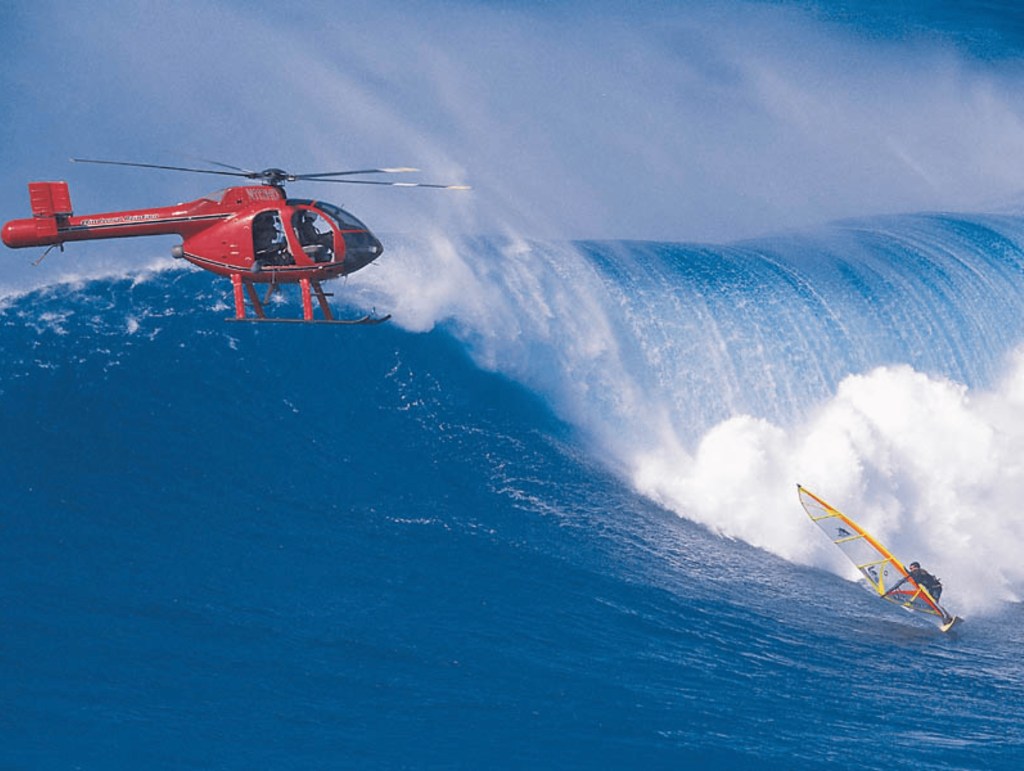
The best configuration of wind and waves is wind stronger than 20 mph (17 knots), blowing parallel to the beach (side shore), with waves breaking in the same direction as the wind. And because I surf with my left foot on the back of the board (goofy foot), the wind needs to blow from the left. This magical mix is rare, found in fewer than a dozen places worldwide. We’ll be visiting them.
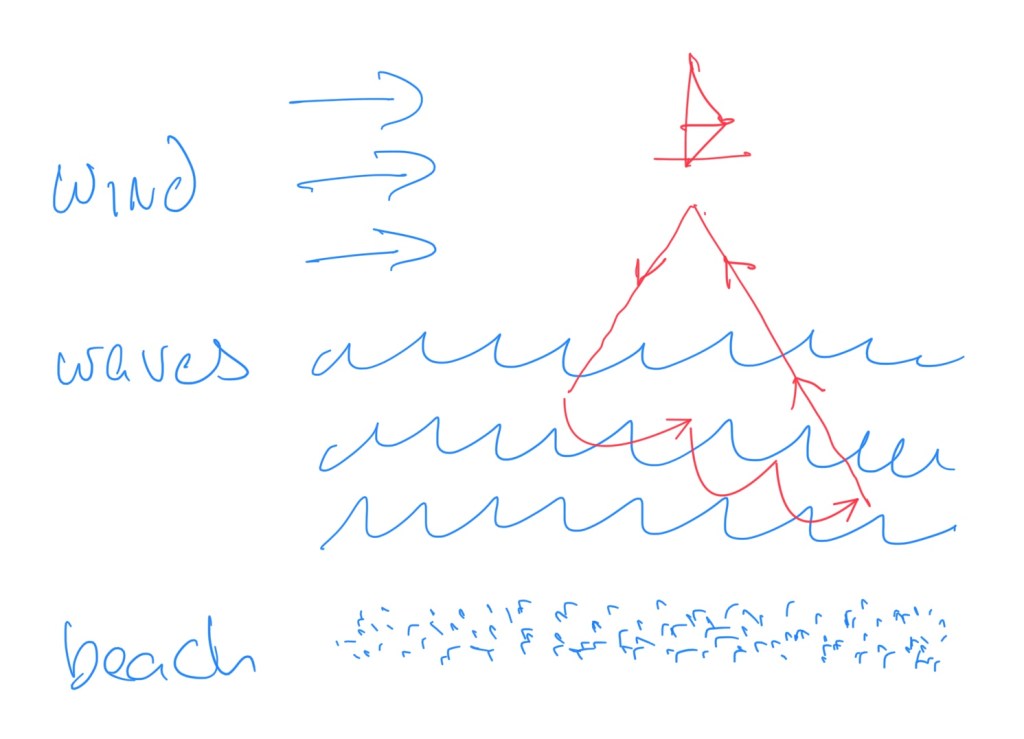
The windsurfer uses the wind to go out through the waves so she can turn around and ride a wave (surf) back to the beach, and then start over again. There are many, many beaches with rideable waves, waves that break gradually, in my case from left to right. The problem is with the wind. It needs to be strong enough and in the right direction. Not strong enough and the poor windsurfer can’t push through the waves.
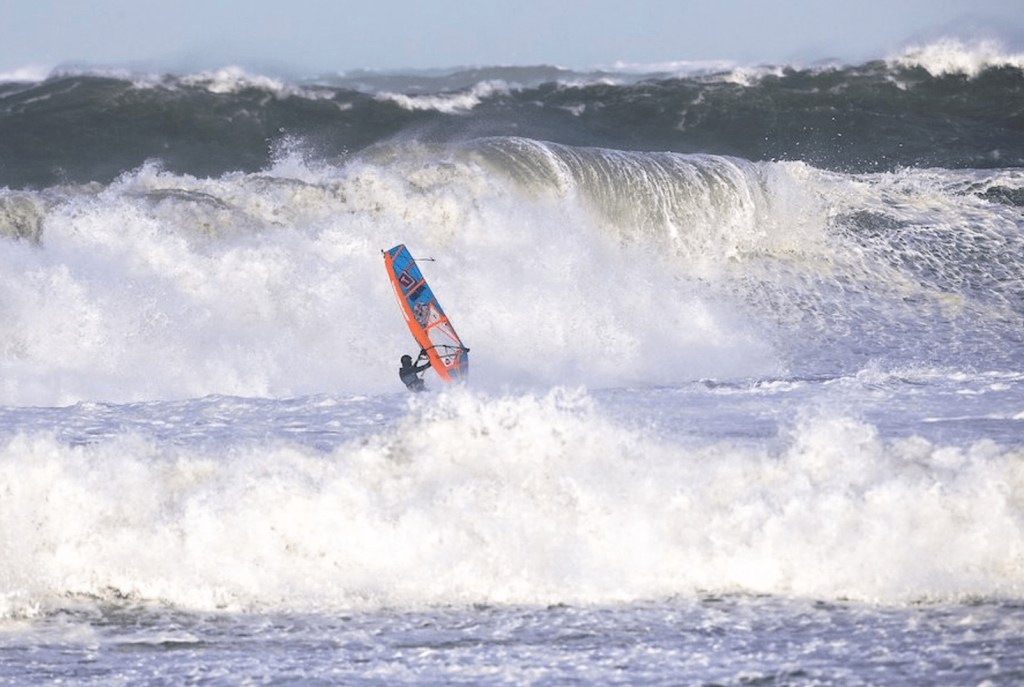
Not in the right direction and the poor windsurfer can’t ride the waves effectively, because she’s surfing wrong-footed (which is like writing with your other hand) or all twisted up to catch the wind.
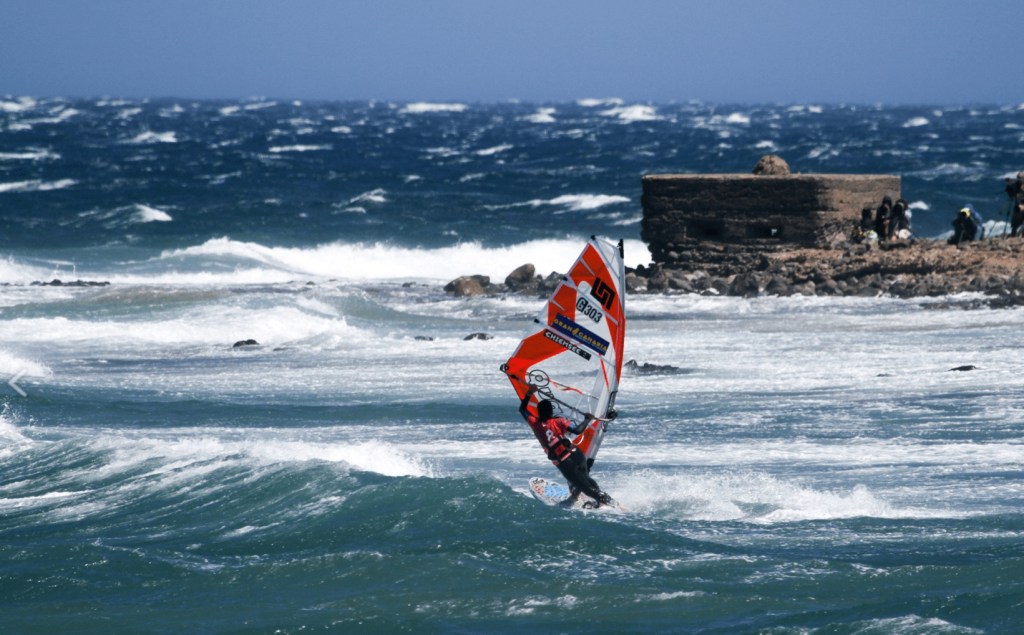
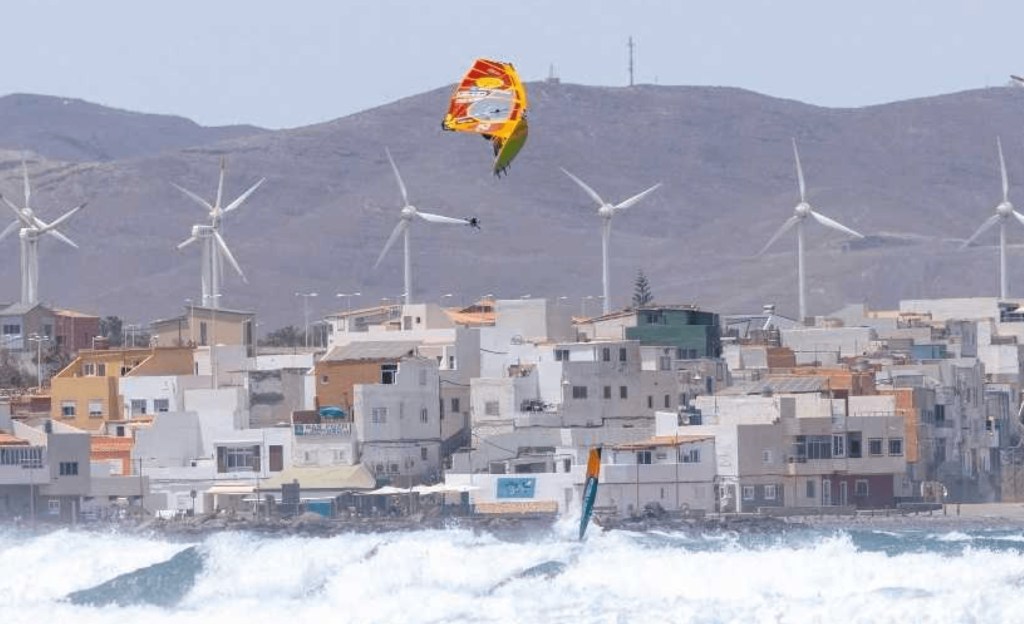
With the right wind though, strong enough and in the right direction, wave sailing becomes easy. You can power over the waves, using the clean ones to catch some air.
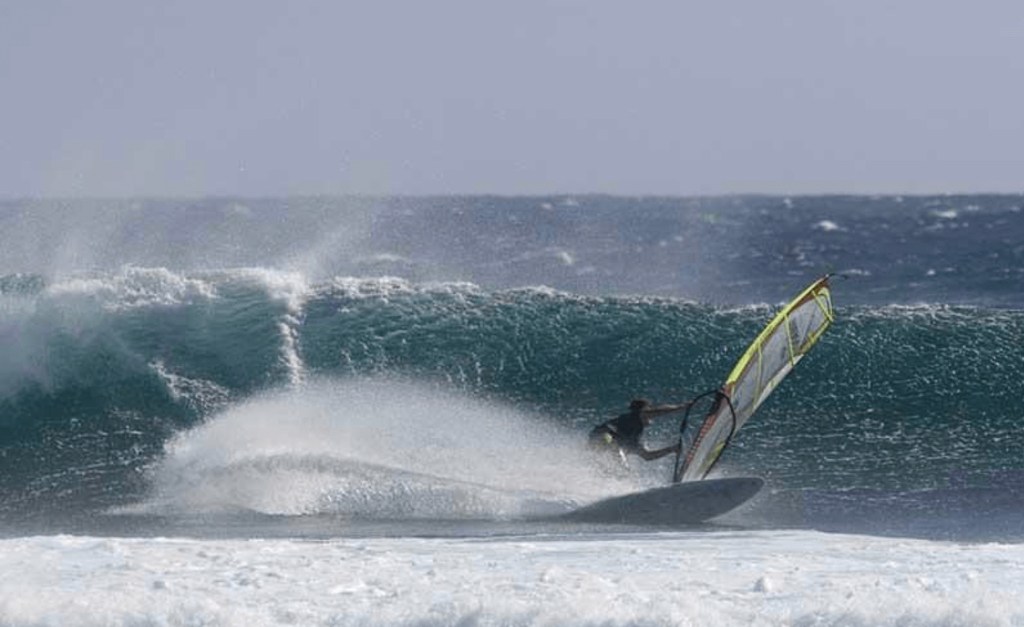
Then you can ride the wave down the line, with the wind behind you, using the power of the wave and the wind to paint your picture.
And what of kitesurfing? A sport created a decade after windsurfing, it shares many of the same attributes and, at least for me, one critical difference that makes it an ideal complement to windsurfing.
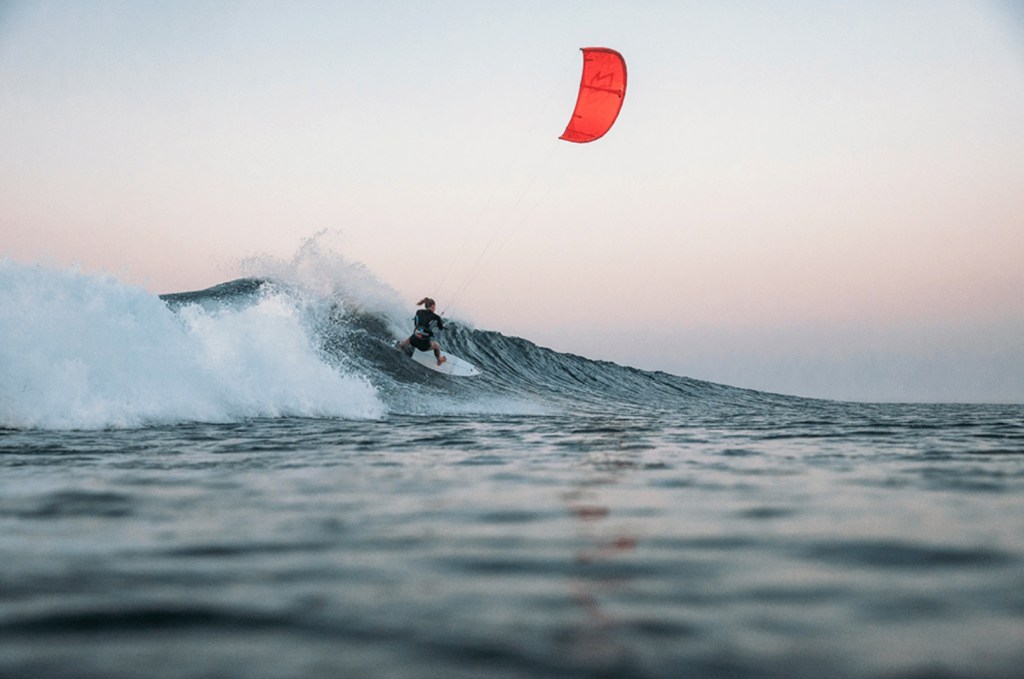
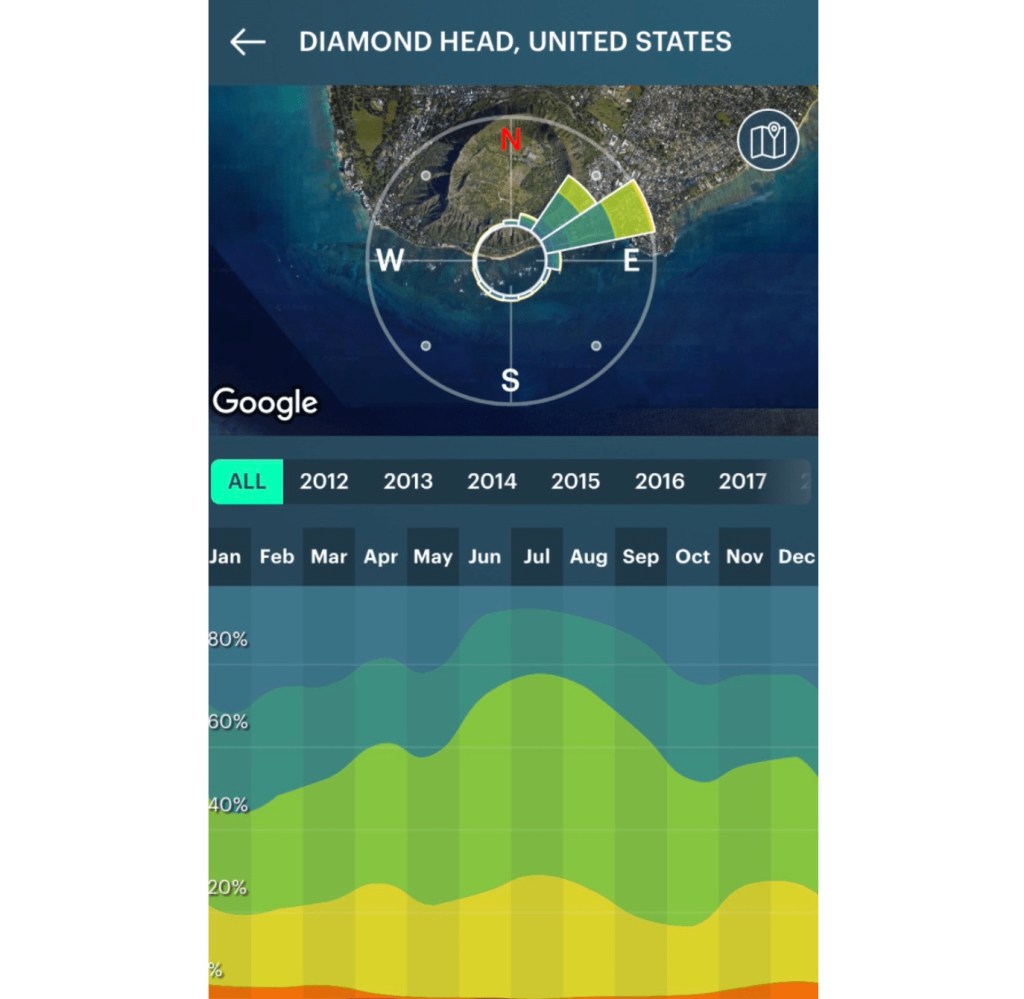
Kitesurfing needs less wind, starting in as little as 15 mph. The difference between 15 mph and the 20 mph needed to windsurf might not seem like much, but because strong winds blow less often, kitesurfing can double my wave sailing days.
Personally, I still prefer windsurfing (for a long list of reasons that will put you to sleep), but kitesurfing is fun too. The sport has quickly become more popular than windsurfing because it’s easier to learn. I am lucky to do both (with a lot of hard work).
And what of surfing, the most popular wave riding sport of all? Honestly, I’m not a fan because it’s too hard. Here’s a quote from a Pulitzer Prize winning surfing biography:
“People who tried to start at an advanced age, meaning over fourteen, had, in my experience, almost no chance of becoming proficient, and usually suffered pain and sorrow before they quit.”
― William Finnegan, Barbarian Days: A Surfing Life
But since waves are easy to find, and the best surfing happens when there is no wind (or light offshore winds), surfing is better than sitting on the beach. And so I’m learning to surf as well, and choosing to suffer the obligatory pain and sorrow.
Between windsurfing and kitesurfing and surfing, I can sail, or at least ride waves, almost every day. And that’s where I feel most myself, connecting with feelings difficult to express elsewhere. And with much practice and repetition maybe I’ll find a way to connect with those same feelings all the time. It’s certainly worth a try.
 F4 Plus