So with all this build up, you’re now breathlessly waiting for the verdict on windsurfing at Waddell. We’ll ready or not, here it is. All images are from an iPhone 500 yards away – not great, but it will have to do.
My relationship with Waddell is complicated. To understand why, Let me describe a typical out-and-back wave ride. When going out, sailing away from the beach, you must get through the breaking waves (the break). Waddell waves tend to break all at once, so there is no natural gap to sail around them. An alternative is to sail out between sets, but that’s tricky.
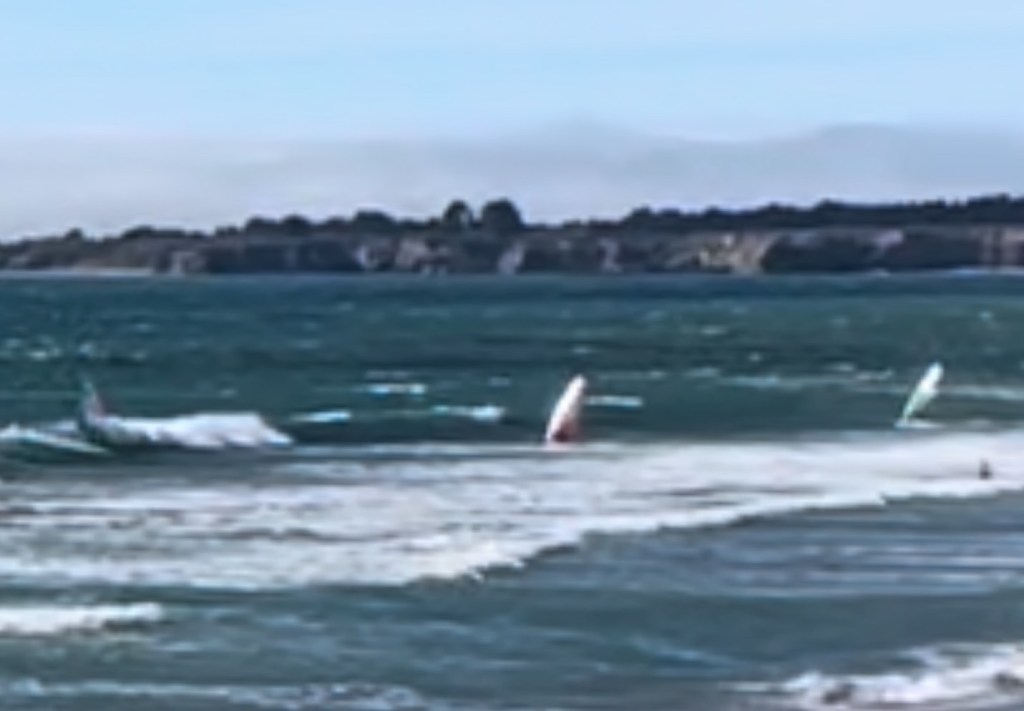
Ocean swell travels in sets, three to five waves (crests) at a time. Swell moves fast and the waves are separated by several seconds (the wave period), typically 8 to 15 seconds on the West Coast. There is usually a slight pause between sets, so the period between the last wave in a set and the first wave in the next set is longer. The wind at Waddell is lighter near the beach (inside) and it takes about 20 seconds to sail out beyond the break, often without enough wind to power over a big breaking wave. If you count the waves and time the end of a set correctly, you can sail out before the next set comes in… usually. This is an imprecise science subject to nature’s whims, which results in a periodic pummeling, where the hapless windsurfer going out, frantically pumping the sail for more power, meets an overhead barreling breaking wave head on, and loses.
It’s more embarrassing than dangerous, but it’s also exhausting. Board sand sail are ripped away by the whitewater while you’re dragged underwater. Surfacing, you have seconds before the next crashing wave repeats the cycle. In that time you must get your gear, place it in launch position and launch, if there’s enough wind. Often, I could only wait out the set, each wave pushing me closer to the beach, where I would catch my breath, collect my thoughts and hope that my timing improved.
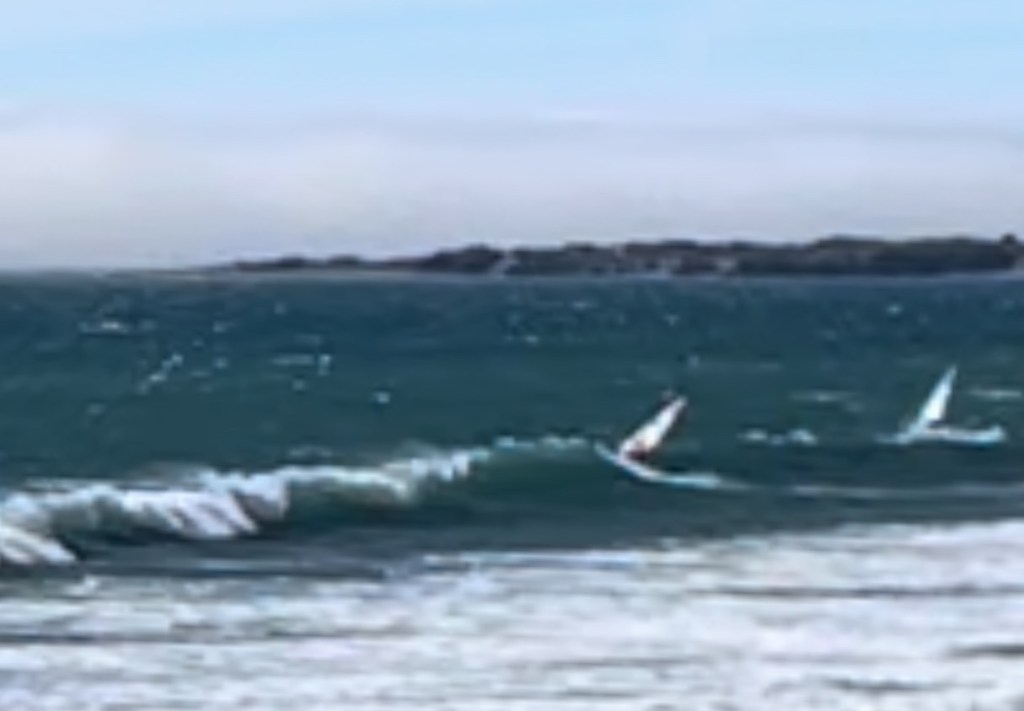
When the timing works, you should make it over the waves before they break. These provide an opportunity to jump, using the steep, smooth wave face as a ramp. This takes speed, and therefore wind. At Waddell, the light inside winds don’t provide much power and I only pulled off a few jumps, all rushed and cramped, which is a shame, because jumping is a very exciting aspect of wave sailing.
Now you’re out beyond the waves, the ocean unfolds in all its beauty. Everything about windsurfing here is beautiful. After the relief of escaping the break, you’re heading directly into the afternoon Sun, which lays out its silvery path with a million fiery sequins. The wind gets stronger, sending you skimming above the water, bouncing across the chop. You’re suspended by the sail, weightlessly held only a few inches above the rush of water passing beneath. And you leave everything behind, the coast, the beach, the other sailors, your life. It’s just you.
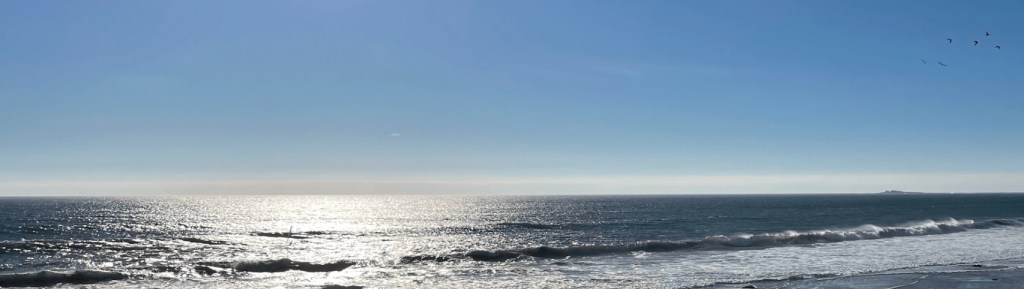
At some point, you have to come back (indeed!). You’re looking for a swell that will turn into a wave that will be worth the ride. This is also tricky. A quarter of a mile away from the beach, all swell looks the same; but not quite. The right swell will be a bit bigger than the others, usually the first or second in a set, and it will stretch out for miles, a faintly darker and foreboding line moving your way. When the swell closes in, and you’re in its trough, which resembles a small valley, and the top of the swell is blocking the horizon, that’s when you want to turn and ride it back to the beach.
Wherever there are waves, there are wave riding rules. Waves are free, but everyone wants the best ones. At Waddell the rule is that the first person on a swell gets to ride it alone. Even at its most crowded, there were plenty of waves to go around.
So now you’re coming in, sailing back to the beach, and the scenery dramatically changes. With the Sun behind, the water turns dark blue and the coastline shines in sharp contrast in the background. With the swell underfoot, you’re going a little faster (around 30 mph) with less effort; it’s downhill all the way. Very quickly, you’re back where the waves break and ready for the most exciting part of all, surfing the wave.
This is where it gets very tricky. As I pointed out in About Waddell, the waves here tend to break all at once, so you have to wait until the very last second before deciding where to start surfing (drop in). As the swell hits the shallows, the sea bed slows the bottom of the swell, which causes the top to overtake the bottom, pitching the swell into a breaking wave. The transition from swell to wave is fast, a few seconds. The wave face jacks up from a slight rise to a vertical drop, and from a few feet to well overhead, and the water below, sucked up the wave face, suddenly smooths out, inviting you in. Well positioned at the top of the wave, looking down from what seems like a great height, board and sail firmly in hand, now is the time to take your first (bottom) turn.
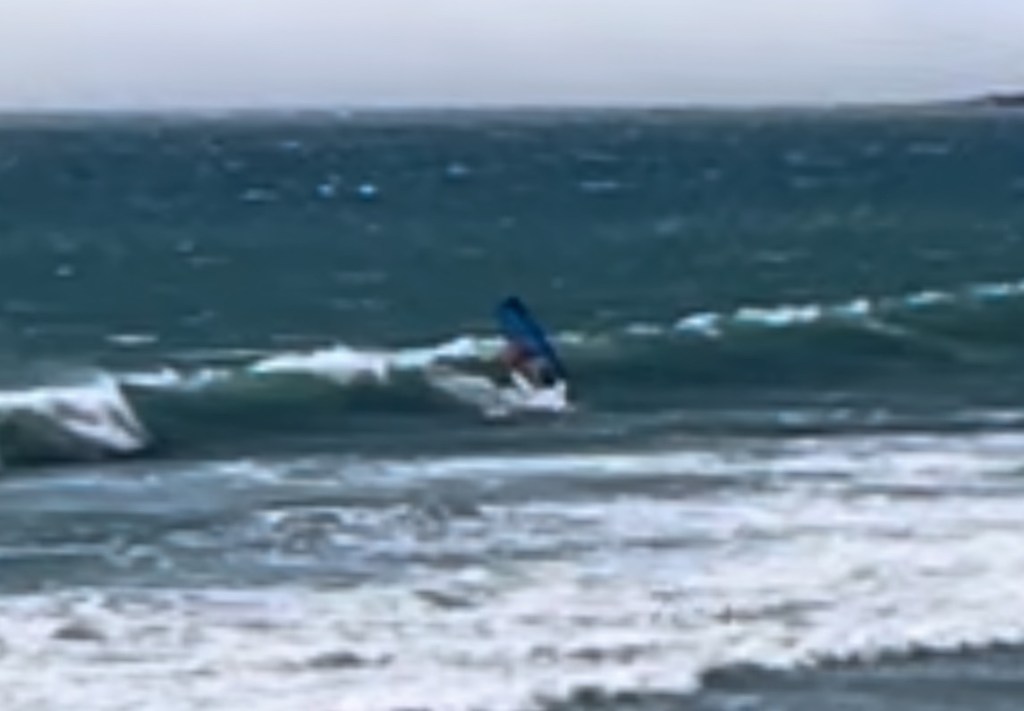
Surfing is all about that first turn. The turn’s arc and speed dictate the rest of the ride. From the bottom of the wave, you’re looking directly down the line, seeing the entire the wave about to break. Instantly, you can see where this ride will take you. There is a lot going on; the wave crashing above you, the speed of your board, the wind in your sail. Instinct takes over.
Surfing is a series of bottom turns and top turns. Bottom turns reposition the rider for the next top turn. The action is in the top turn: long cut backs, sharp pivots, off the breaking lip, sliding over the curl, an infinite number of ways to achieve a sort of symbiosis with nature. You won’t have time to see your turn, but the memory of how it feels is permanent. And if the wave is good to you, another bottom turn follows, and then a top turn, and so on. At Waddell, it’s rare to get more than two top turns before there’s nothing left but raging whitewater. And hopefully you’re out in front.
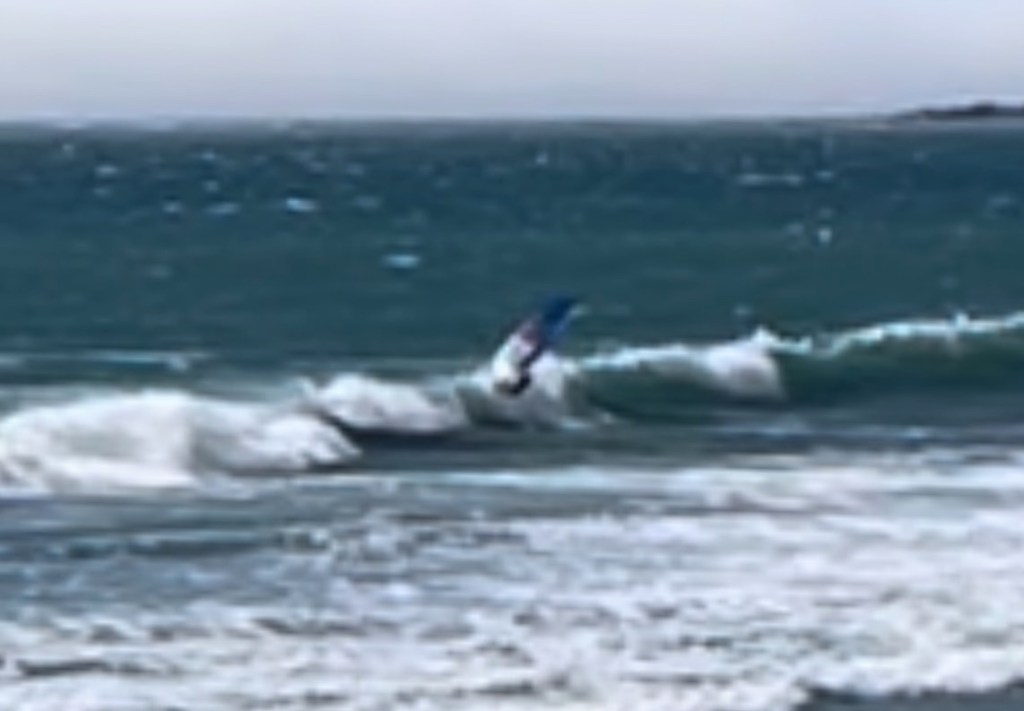
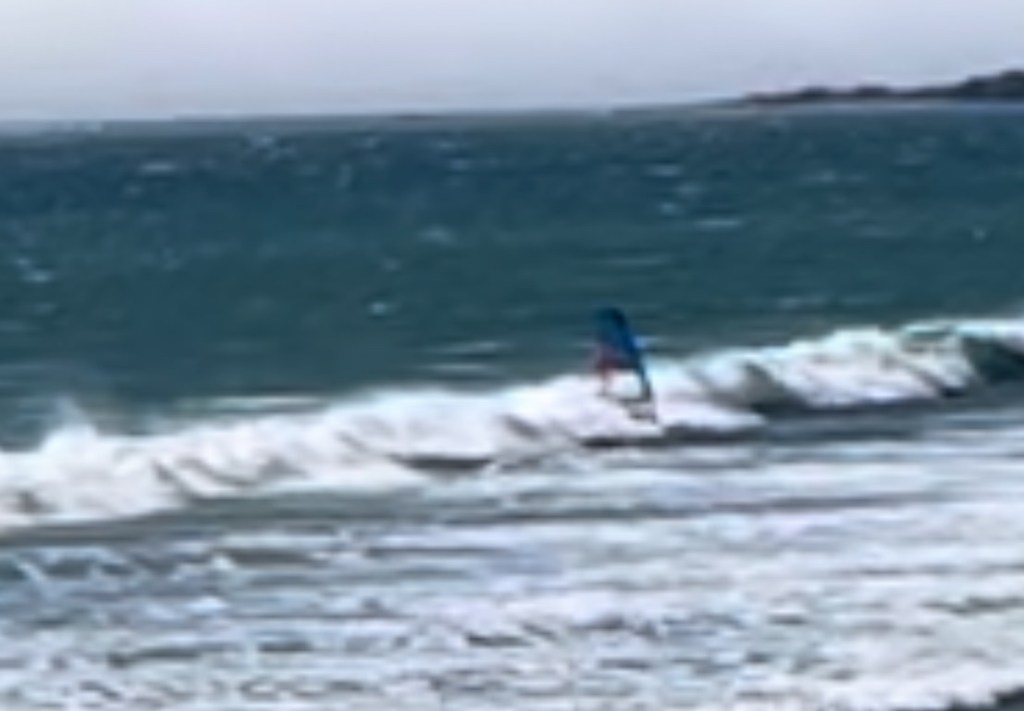
That’s not always the case. There are many ways that waves keep me humble. I mistime my bottom turn so I’m heading up the wave face just as the wave is bearing down on me. The entire weight of the Pacific (so it seems) hits my sail, which is standing between me and the wave, slamming me to the bottom, and then pushing me deeper. I mistime my top turn so it’s past the top of the wave, only to be sucked back in by the falling lip (going over the falls), the wave pulling me under, and then pushing me deeper. I time everything perfectly and come out smiling, only for the broken and vengeful wave to catch up with me and trip me, roll me around, and then pushing me deeper…
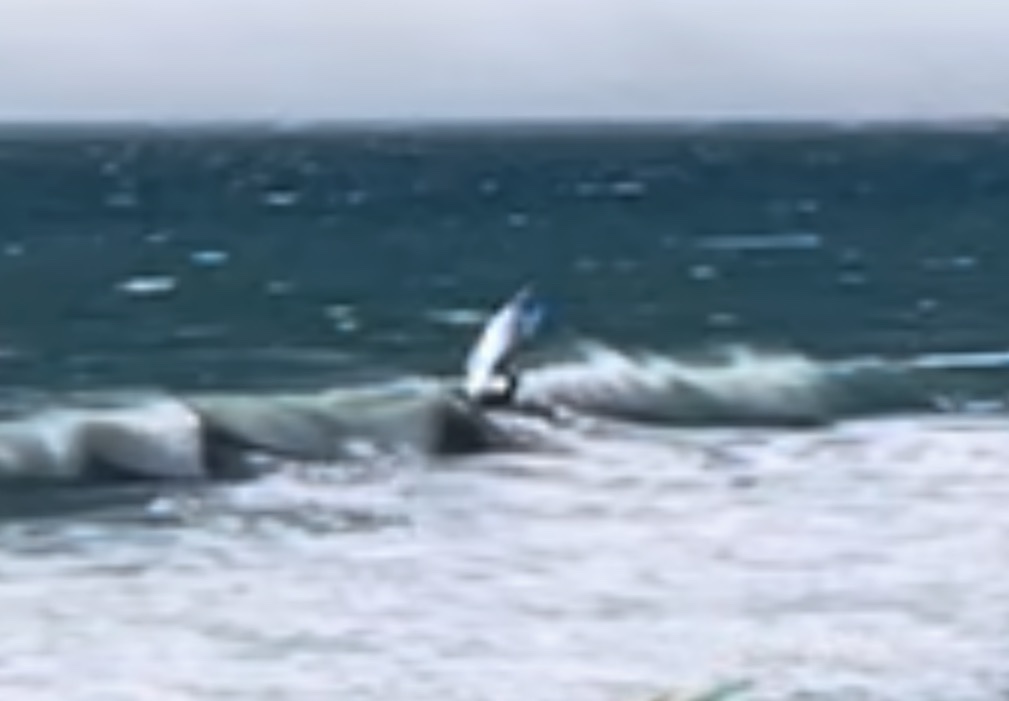
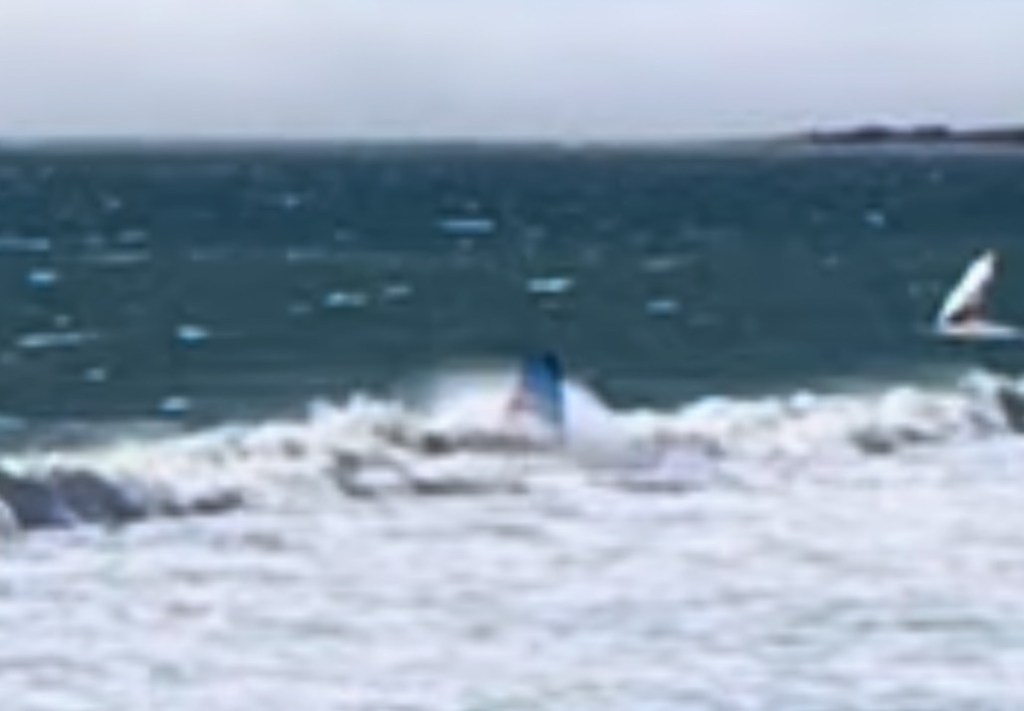
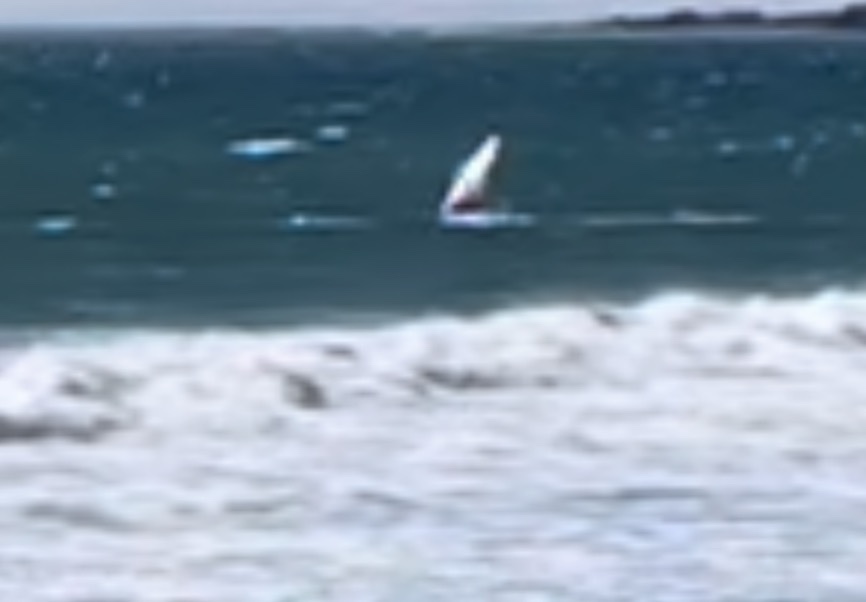
As an added complication, at Waddell, because the wind is coming from the right, I’m forced to surf with my right foot on the back of the board instead of my usual left foot. This would be very unnatural on a surfboard or snowboard, but because I can use the power of the sail as well, it’s manageable on a windsurfer. Manageable but challenging, and a good enough reason to find wave riding spots where the wind blows from the left (which we will do).
Many times it ends well, as I accelerate out of the last turn, the whitewater well behind, the beach just ahead, drunk on adrenaline and savoring the calm water and misty air on the inside, acknowledging the spectators on the bluff as I gently nudge my board into a turn for my next ride out. Repeat 20 times and you have the makings of a decent session.
Occasionally, you’ll sail past another windsurfer, not close enough to hear them over the howling wind, but close enough for a friendly gesture, a wave, high five or hang loose (Shaka), a well done for a great ride or, more often, a spiritual thank you for the beauty of it all.
The locals at Waddell are very local. One women has been sailing here for 42 years, and I saw her out on the water almost every day. The same cast of characters and their cars show up like clockwork, dedicated to the cause of catching the next best wave ride; and so did I. The place is too remote and too difficult for the casual crowd, so I was honored to earn my stripes and feel welcomed. Familiar faces smiling back, generously sharing the best waves, and friendly post-session griping about less-than-perfect conditions (“but it beats the hell out of working”).
And so the session ends, feeling good. Nature always rewards my effort and even the most frustrating and punishing sessions have moments of perfection. And on the ride home, along the now-familiar coast road, my body completely relaxed from the exertion, I can replay those moments and the feelings they invoke, feelings that have me coming back each windy day.
Many of these feelings trigger a healthy dose of dopamine with the addictive expectation that the best is yet to come: the energy of competing with nature; the sense of accomplishment from mastering a difficult task; and, I must admit, the recognition from others. Other feelings go deeper: assertively exerting control, without submission or aggression, and with compassion and understanding for my limitations; unconditional love for the beauty of what I did and what I saw, and the vulnerability to appreciate my transient good fortune. And while I’m good at chasing the dopamine-inducing feelings, it’s the deeper feelings of assertiveness and love that I really want to find. Therein lies my work.
 F4 Plus