My “big” is a wave face 4 meters high (13 feet) and has nothing to do with what the locals call big (6 m or 20 ft) or Hawaiians call big (8 m of 26 ft) or the biggest wave ever surfed (30 m or 100 ft). But still, it’s big to me and I was lucky to windsurf a couple this weekend, so I thought I would share what that feels like.
I have been chased by a big wave before, desperate to get out of its way, but I’ve never ridden one. There’s a (big) difference. In most places where waves are rideable, breaking gradually as they sweep into the beach, they close-out when they get big, which means the wave breaks across its entire length all at once. Whatever special shoreline feature that’s creating the rideable wave loses its wave-shaping power when the wave gets bigger. At best you get a straight shot straight down the wave as it’s breaking all around you. Fast, stressful, not particularly fun.
Many famous big-wave surf breaks only work when the waves are big, like Waimea (Hawaii), Peahi (also called Jaws, Hawaii), Mavericks (California), Punto Lobo (Chile), Cloudbreak (Fiji), and Nazare (Portugal). A few places work well when the waves are small and big, just not too big. Matanzas is one of those places.
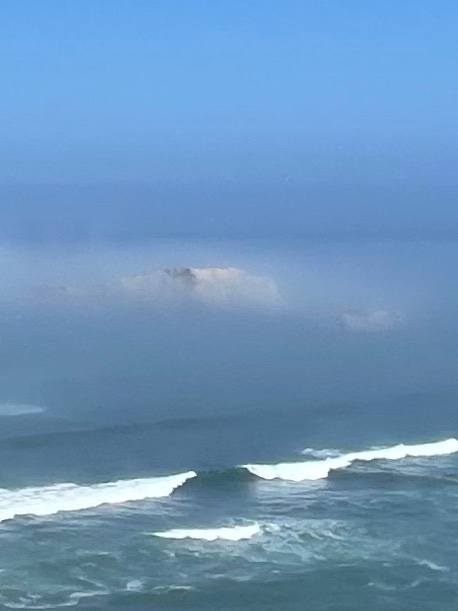
The weekend forecast was for 4 meter (13 feet) waves, plenty big enough. The waves built up slowly during the week, the crashing thunder outside my beachfront cabin noticeably louder each morning, the sea mist a little bit thicker before being swept away by the afternoon winds. By Thursday I was nervous about getting out through the breaking waves but riding the waves was still familiar. By Friday I was confident getting out but over-confident riding in, punished by a couple of powerful wipe outs and long swims. Then everything came together on Saturday.
The sessions were beautiful, brutish and short, physically and emotionally draining. It was technically challenging, a different kind of wave riding with an intense focus on getting the timing right. On a big wave there’s lots and lots of room to carve wide arcs at high speed, but as you dive into each turn you’re betting on the wave holding up long enough. Timing exactly when the wave is going to break is tricky. The ponderous progression of a mountainous wave looks slow and steady, but the size masks the speed; it’s moving fast (think elephant stampede). You also want to finish the ride by kicking out the back of the wave, over the top, not straight ahead trying to outrace it, ending up caught inside with no wind, battered by a barrage of whitewater. And when you kick out the back, you want to make sure the next wave isn’t breaking as well, coming down on you from it’s highest point just as you’re gingerly collecting yourself to go back out. There’s a lot to learn, and not a lot of mercy for mistakes.
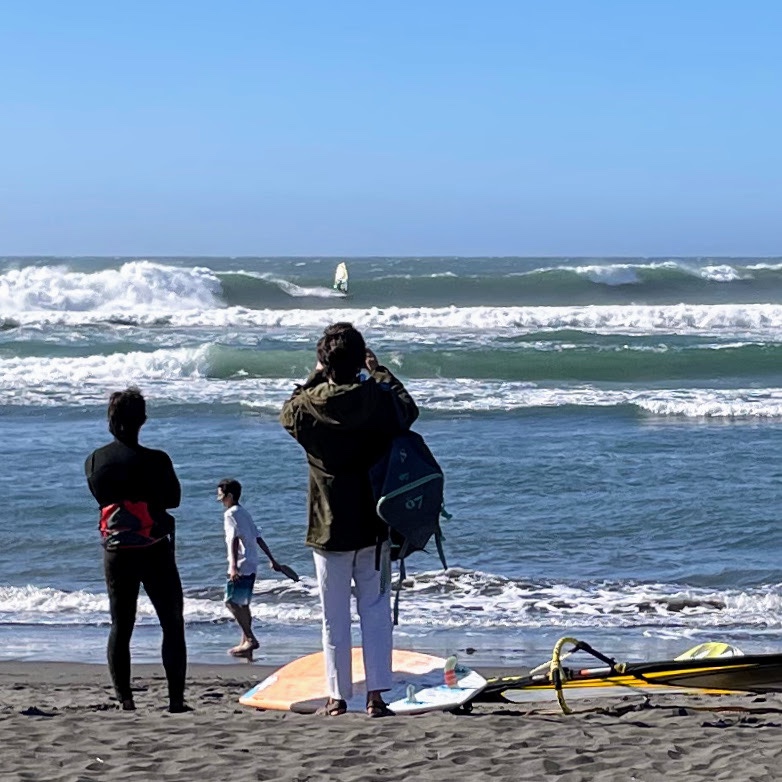
By Saturday I was getting the hang of things. Here’s a sample. Sail fast towards the beach; pick a wave that looks big. You want to ride the biggest (or last) in the set so the next wave, the one that’s behind the one you’re riding, doesn’t break on top of you when you finish your ride (the bigger the wave, the further out they break). From the trough of the wave you can’t see anything behind except for two storeys of water, so slow down to let the wave catch up and carry you to the top. Now you see the waves behind and, if you picked right, you’re ready to go. Plunge down the wave face; you’re going fast but so is the wave so it takes longer than expected. Carve the board gently into the turn; at this speed everything needs to be gentle. Brace the sail against the wind rushing up the wave face; spot where you think (hope) the wave is going to break; complete the turn and straighten out so you’re speeding just below the crest of the wave as it hesitates to pitch over. At the last second pop over the back of the wave, enveloped by the spray coming off the pitching curl, flipping the sail, switching your feet, fighting for balance, and staring at the wave behind, finding out if you were right about it not coming down on you. I did that five times on five waves, and it was enough.
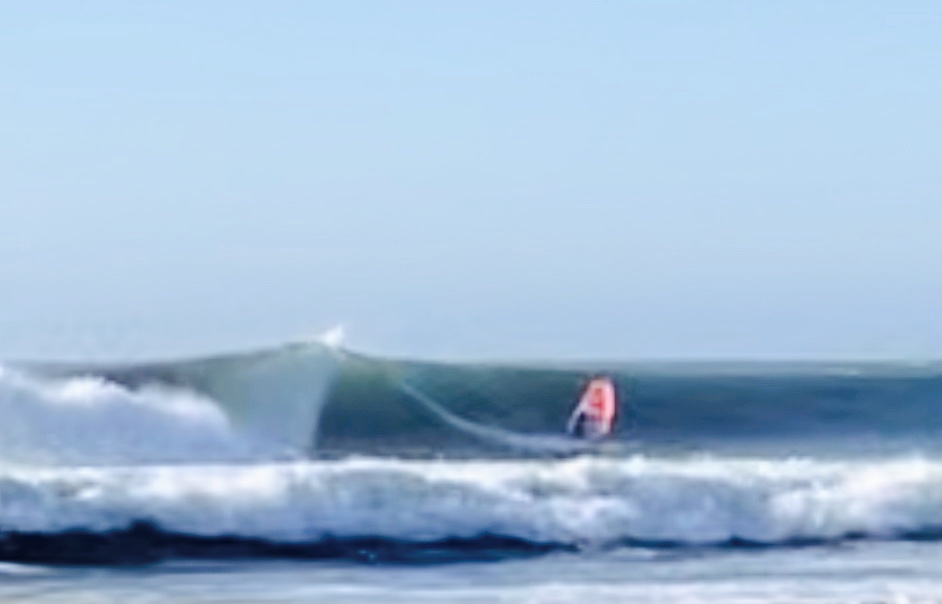
There was no snapping top turn, exploding off a section or sliding over the curl; none of the stuff that typically makes for a good wave ride. Just a simple, almost straight-line ride along the wave, and yet it touched all my emotions; anticipation of riding a really big wave and surprise when it happens; fear of being swallowed by the wave and anger when caught; disgust in making a mistake and trust in the next time; joy in doing it right and sadness the ride ends (mixed in with a hefty dose of relief). It’s a crash course, literally, in emotional therapy.
Emotions, feelings, are important to navigate life (so I’m learning). They provide direction to meet our core needs; comfort for autonomy, motivation for competence, boundaries for relationships. To do this well, you have to master your feelings, which, like any mastery, takes practice. Experiencing them is a start, then tuning into them, then using them, then using them in healthy ways. I know it’s going to take more than riding big waves (or listening to Coldplay).
 F4 Plus