My heart was heavy when I left Chile. The country, the people, the ocean; each felt special and, in turn, made me feel special. Starting with the country, here’s a quote that fits. “Latin America has always been, first and foremost, about geography—stunning, bountiful, impossible and treacherous.” Chile has 4,000 miles (6,435 km) of coastline, more than the combined length of the West and East Coast of the USA (excluding Alaska), and a population of just 19 million inhabitants, of which nearly 40% live in and around the capital. That leaves a lot of empty space to enjoy the highest mountains in the Americas (and in the Southern Hemisphere), vast deserts, subpolar glaciers, thousands of rivers and lakes, untold number of beaches and islands, and the best left-breaking waves in the word; a veritable goofy foot heaven.

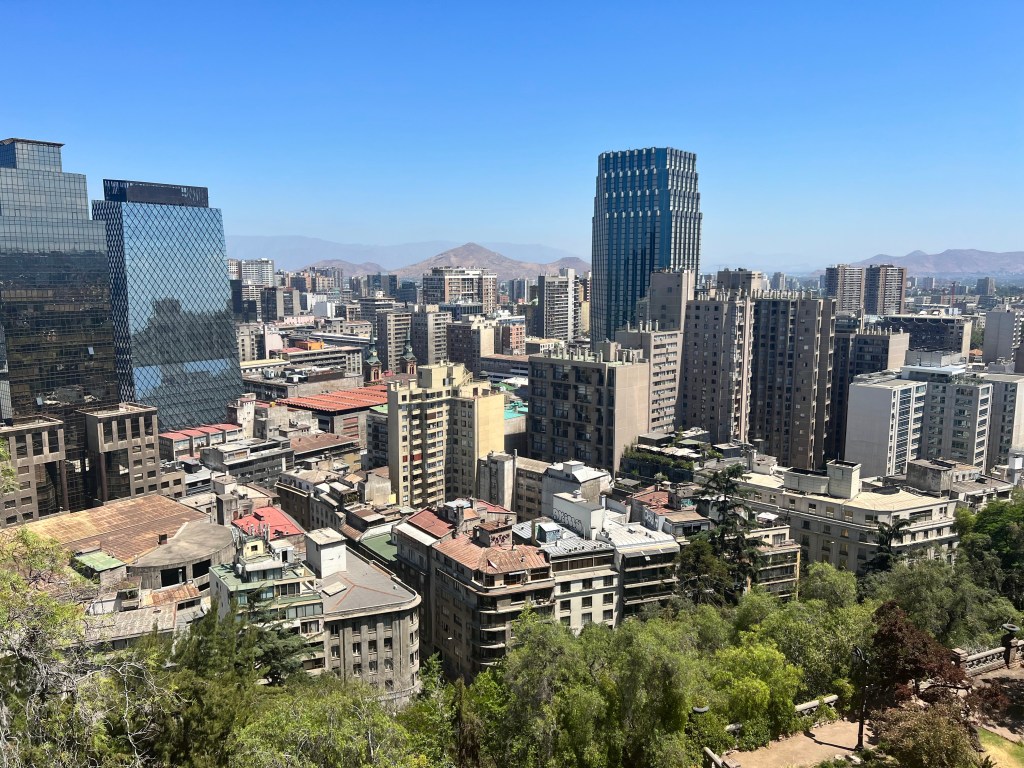
I visited only a small area around the center of the country. It was a fantastic introduction. Santiago, the capital, a vibrant, edgy metropolis of tightly packed high rises, chaotic streets and plenty of parks, sits firmly against the dramatic backdrop of the Andes mountains that reach almost 7,000 snow capped meters (23,000 feet). Gritty shops and tiny stalls line the base of apartment blocks and office buildings, all intermingled with no obvious order. The restaurants and bars vigorously embrace the country’s renowned wine heritage, offering dozens of choices by the glass and hundreds by the bottle, all at rock bottom prices compared to the US, accompanied by extensive commentary on origin and taste (I mostly stuck to Carmėnère, a local favorite). The food, which has a heavy Peruvian influence, is excellent in the excellent restaurants (if you get my drift). And I will now be drinking Pisco Sour anytime it’s offered.
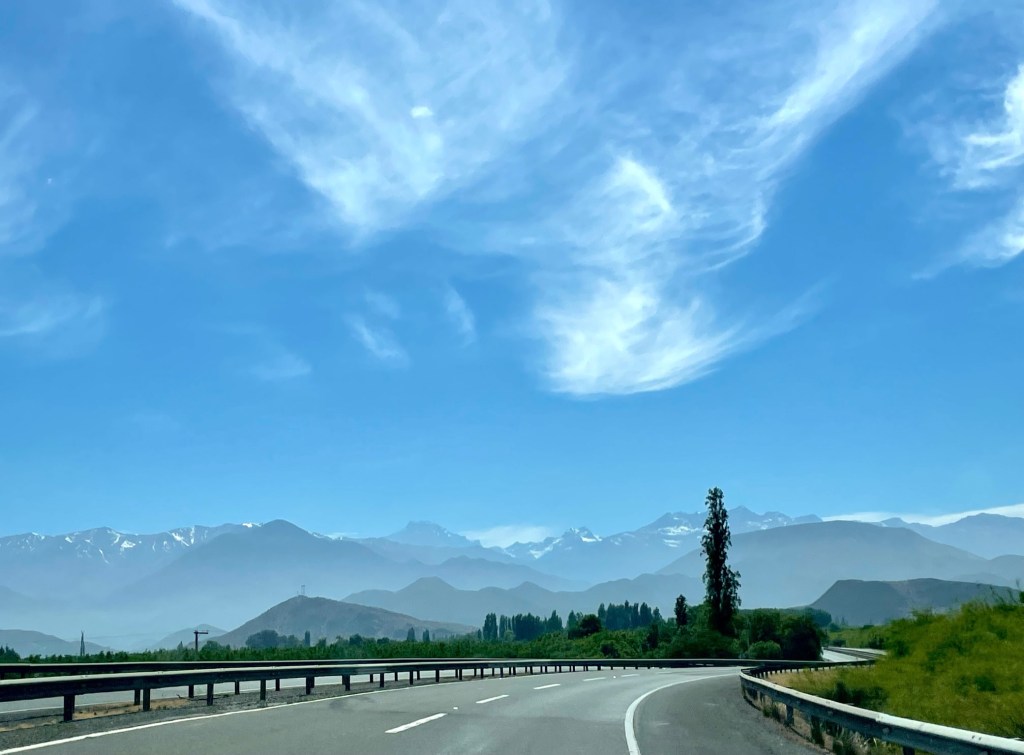
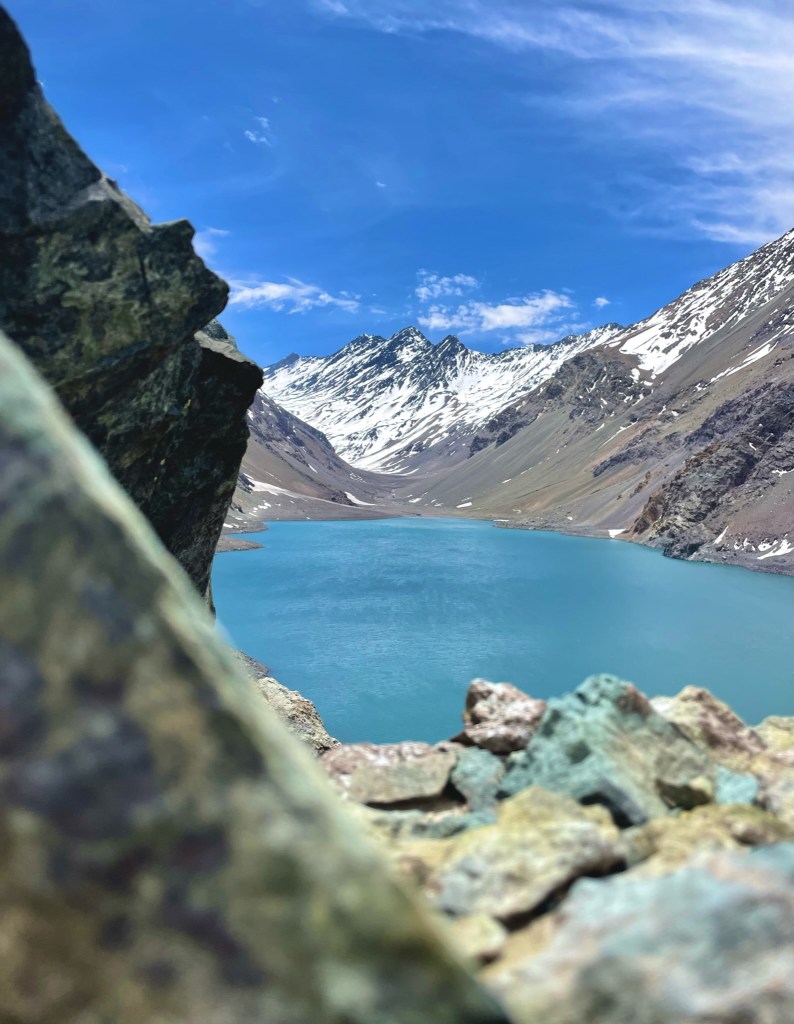
The city quickly turns to un-groomed countryside, farms and vineyards laid out between low earthy hills that dot the landscape, sparsely covered with dry grass, shrubs, cactus, and the occasional tree. The villages along the way are announced by lines of informal roadside stores, usually the converted front of a house, with colorful flags touting favorite brands, and maybe a table to sample empanadas and churrascos. Hand-painted signs everywhere hawk bread, eggs, cheese and charcoal. Nearer the coast, the hills get steeper, the trees more dense and the villages sparser. The natural beauty is unadulterated (except for the few resort towns, Miamis in miniature).
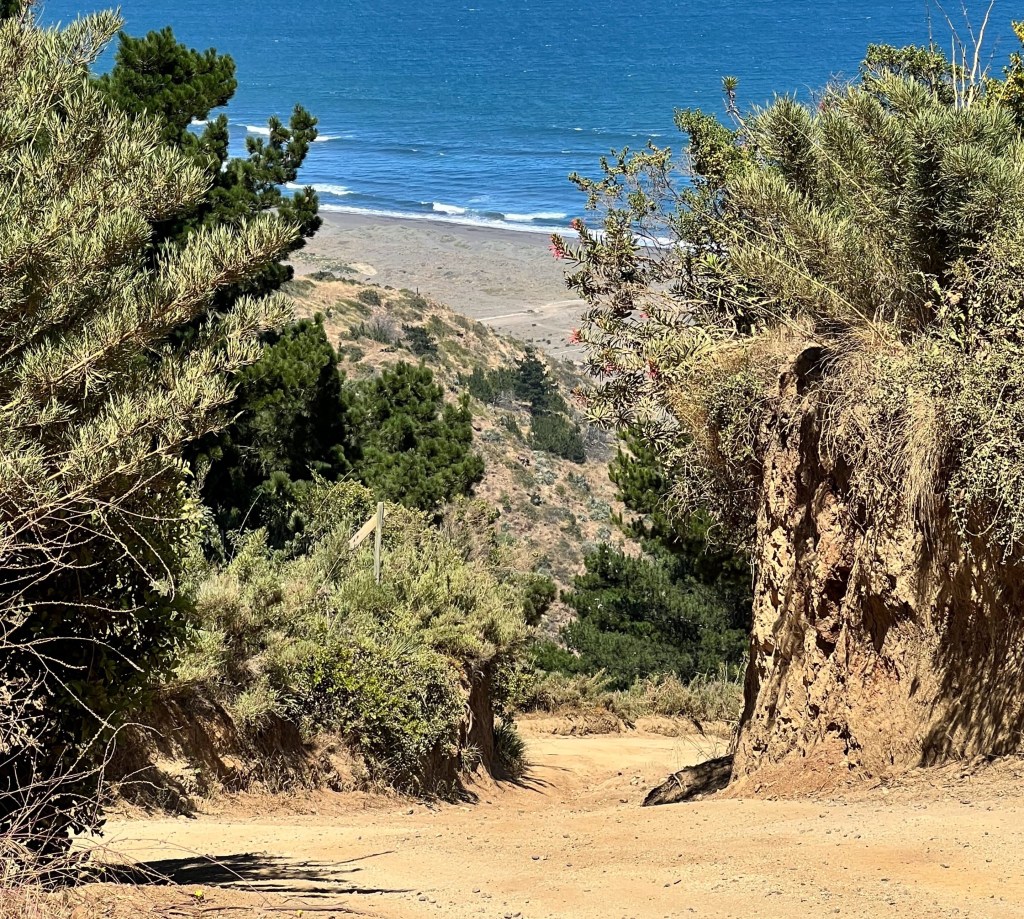
I’ve already expended hundreds of words extolling the virtues of Chilean windsurfing, so let me say a few on their surfing, starting with with an anecdote. I met an expert surfer from California who specializes in big wave surfing. He visited Chile seven years ago and never left. There are thousands like him, who make the trip and stay. The quality and abundance of the surf is widely praised, and the laid-back, bare-essentials lifestyle fits.
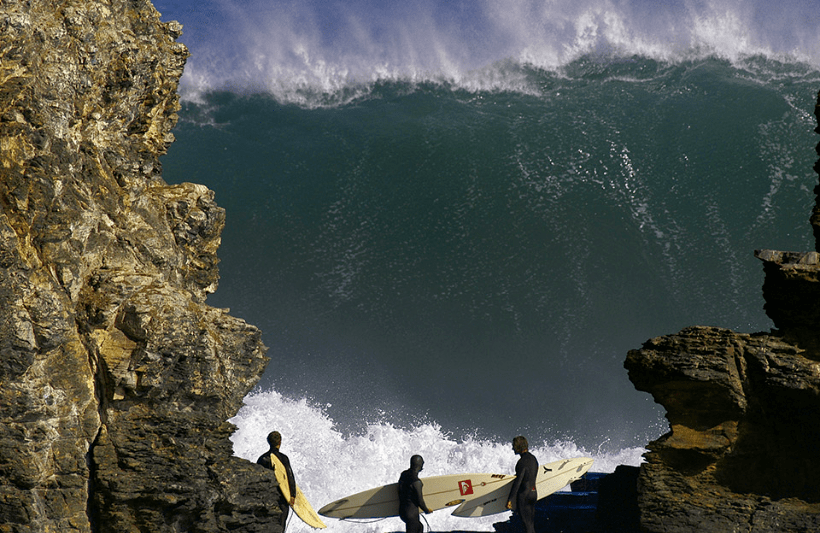
For myself, I’m only just learning to surf, so the big, perfect pealing waves are lost on me (or rather, I’m lost in them). I did, however, sample a few days of surfing two hours north of Matanzas, in a bay close to Viña de Mar, the swanky resort town that borders Valparaiso. The experience was reliably humbling, with the rental shop calling the head-high pounding surf “muy tranquilo” as they pushed me out the door. I progressed a little, carried by the happy enthusiasm of dozens of other learners in all shapes and sizes, all of us clad in dark rubber suits, fighting our big colorful foam boards, flailing in the whitewater, and on rare occasions, surfing. Later I learned of a remote beach one hour south of Matanzas, called Puertecillo, features one of the best learning waves in Chile (and on a good day, one of the best waves full stop). Drive another hour south and you reach Pichilemu, the surfing capital of Chile (they would say of the World, but the North Shore of Oahu, in Hawaii, probably has a better claim, and the Biarritz region of France, being French, would make the same claim). All this in only a tiny sliver of the coastline. If you like to surf, go to Chile.
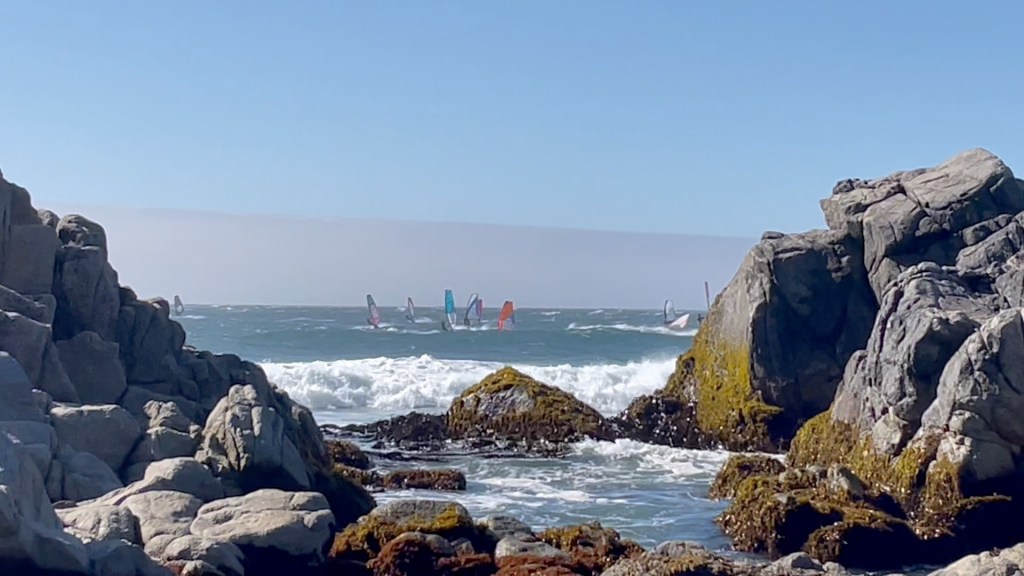
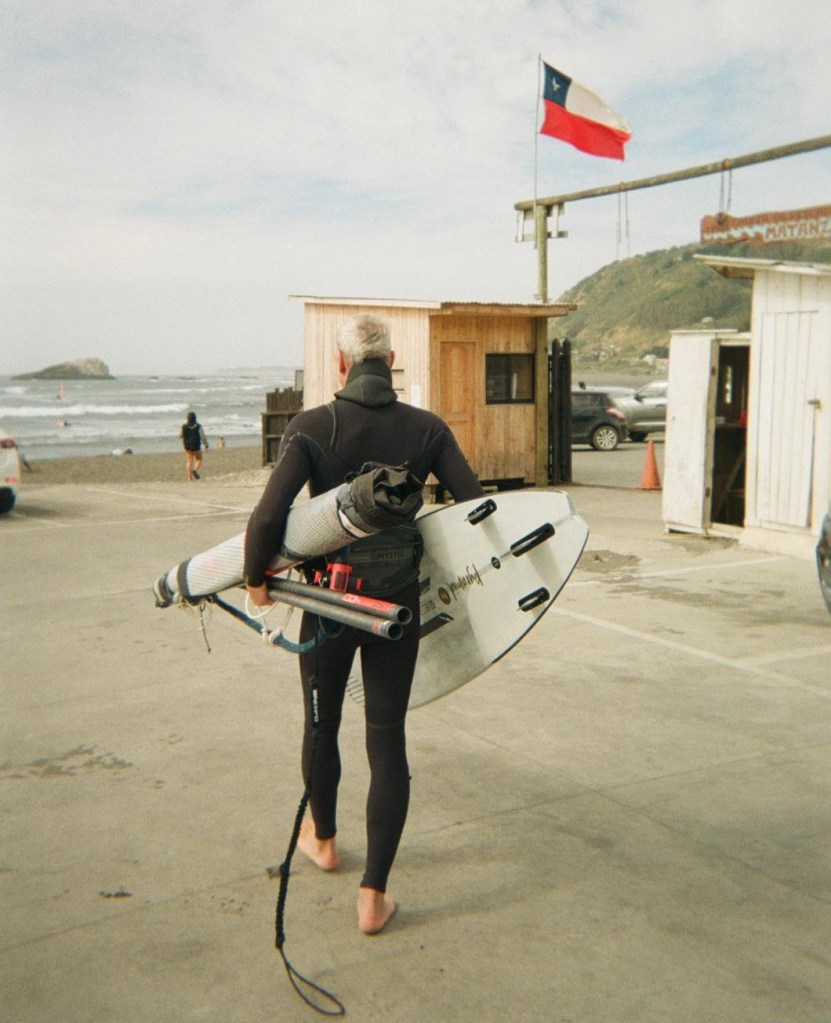
Back in Matanzas, a windsurfing life is rewardingly simple. The wave is framed by the village, directly in front of the beach parking, surrounded by the beachside stores and houses. By mid-afternoon I take the only road to the village, check out the wind and waves, park, rig and launch. The same locals are out every day, along with a handful of visitors, often professionals sailors. I ride a few waves, exchange a few smiles, come in, take a few minutes to watch the action on the water, then pack up and go home. Later, when the wind drops and the evening glow fills the sky, I’m back in the village for dinner at my favorite restaurant. Some days, I pick up a few essentials at the market.


To shake things up, I occasionally take the road the other way, to Pupuya, the next village over, same size as Matanzas, with it’s own wave, beach and favorite restaurant. Pupuya is a hotspot for kitesurfers. The beach is littered with kites and you rarely see a windsurfer there. In Matanzas, the beach is littered with windsurf boards and you rarely see a kitesurfer there. A slight difference in the beach orientation is enough to keep the tribes apart. The common thread between them is a passion for their sport and the ocean. Many locals moved to the villages years ago to sail, finding local work to support their lifestyle. Some now have children that sail. Some are national champions. Sliding into a wetsuit and launching into the waves is a daily routine ritual. When the wind is too light, they’re surfing, fishing or traveling to find better wind somewhere else.
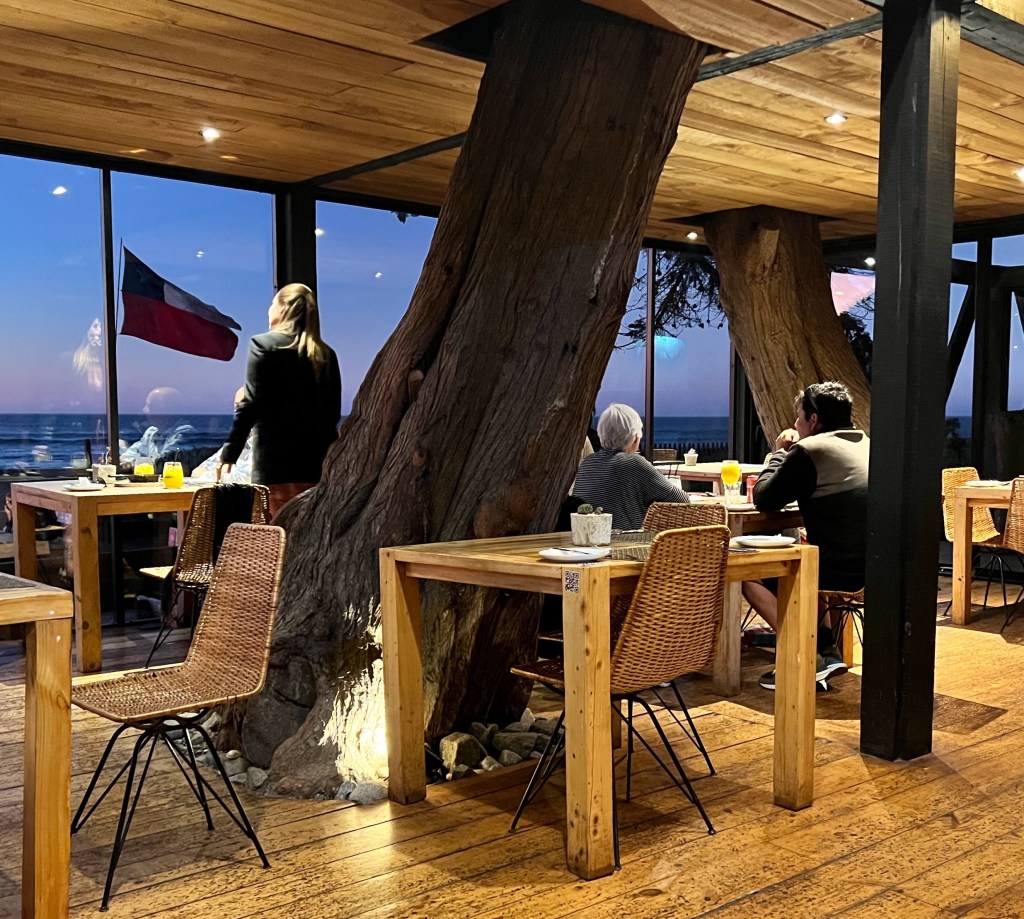
Something else they have in common is warmth. Every Chilean I met offered a warm smile and helping hand. I am fortunate to have been a part of their lives for a little while, sharing their positive, loving attitude. Some favorite moments: exchanging life stories over a jar of homemade trail mix with nothing in mind but waiting for the wind and seeing the trees sway over an idyllically desolate river; debating wine varieties long past midnight with a lot more sampling than reasonably required; searching for estrellas fugaz (shooting stars) from a hot tub buffeted by storm force winds; the weekend parking attendant telling me to name my price for my stay; group meditation after yoga; dinner at Surazo (named after the dominant southerly wind), the world’s best restaurant run by and for windsurfers (location, staff, menu, amenities); and always the warm smiles everywhere.
 F4 Plus