As much as I love windsurfing (which should be obvious by now), I’m actually a better skier. I was fortunate to have a French mother that took her two then three then four children skiing every year for four to five weeks over the Christmas and Easter holidays (in France skiing is considered a basic right, along with early retirement). I started at four, was in ski school for ten years and have skied every season since, including a couple on monoski (a strange ‘80s variation that could only be practiced properly in a tight neon one-piece snow suit) and a dozen snowboarding (the early cool factor eventually falling to sore middle-age knees).

The French ski village where I learned to ski and that has been an annual place of pilgrimage for my family ever since is famous for a very steep, kilometer long mogol run that marks the border between France and Switzerland. Alternatively called La Chavanette, the Swiss Wall or the Wall of Death, it’s a fantastic initiation to extreme skiing, both on marked runs and backcountry.
Skiing backcountry, outside the boundaries of the ski resort, is a tricky balance of good and bad. The snow is better (100% powder) and the runs more interesting, taking full advantage of all the natural features of the mountain; bowls, glades, cornices and couloirs (chutes). But the best backcountry usually requires a lot of trekking, trudging through deep snow in heavy boots, lugging your skis on your back, up steep, interminable slopes. And backcountry also comes with avalanches, the Great White of the mountains, terrifying skiers of all levels, unpredictable and not rare enough to ignore. I’m as far from a mountain man as you can get, having lived my life mostly in cities in front of a computer screen, and totally unqualified to test the snowpack for avalanche risk, an art that requires intimate local knowledge and an abundance of patience, so I tread very carefully, follow the locals and stay within easy reach of rescue. I believe in the adage that there are old skiers and there are bold skiers, but there aren’t any old bold skiers.
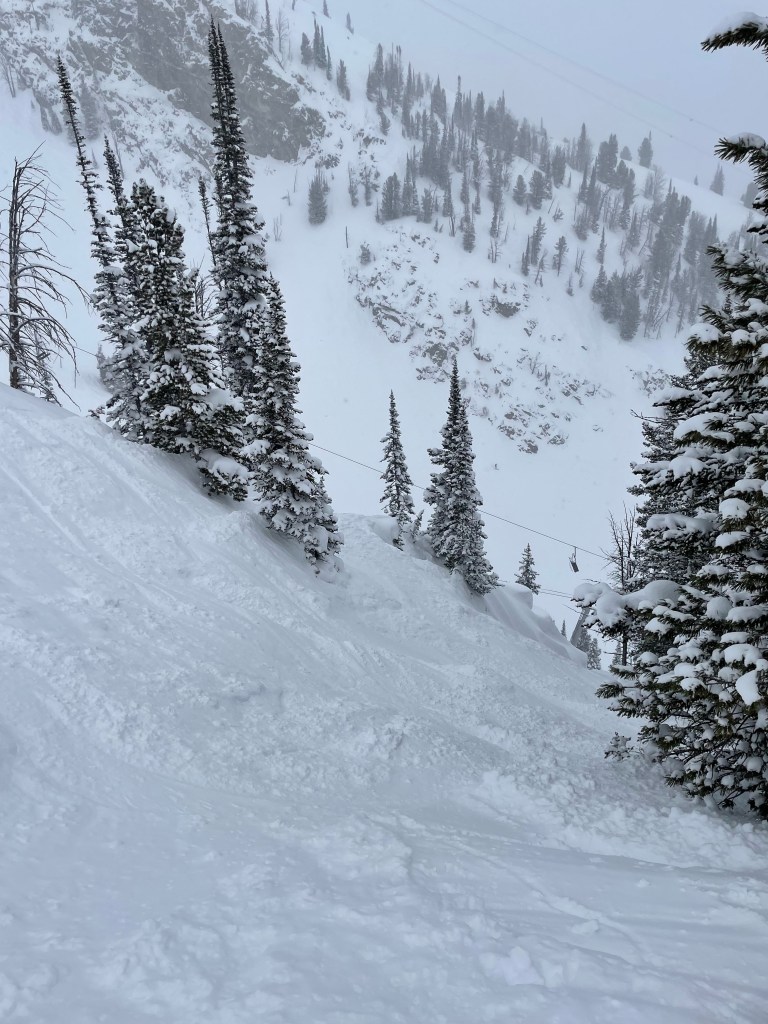
Skiing steeps is thrilling to me. Like most difficult acts in life, the start of a steep run is always the most challenging. The top part is usually the steepest, often so steep you can’t see the slope below, so dropping in is always a good test of faith, in yourself or, if you have one, a higher power. Once you’re in there’s no turning back. Everything becomes easier when there’s no choice, and there’s comfort in knowing that the difficult decision is now behind you. Life is littered with challenging blind decisions that, once taken, open up a panorama of possibilities previously hidden from view.
Skiing steeps feels a bit like flying, or at least what I imagine flying to be (my only experience being a fast solo parachute drop from a small prop plane). The earth falls away below your feet and the sky is right there in front of you, the empty air pulling you forward. The views are spectacular, the drop off surreal; Nature imposing, beckoning, threatening, nothing on a human scale, humbling and uplifting. And with the first turn, skis connecting with the snow as if for the very first time, a unique combination of steepness, snow density and quality, mixed in with your own momentary feelings of fear and exhilaration, you commune with it all, realizing how special, how privileged, this all is.
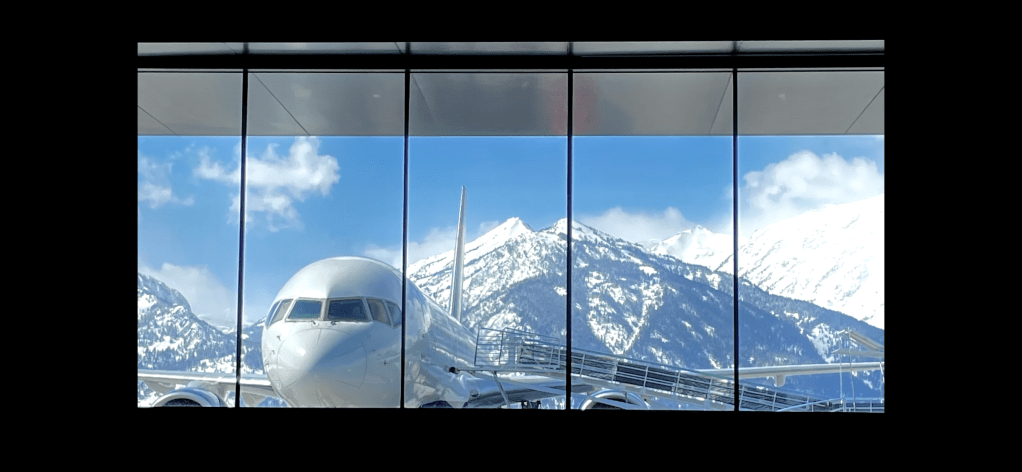
The thrill of the steeps brought me to Jackson Hole, Wyoming, to ski Courbet’s Couloir for the first time, considered the most difficult marked run (ie, not backcountry) in North America, featuring a very steep drop into a very steep un-groomed run framed by very steep rocky walls. All quite dramatic!
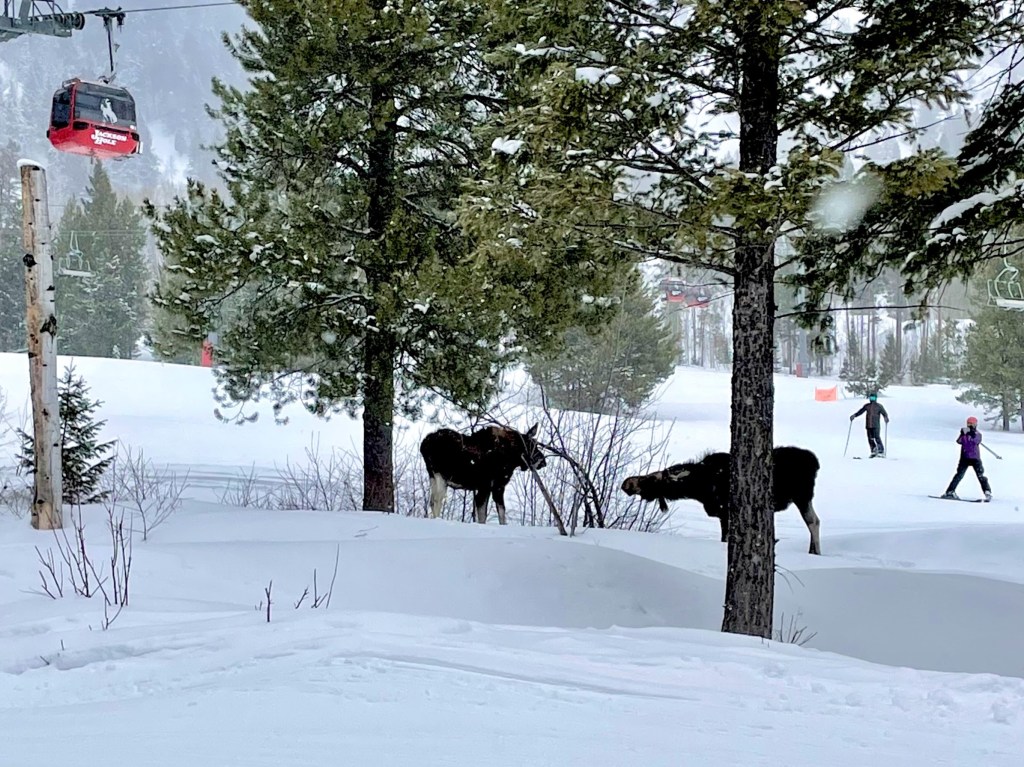
Jackson Hole is a ski town masquerading as a cowboy town. It is easily mistaken for the real American West, where moose roam and you’re encouraged to pack bear spray, steaks are named by their ranch of origin, and check shirts are everywhere. But the best restaurants are Italian, goat cheese is served slope side and you can find an Aperol Spritz pretty much anywhere. I’ve visited once before, attracted by its reputation for big mountain skiing and high quality snow. I personally consider it to be the best skiing experience in North America.

And this is what happened at Corbet’s. The drop-in changes throughout the season based on snow conditions. It is often closed because of unstable snow, so you need to be ready when it opens. You don’t get much of a chance to equivocate; other’s are waiting to follow you down or spectate. The experience feels rushed. The initial drop is a fairly vertical two stories, ending with a sharp turn at the bottom that blasts you onto the top of the slope, hidden from view until just then; a desperate fight to stay in control and another fast turn to avoid the rock face directly in front of you; one more turn to shave off some speed, and you’re already one quarter of the way down the run and can look up to see the waving crowds at the top. Then you quickly clear out to make way for the next hapless skier who might come flying at you with all manner of sharp instruments. For an idea of how the pros do it, check out this year’s Kings and Queens of Corbet’s.
For all the challenge, beauty and self-aggrandizement of Corbet’s, there are much better runs backcountry, and to find the best of those I headed to Valdez, Alaska, where the powder is deep, the slopes are steep, and the lifts are helicopters. Valdez is the pinnacle of heliskiing, offering the world’s best snow and steepest terrain. You might find better elsewhere on occasion, if you’re lucky, but never so consistently on such a vast scale. There’s a reason the place is fully booked a year in advance and that most of the skiers are repeat visitors. And there’s a reason they were the most passionate group of skiers I had ever met.
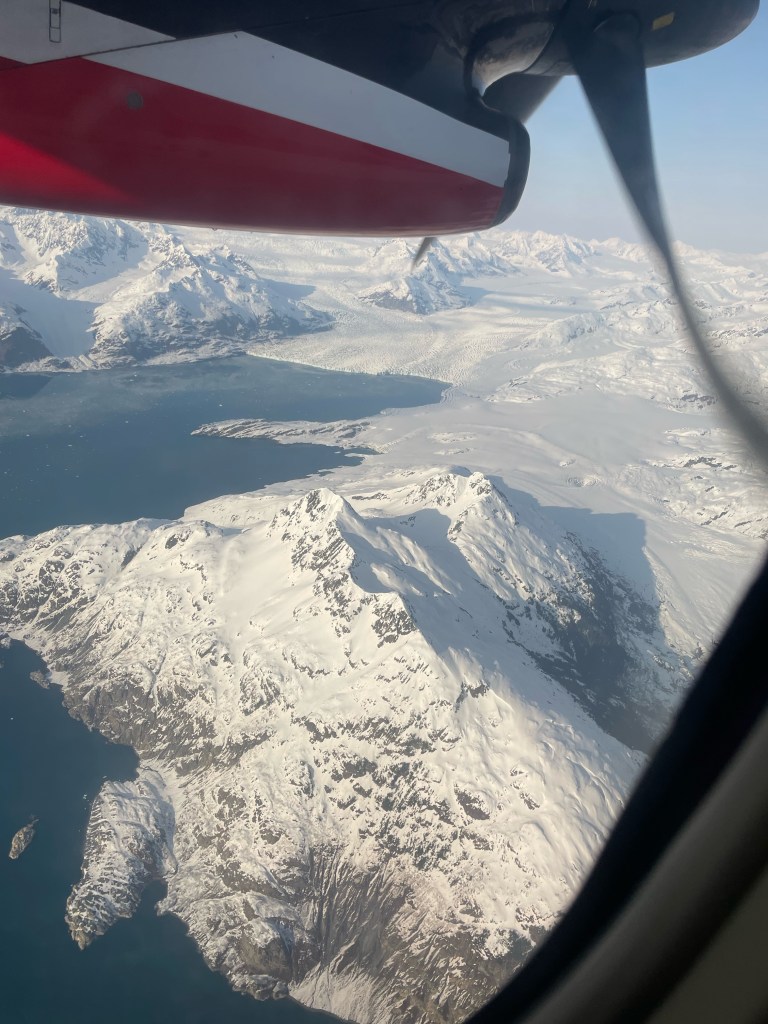
There are a handful of operations in Valdez, but Valdez Heliski Guides is the original and most reputable (a good thing when you’re operating helicopters in frozen moutainous terrain). They take 32 people divided into 8 groups of 4, the number that fit into a helicopter, with a guide and pilot. Most people stay a week, but some more because bad weather can keep you grounded several days at a time. One skier I met had skied a total of one day during his previous two visits. Another had returned six times.
It’s not easy skiing. The guides are there for your safety and excitement (in equal measure), not for instruction. They assume you can and will ski anything. They expect that you will have already skied that season and they ask where and for how long (hence my preliminary trip to Jackson Hole). The skill level was impressive, with most of the skiers living close to ski resorts (Boulder, Tahoe, Jackson, Vermont). One skier clocked up 100 days of skiing… each year! I felt a little under-prepared with my average 5-10 days a year. My sister, who accompanied me and skied everything the others did, was even more impressive with her average 2-3 days a year. (Thank my mother for the many years we spent in ski school!)
Majestic, infinite, out of this world, are words that come to mind when reflecting back on the experience. Along with scary, unbelievable, and best ever. Some memorable moments:
- Military-style precision coordination to load and unload the helicopter safely and quickly.
- Attempting to land a helicopter on a mattress-size ridge, and failing, and then trying again on an even smaller ridge, and succeeding.
- Putting your skis on over a wind-blown cornice with no room to move and no way to see the slopes on either side, only the flat, featureless white valley a thousand feet below. Doing that many times.
- Watching a teammate step out of the helicopter and slide slowly but helplessly down the spine with nothing beneath him, until his boot catches a rock and he’s returned to us alive (you are at your most vulnerable when your skis are off, which is exactly how the founder of this operation, a veteran extreme skier, died: https://en.wikipedia.org/wiki/Doug_Coombs).
- Perfectly even, silky, knee deep powder on 50 degree slopes, alone with only the sound of your breath.
- Sluff management, so you’re descending at about the same speed as the snow you’re dislodging, giving the impression that the entire moutainside is moving with you.
- Finishing a thrilling ride with miles of easy snow-covered rolling hills, untraced, unmarked, unbelievably pristine.

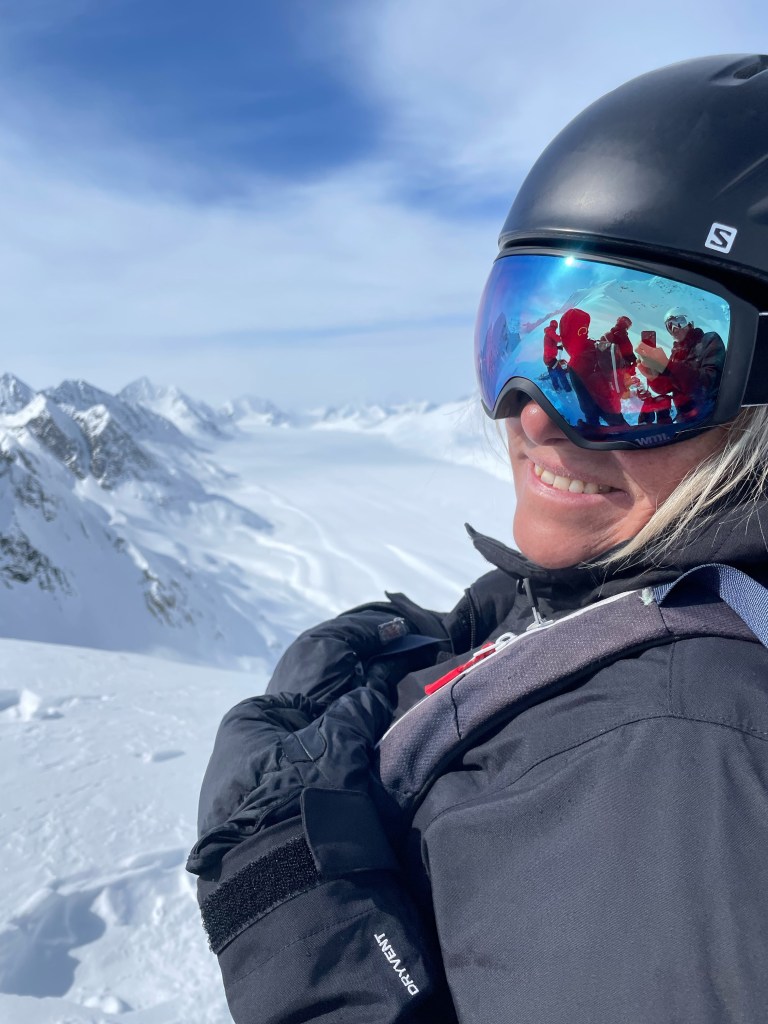
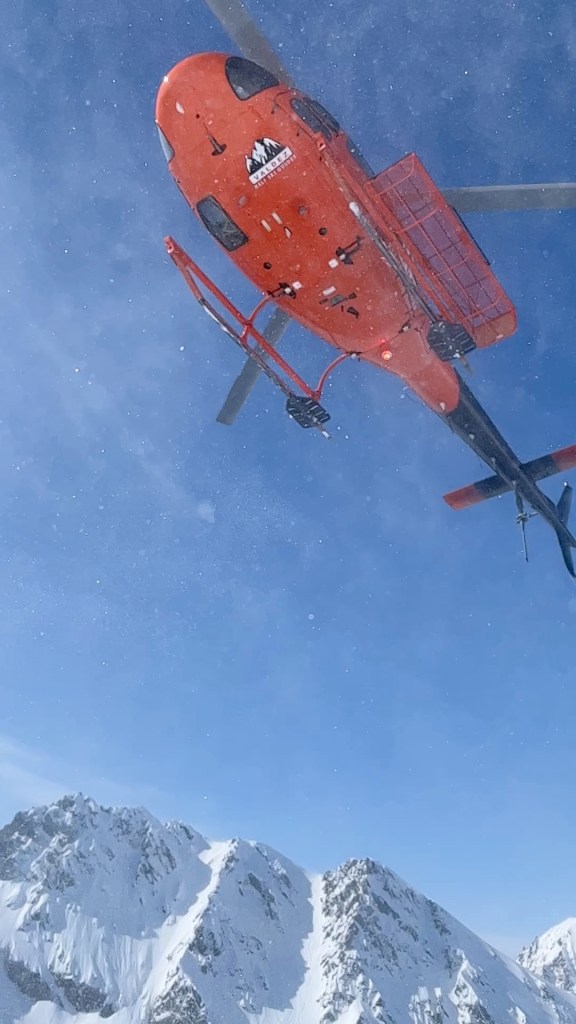
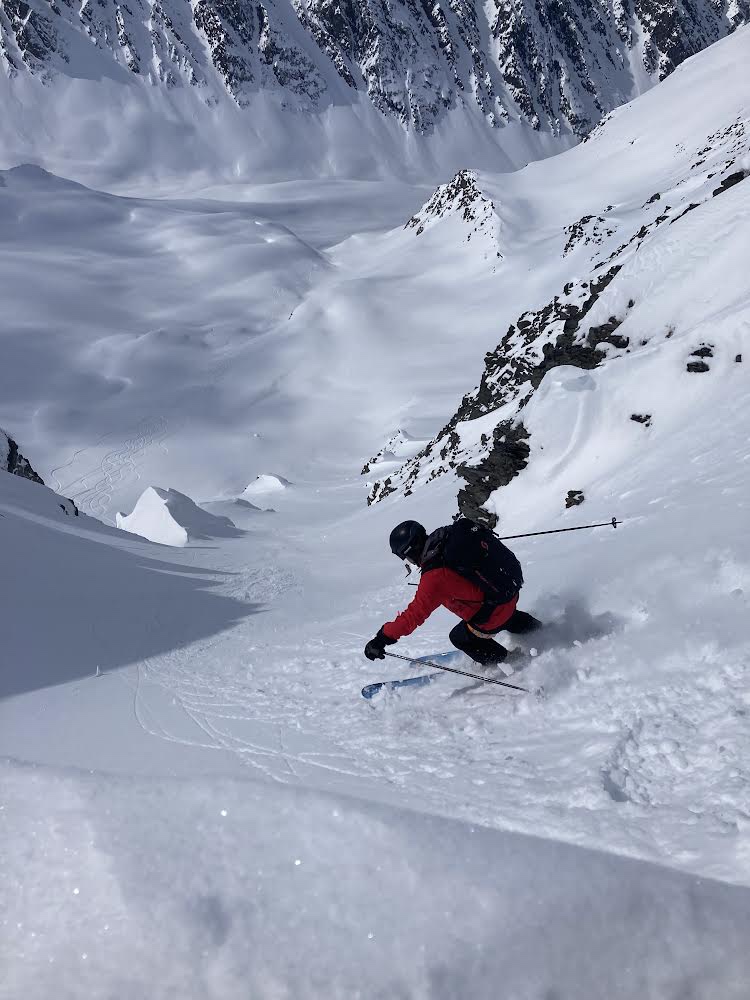
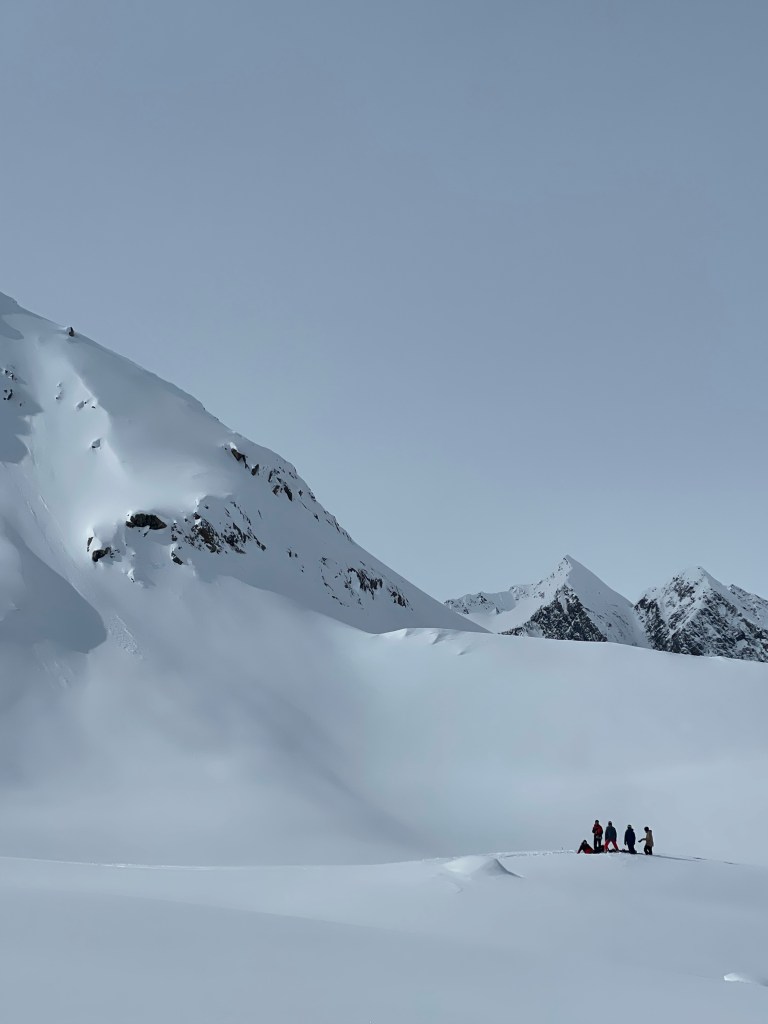
In the end, we were lucky. We flew five out of seven days, completed 21 runs totaling more than 60,000 vertical feet (18 km), never skied with more than four other skiers, and enjoyed the best snow on earth.
 F4 Plus