I’m back! After a two year break, almost to the day, I was ready for the next stop on my windsurfing tour. If you missed the first part, here’s the overall plan and I went as far as Hawaii. Next on my list was the west coast of Europe. (Most of the pictures are for illustration purposes and a credit to others.)
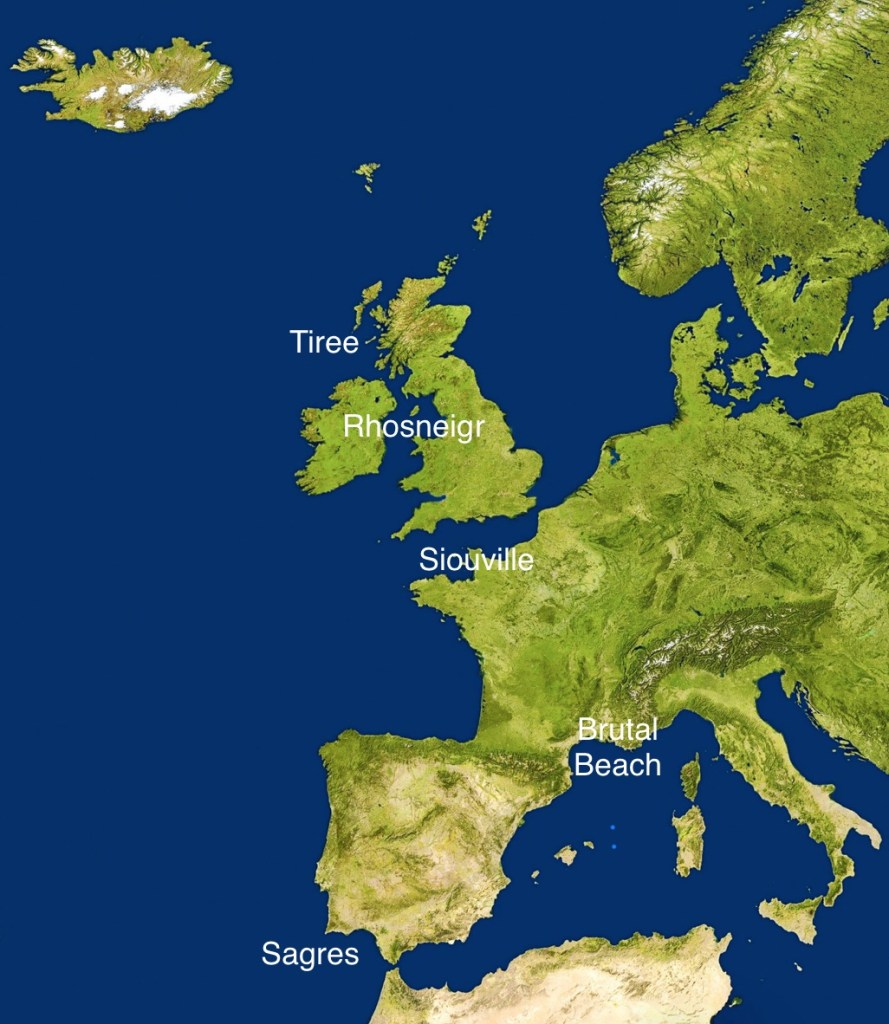
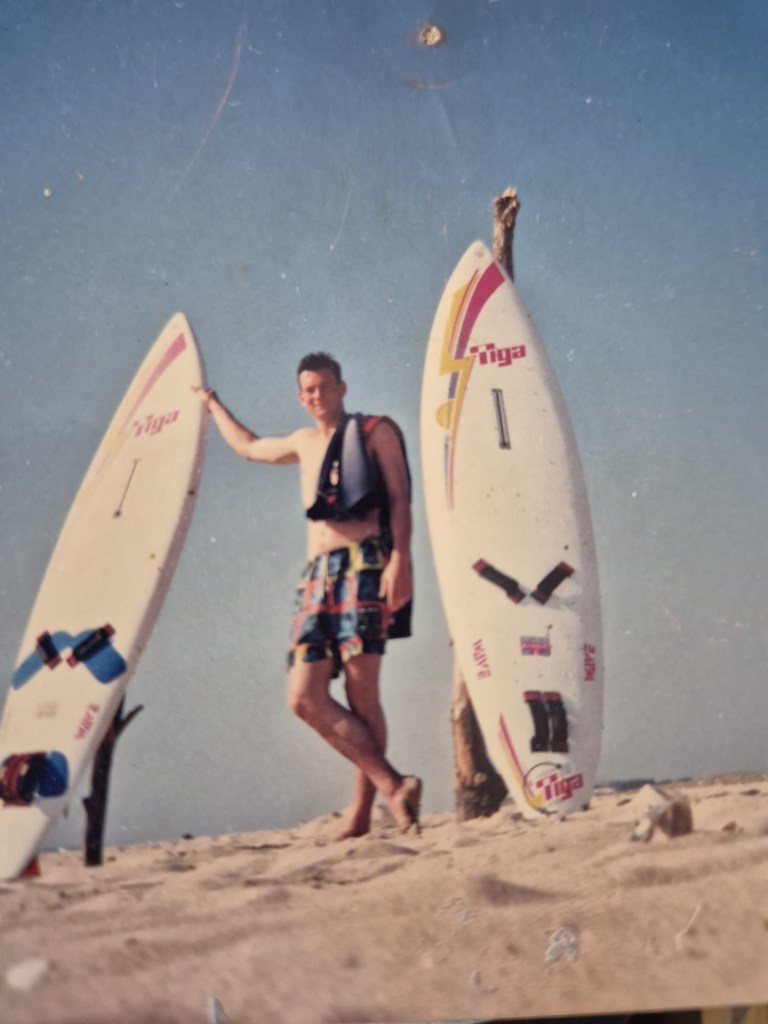
I learned to windsurf on the south coast of England and spent four years of university in Paris, so I was already familiar with that part of the coastline. I have sailed pretty much every reputable windsurfing wave spot (here’s a reminder of what that means) from Land’s End at the tip of Cornwall to Wissant at the top of France, all the way to Cherbourg at the end of Normandy. It was years of sneaking out between school and work days for cold, grey, stormy sessions, separated by long windless spells spent dreaming of the perfect places I would prefer to be windsurfing, the same places I ended up sailing two years ago.
But the west coast is much bigger than that, stretching from northern Scotland to southern Spain, and there were plenty of legendary beaches I’d not seen or sailed. And so one very hot August morning, I packed my car with everything I would need for the next two months (mostly my windsurfing gear) and headed north from Italy.
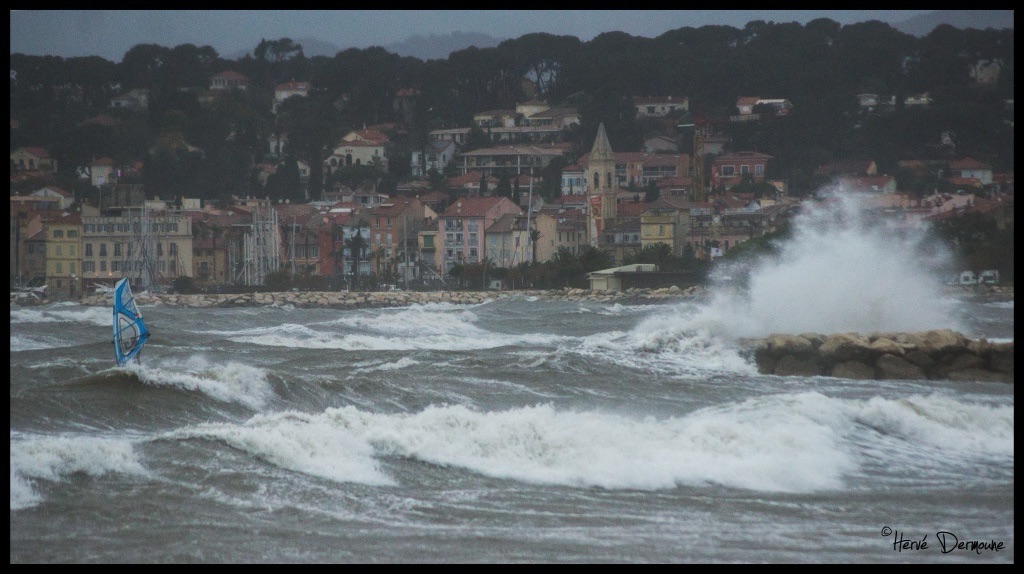
My first stop was to sail with a friend at a famous spot on the French Riviera nicknamed Brutal Beach, for good reason – it’s officially Six-Fours but has enough of a reputation for Google Maps to recognize the nickname as well. I hadn’t sailed with my friend Patrick or at that beach in over 35 years, so it was nice to catch some waves together and catch up! We managed to squeeze in both a windsurfing and surfing session on the same day.
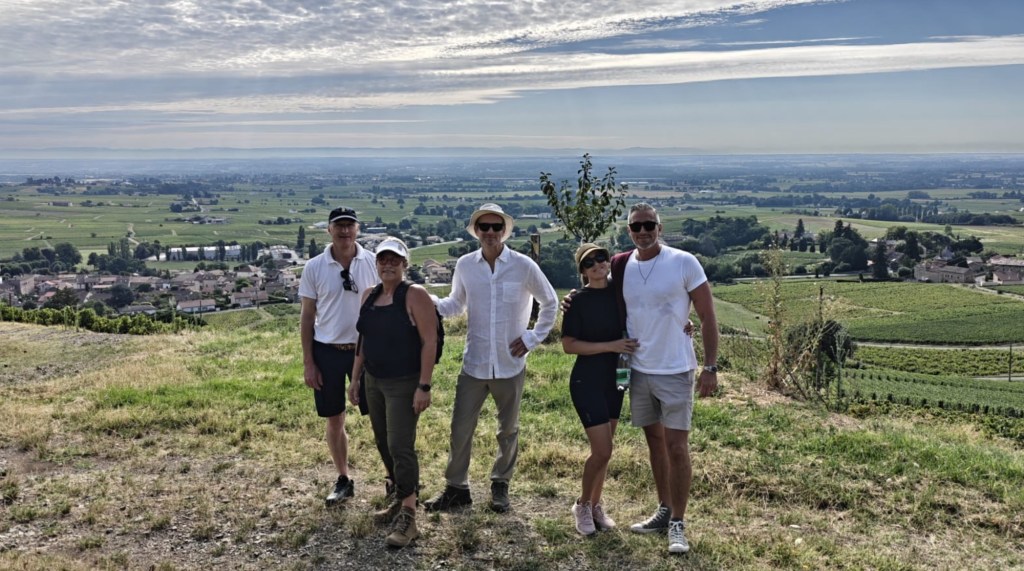
My second stop was a few hours up the road in Beaujolais where I joined my sister and brother for a wine tour weekend. If you’ve been paying attention to my vagabonding, there’s a suspiciously tight correlation between good windsurfing regions and good wine regions (California, Chile, Western Australia), which I think is exactly as it should be.
I was finally ready to officially start my west coast trip and I drove south 18 hours to reach Sagres in Portugal, the point furthest west in Europe that used to be known as fim do mundo (the end of the world). Sagres is mainly a surfing town (actually more of a big village) jutting out into the Atlantic and surrounded by small rocky coves enclosed by high cliffs. The waves are permanent and can get very big. The famous big-wave spot you might have seen on TV called Nazaré is only a couple of hours drive north.
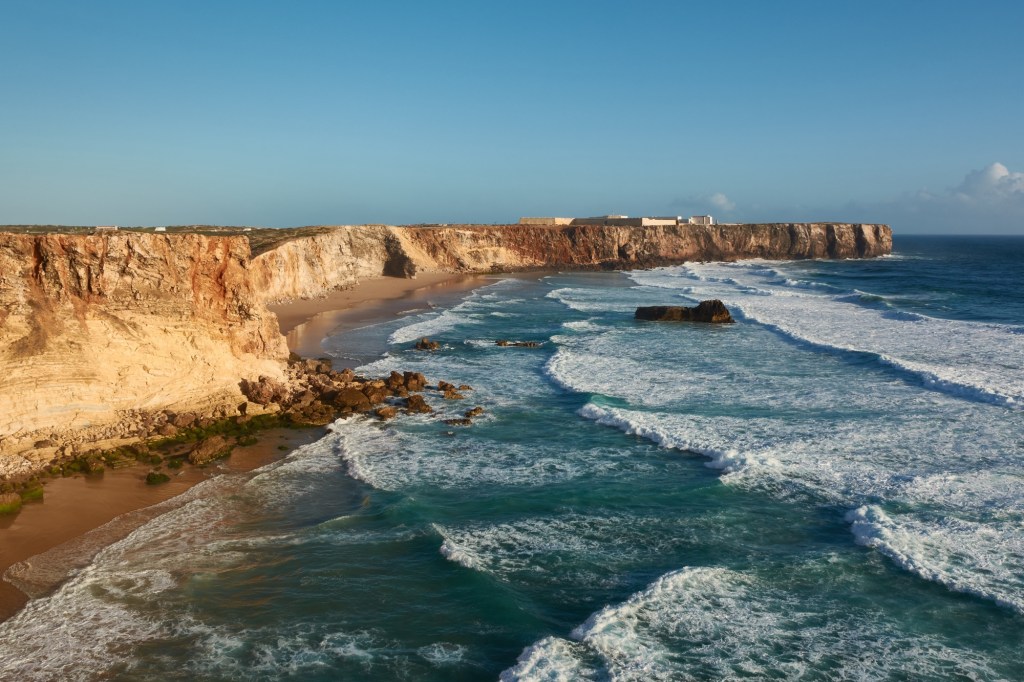
Sagres also gets windy in summer as it benefits from one of those magic thermals created by the cold ocean air pushing inland to replace hot air rising over the mainland, so windy in fact that it drives the non-surfers away, which makes it a very chill and relaxed place, even in the middle of August when every other beach town in Europe is packed. Another feature is that the temperature rarely rises above 27C (85F) due to the chilly water. So while Amalfi, St. Tropez and Malaga were sweltering in a record-breaking heatwave, I was wearing my hoodie to dinner.
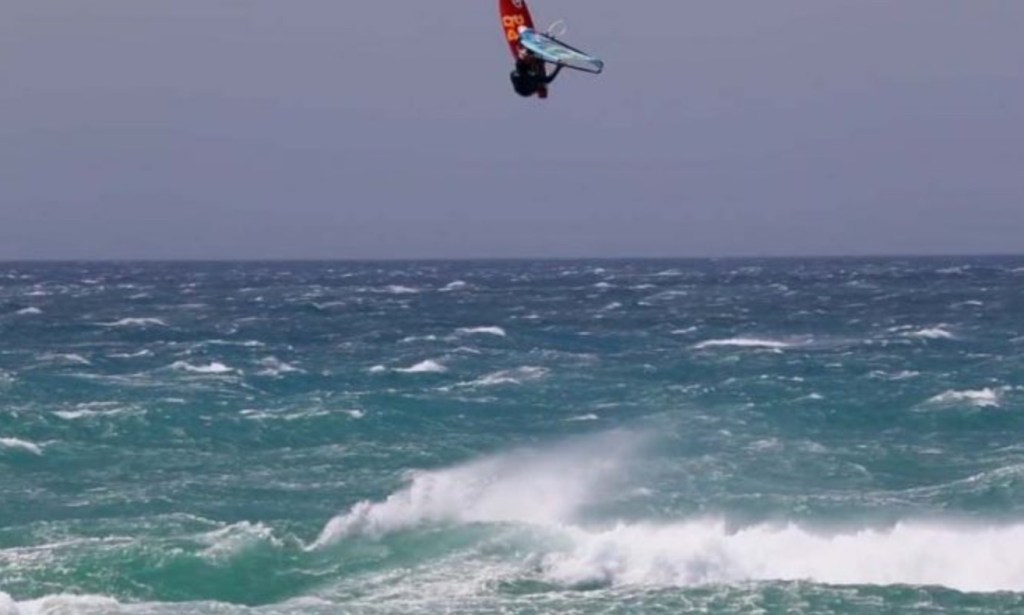
From a windsurfing point of view, I think the current #1 wave sailor in Britain said it best: “Well it’s a bit tricky, mate.” Indeed it is! The sailor in question is Ben Proffitt and he lives there full time now. My best friend, the very one who taught me to windsurf when I was 12, owns a place near Sagres and knows Ben, so he introduced me while we were reconnoitering Tonel, the local wave sailing spot. That day, Ben was sailing with Marc Paré, who placed first in the latest World wave sailing competition (so he’s currently the best in the world!), and he’s the very same pro that I had the fortune to sail with ever-so-briefly three years ago in Chile (read the story here). If you’re getting the impression that the windsurfing is a small world, you’d be right.
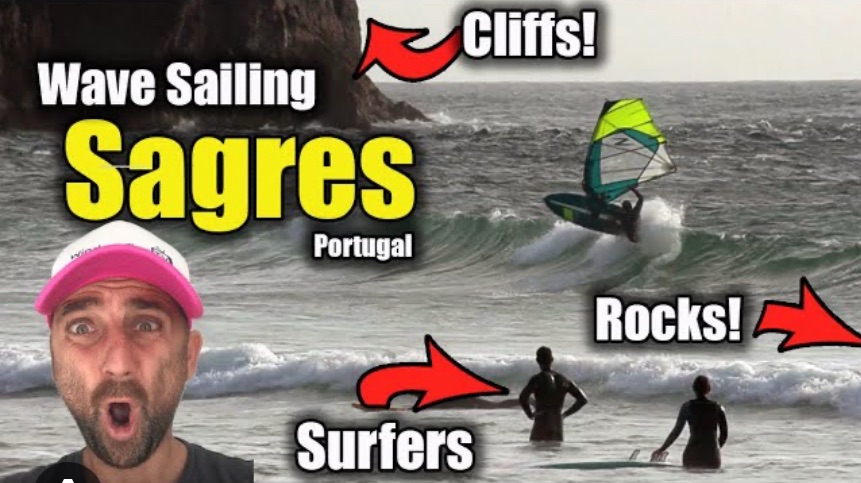
Ben Proffitt introducing his new home spot (video)
I eagerly introduced myself to Ben and Marc (he did not remember me, but later, over coffee, we compared notes on our favorite sailing spot in France, so maybe he will next time) who were soon back on the water showing my friend and I what real windsurfing looks like, even when the place is tricky.
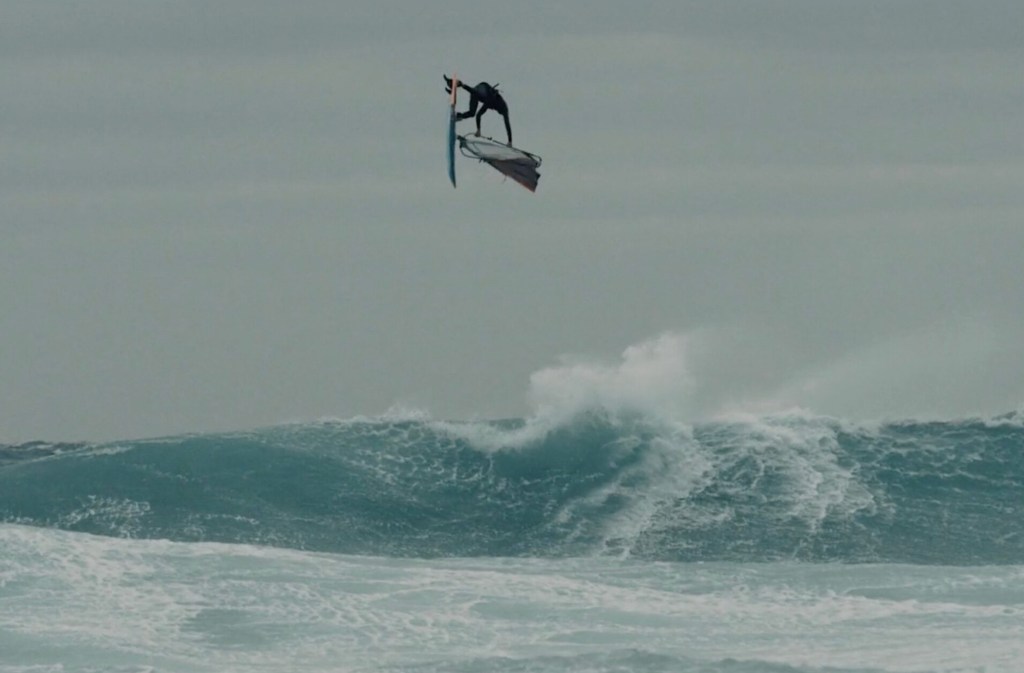
What makes Sagres tricky are those high cliffs, which effectively block the wind. So it might be blowing 30 knots above, and the clouds are flying by but there will be nothing at sea levels, just as a wave comes bearing down on you. And then suddenly a 30 knot gust comes out of nowhere to flatten you, and then nothing again, and repeat. So if you can catch a wave at the same time as the wind blows, but not so strong that it blows you off the wave, it can be quite fun. Otherwise it’s just very hard work.
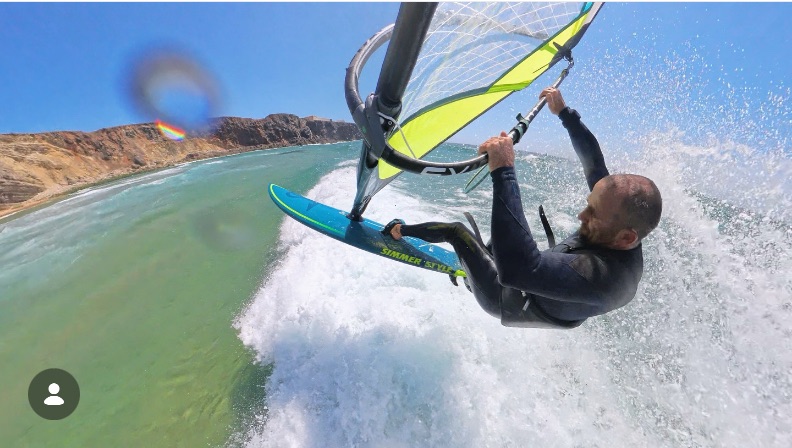
Still, after a few sessions, you learn how to anticipate the gusts and relax during the lulls, read the waves and even catch a few good ones. Tricky also means that there aren’t a lot of windsurfers out, four at most, and kite surfing is banned because the gusty conditions are too dangerous. Which is fortunate, because the other tricky part is that the wave is quite short, sandwiched between two imposing rocks, room for only three, maybe four turns. And while the windsurfing is tricky, the surfing is actually quite easy, so the waves are crawling with surfers, mostly beginners because it’s mid-summer, which makes for quite an obstacle course as you come barrelling down the wave on a windsurfer.
In three weeks I only managed five days sailing at Tonel. There was no wind for one week and the waves were too big for another week. Not as big as in Matanzas (read the story here), but Tonel doesn’t hold a big wave well and tricky quickly becomes suicidal.

I also made a quick trip to Spain to sail Caños de Meca, a noted wave spot a little bit North of Tarifa on the Gibraltar Straits, known for its very, very strong wind (the straits are a massive wind funnel) which, legend has it, moves rocks and makes the locals mad. Perfect for us windsurfers.
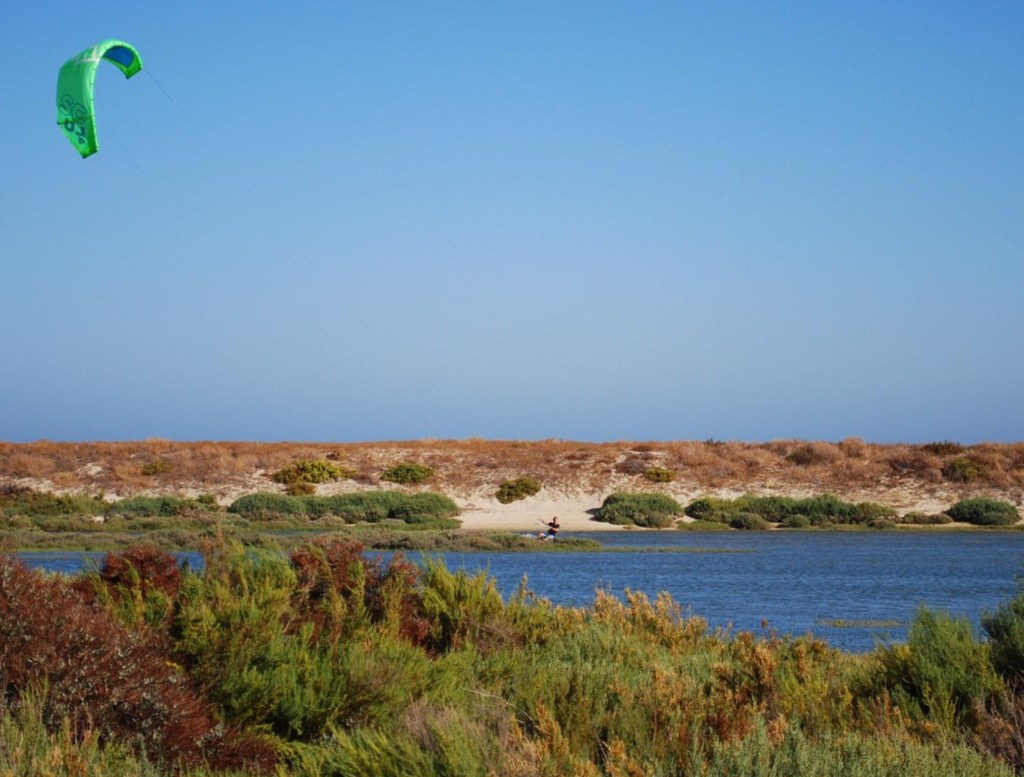
Still, there were plenty of other things to do in the area. I bagged a few days of speed sailing with my friend, at a nearby beach where the wind blows directly offshore (from the land), which means totally flat water (no chop). Sailing fast in a straight line is a completely different discipline to wave sailing, with different equipment and skills. I’m not particularly good at it, though I benefited from a recent training camp getting ready for the world’s biggest speed sailing contest, the Défi Wind (a story for another day). My friend was passing 30 knots (35 mph or 55 kph), which was impressive to watch. I was happy practicing my flat-water turns. We also managed a couple of kitesurfing sessions a short beach-buggy drive away from his house, on a beautifully wild part of the coast (August, gorgeous beaches, sunny and warm, and barely a soul).
There was also surfing, lots of surfing. I’m a convert since Waikiki (read my mea culpa here) and the more I learn the more I get the attraction. Forget the arm-wrenching pain of paddling through whitewater, the endless frustration of watching better surfers catch the waves you can’t catch, the humiliation of bailing on the few waves you do catch, and the measly five seconds that even a good ride will last; when you take off just right, pivot straight into the curl and see the wave unfold in front of you, it makes everything all right again. So I also had fun surfing Sagres, until my very last day there, when I caught the board right between the eyes, leaving a new scar to remember how much fun I had.

Sagres is pretty special in summer: the climate, the wind and the waves, beautiful nature, wild enough but not desolate. Definitely a place I want to visit again, hopefully an annual pilgrimage. And the best part is that my friend lives there, and that’s pretty special too.
 F4 Plus