From the time I started reading about windsurfing in magazines, Cape Town was a mythical destination for wind and waves during the cold European winters. It seemed that everyone who took windsurfing seriously managed to scrape together enough time and money to make the trip, returning with stories of perfect conditions. It was on my original tour plan and this January, when even the water in Italy was freezing, I packed up and joined a group of fellow windsurfing fanatics to explore the best Cape Town had to offer.
The trigger for the trip was meeting Ben Proffitt, top UK pro windsurfer, in Portugal last summer. He said he was running a series of wave sailing clinics with his buddy Colin Dixon, an ex-pro himself, in Cape Town this January, and that he might have one space left, or maybe not. They were a hot commodity. I signed up immediately!
The plan was to spend 15 days, enough to guarantee at least a few days of wind and make the 18 hour flight worthwhile (but no change in timezone, which is nice). I ended up being in the water 11 days, and only because I caught a flu and was too ill or tired to get in the other days. That’s how good the place is!
Traveling with windsurfing equipment is always a challenge. It’s too much to carry for one person alone, and too bulky to fit on a luggage cart, so it takes a bit of sweat and balancing to make it from the car park to the check in counter, and a lot of apologising to the people waiting to check in for taking everyone’s space and time. Still, everything arrived safely and I was able to get it all into a VW Polo rental (basically a small Golf), feeling very young again to be vagabonding with nothing but the basics. And also relearning how to drive a stick shift on the left hand side of the road.
The wave sailing clinic was 7 days long and I had a couple of days before it started. My flight arrived at 5am and I was tired from the overnight flight and disoriented from being somewhere really new and exotic: South Africa! I couldn’t check in until later that afternoon, so I drove. North a bit to where I was going to be staying, from where you get the best views of the famed Table Mountain, and then south, through Cape Town (disappointedly, just another big city) and onwards towards the Cape of Good Hope, only a few miles away and the last bit of land before Antarctica.
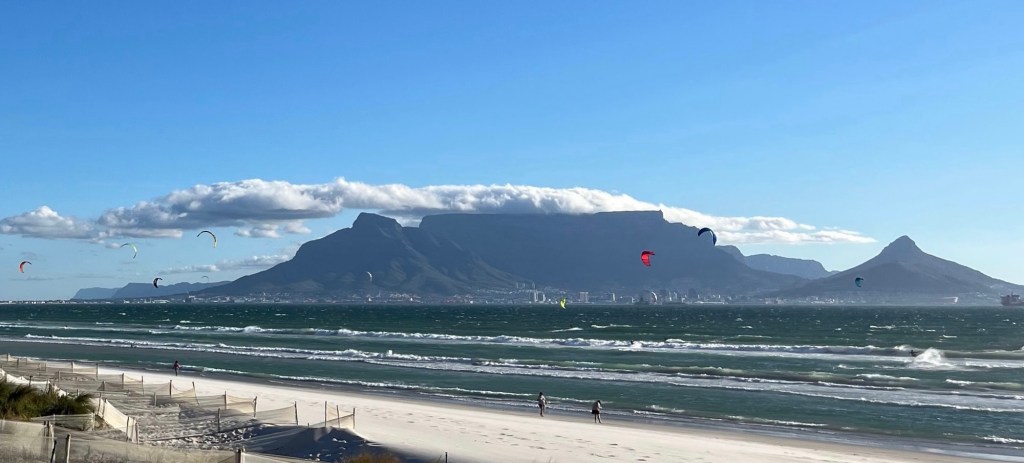
The nature in Africa is incredible, awe inspiring, beautiful. I was fortunate enough to have done a sightseeing safari in Tanzania and I was gratified to find the same type of vast landscapes and infinite skies here, and some of the same wildlife too, but more on that later. I was also heartbroken to find the same type of economic inequality and social injustice. To put it crudely and far too simplistically, the blacks are horribly poor and the whites keep to themselves. You only have to drive a few miles to go from rundown shanty town where not a white face can be found, to manicured gardens surrounded by electric fencing where the only blacks are doing manual labour. I know the history and I’ve read about the improvements that have been made, and I was still shocked.
It felt like I was taking advantage of the situation, staying in the nice part of town, benefiting from the cheap services (because of the cheap labour), enjoying the beautiful beaches, all on the backs of the terribly, terribly poor. It felt wrong and my excuse was that I was bringing tourist money to the local economy, which I guess is better than not going at all.
So back to Day 1. I’m driving south and the wind forecast isn’t great. Table Mountain doesn’t have its famous shawl of white clouds that indicates strong winds. And yet the further I drive south, hugging the mountainous coast, the more whitecaps I see on the ocean. Whitecaps and glorious waves. Waves longer than I’d ever seen; big, clean waves of almost turquoise colour plumed with white. Absolutely breathtaking. I got used to the view real quick because it’s basically like that up and down the coast for hundreds of miles!
I was aware of a few good windsurfing beaches from reputation. When I drove into Scarborough, a small, charming, central California-like surfing village, I couldn’t resist the urge to check out the local beach. I found windsurfing paradise.
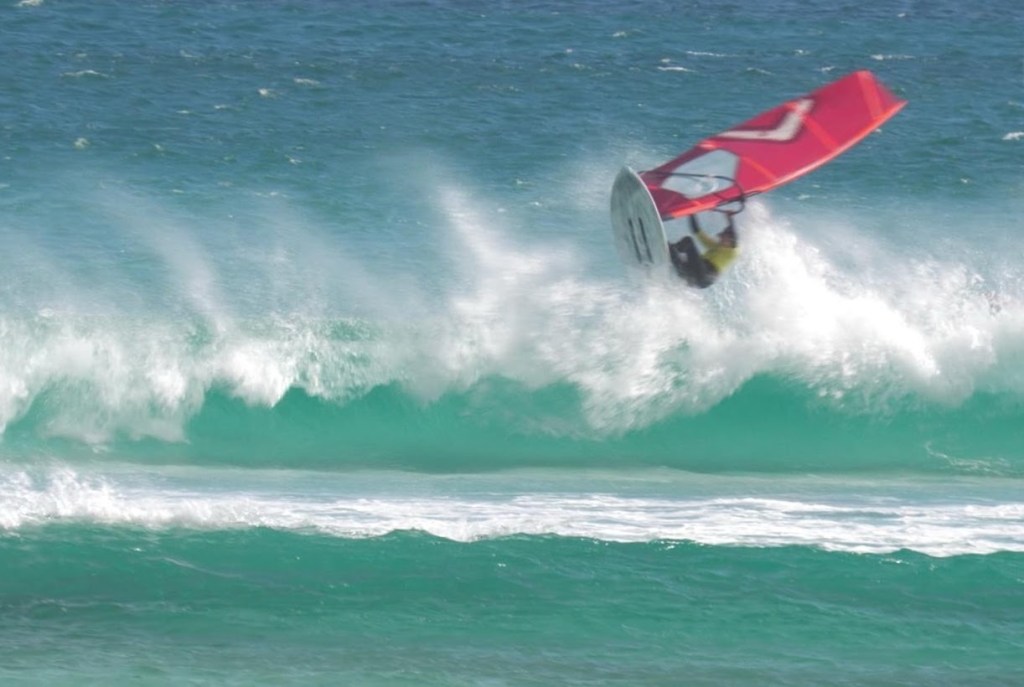
Start with the wind (always). Somehow, it was really windy here when the rest of the coast was quiet, something about the direction of the wind and features of the landscape. Windy and from the left, my favourite in case you forgot. And with perfect waves; clean, peeling, head high; big enough to be interesting but not so big as to be scary. A handful of windsurfers were out already, being watched by no more than a dozen beachgoers on the pristine white sand. The windsurfers were taking it in turns throwing massive aerials – a highly technical maneuvering that has you riding the wave towards shore and taking off on the breaking lip, throwing you high and forward to land on or in front of the wave. It was like watching a perfect wave sailing merry-go round. What more could I ask for?
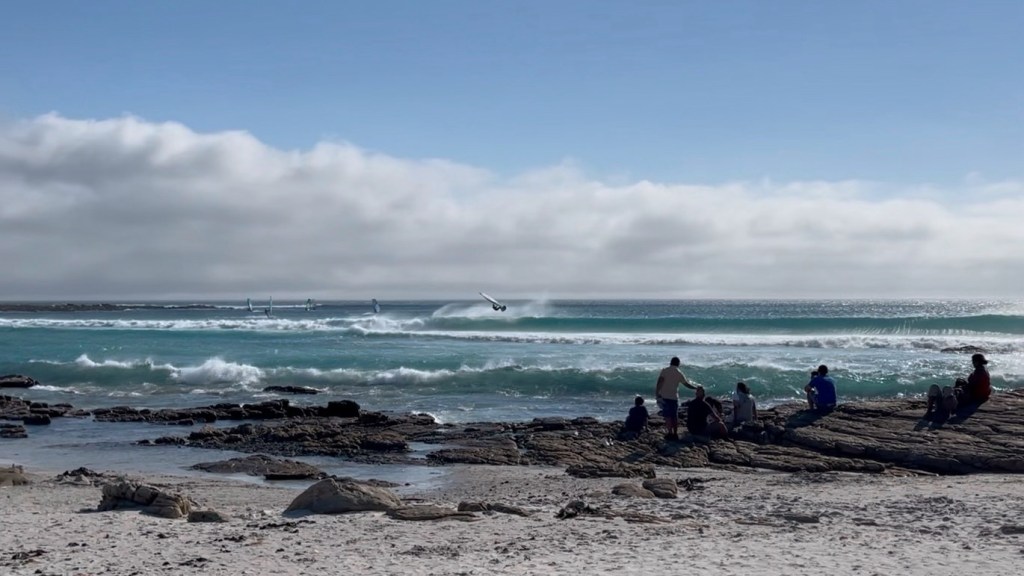
Well to start with, more sleep. I was genuinely tired from the trip, but this seemed like an opportunity that was too good to pass up, so I rigged.
Sailing for the first time on a new beach is always a bit scary. I’ve had many first times in some really scary places (huge waves, stormy weather, reef and rocks, locals with an attitude) so I’m getting used to it, but the fear is always there. Scarborough didn’t seem scary though. Aside from a promontory of rocks upwind and downwind, the main sailing area was all sand. The wave broke pretty much at the same place every time, about 50 meters off the beach, plenty of space to get enough speed to carry you over. Beyond the wave, the water was remarkably calm given the strong wind, because the wind was slightly offshore (coming from land) and the chop was smoothed by big kelp beds (a big floating seaweed common to the best California surfing breaks). So not much to worry about, so I launched.
The wind hit me like a truck. It was brutally strong. You couldn’t tell from the beach or from the state of the sea because the wind was basically blowing from land over the beach. And the wind was incredibly variable, alternating violent gusts with brief periods of nothing. Gustiness is usual for offshore winds, but this was like nothing I’d ever experienced. I was either holding on for dear life or balancing precariously to stay afloat. Unprepared, I fell in a few times before I even made it to the wave, which duly smacked me down.
The wave was super clean, but it broke fast, really fast, so to pass it cleanly you had to time it perfectly or deal with the mountains of white water it left behind. Of course, the inconsistent wind made any timing decisions useless.
Once over the wave, the gusts were even stronger, and the direction of the wind direction would also change in the gusts, forcing me to constantly change how I was trimming my sail. It was exhausting. And the water turned really cold, which didn’t help. You could almost feel the breath of Antartica. Not so perfect after all, but I managed to have a decent session in the end, getting used to the shifting winds and the fast waves, something the local windsurfers had clearly figured out over the years.
Later, when I sent Ben the picture above, he commented that Scarborough was a place where you had to watch your ankles. I thought he was referring to the rocks, but actually he meant that you can get such big aerials there that you need to watch your ankles on the landing. I’ve never done an aerial, at least not a proper one with real air. I got very close at Scarborough and it set me up perfectly for the “hit of the day” on the first day of the clinic.
I still had two days before the clinic started and the usual wind patterns were off, but as they say down here, if you’re willing to drive a bit, you can always find wind in summer (their summer, that is). So I drove a bit, 100 miles (160 km) north of Cape Town, to a place called Paternoster, because the forecast said it might be windy there.
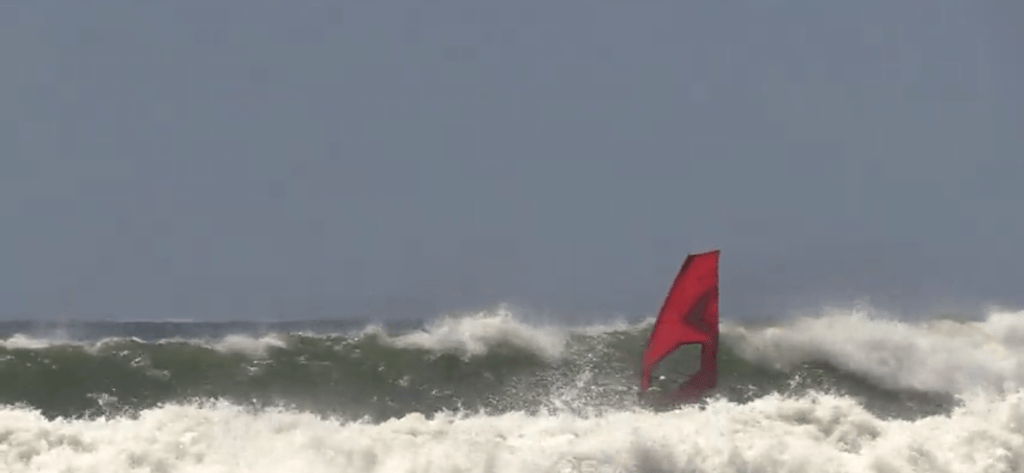
Africa is big, really big, and there isn’t much between towns, so the roads are straight, very straight, and usually empty and surrounded by what the world might look like without humans – pure, unadulterated nature in its infinite configurations. Hard to describe, somehow bigger, richer, more wild than the other open spaces I’d visited, like the American West or Australian Outback. It’s a wonderful landscape to drive through, calming, somehow more connected to the beginning of time.
Well it would be calming if it weren’t for the strange driving rules on these long empty roads. They are basically two lane roads, because it would be too expensive to build them wider for so little use, with only paint to separate the lanes, because anything more would be too costly too, and the speed limit is 75 mph (120 km/h), because the distances are really long. So they’ve devised a clever way to deal with the problem of overtaking. Keep in mind that each car is travelling at 75 mph, so they are approaching each other on opposite sides of the road at 150 mph or more, which makes timing the overtaking maneuver difficult and dangerous – especially in a VW Polo with no acceleration whatsoever. So what you do, is you get really close to the car in front of you, until they notice you. Then normally they’ll pull over to the side a little, so they’re traveling half on the road and half on the emergency lane. They don’t slow down at all; they just shift over. This leaves enough room for you to pass them, half on your lane and half on the oncoming lane. Brilliant! But with the following caveats:
- Any oncoming car has seen you and has given you the same space by shifting into their emergency lane as well.
- The emergency lanes on both sides don’t contain any emergencies or debris that needs to be avoided.
- No one tries to attempt the same overtaking maneuver in the oncoming lane.
And you have to work out all these possibilities by looking far, far ahead. It takes about 5-10 seconds to comfortably pass a car (no big American-size engines here), so that’s 1/4 to 1/2 a mile at 150 mph. That’s how far you need to be looking. Thankfully the roads are straight. It was stressful for the uninitiated, but I drove to Paternoster three times and by that time, it felt almost comfortable. It’s in fact remarkably efficient, with neither the fast nor the slow car changing their speed at all, just shifting a little left and right.
It’s on the road to Paternoster that I saw a giraffe. I had seen them on safari, but that seemed at the time like a big open zoo. This one was standing by the side of the road, looking down at my passing car, alone in the middle of the vast emptiness. Maybe it was waiting to cross, maybe it was lost. It didn’t look like there was anywhere that it came from or could be going. It was an awesome sight, so big and elegant, and wild.
South of Cape Town it’s quite common to run into baboons. At one point traffic was stopped while a troop of about 20 baboons lay on the road, oblivious to the cars. Road signs warn they are dangerous, so not to feed them or get out of the car.
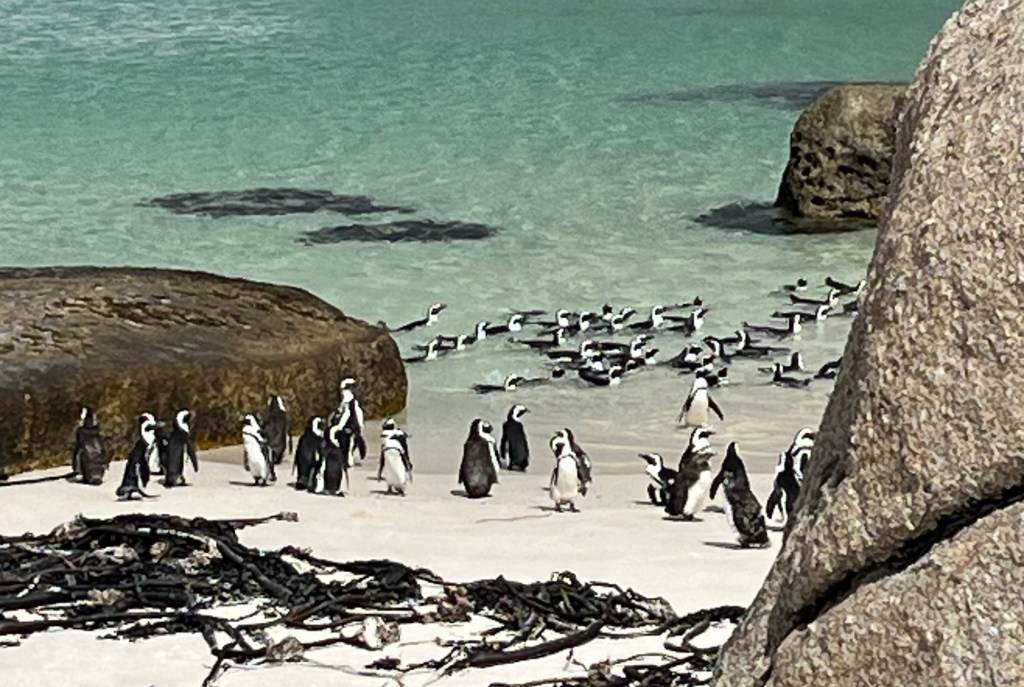
I was also treated to one of the rare penguin colonies outside of Antartica, a small colony that lives basically on one beach that has become an overcrowded sightseeing destination. Still, I joined the crowd and enjoyed the sight.
The wave sailing clinic was epic. Colin, who leads the coaching from the beach, and Ben, who provides on-the-water support, are both fantastic, backed up by years of professional experience and a real passion for the sport. They work very hard, coaching foremost, but also filming, editing, prepping, cheering, consoling… part sportsman, part manager, part therapist. I learned a lot and it will take me the rest of my windsurfing days to put it all into practice.
One of the many great things about sailing with pros that have sailed Cape Town for many years is that they know exactly where to go to get best conditions. What I had only read about, they had lived. And so we were treated to 7 out of 7 days of excellent wind and waves, from the (ant)artic waters of Platboom to wild winds of Melkbos.
They also knew everyone, or everyone knew them. It’s like the whole Cape Town windsurfing community reunites once a year for a couple of months, reliving all of the previous times and catching up on the latest adventures since then. Like being at your local beach, only on the other side of the world.
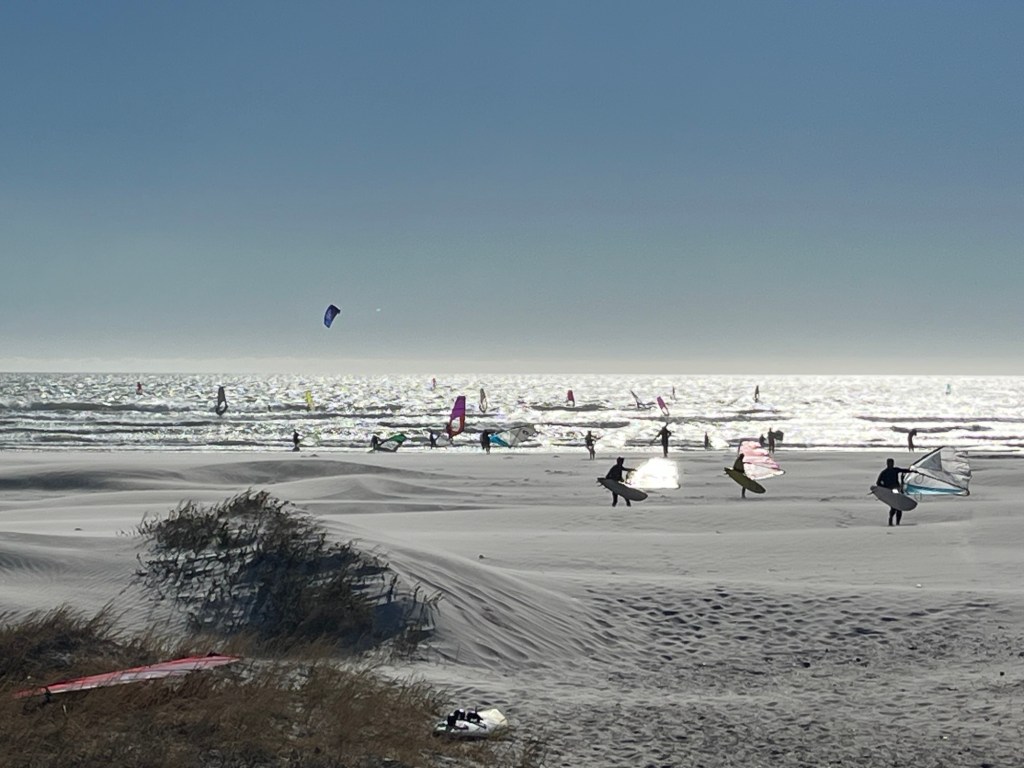
Cape Town is also a surfing town (actually, it’s mostly a kitesurfing town nowadays, with literally – I mean literally – hundreds of kites on the same beach at once – crazy!). On the couple of days when the wind wasn’t blowing hard enough, or I was too tired to chase it, I went surfing. Uncrowded, fun breaks abound and I didn’t have to drive far to find something perfect for me, a novice who is still getting their feet wet (as it were).
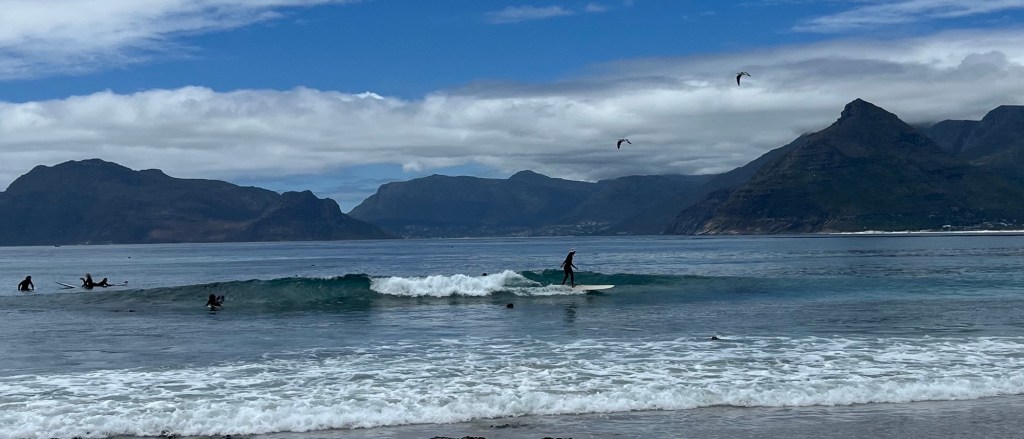
A pretty good trip then! Where next? From my original plan, I’m only left with a handful of spots:
- Ho’okipa, Maui, undisputed King of the windsurfing wave sailing spot, which I plan to do this May.
- Pacasmayo, Peru, longest rideable windsurfing wave in the world, which I plan to do in October.
- Mauritius and the Caribbean islands, which I’ve already done and have since lost their magic, or maybe I’m getting old. We’ll see…
 F4 Plus