On a gloriously sunny day in April 2025, my brother, sister and I skied La Vallée Blanche, a gentle 20 km (12 miles) long glacier run from L’Aiguille du Midi at 3,842 m (12,604 ft) to the receding edges of the Mer de Glace, in the Massif du Mont Blanc, France. Our chain-smoking 60-something guide led us confidently through the dramatic ice fields and deadly crevasses on an endless downhill glide that made up in beauty and scale what it lacked in challenge.
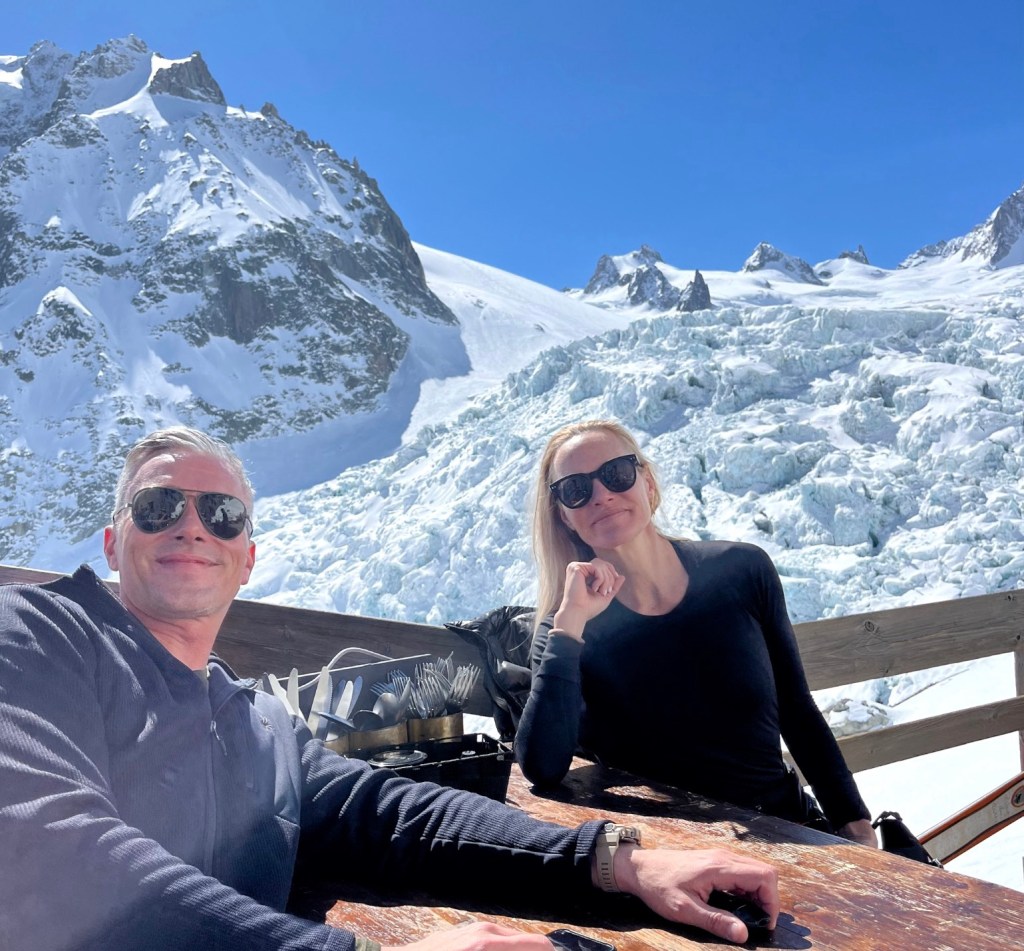
An allround alpinist, our guide had summited the Mont Blanc peak, at 4,807 m (15,772 ft) the highest in Western Europe (to not discredit the even higher peaks in the Caucusus, geographically European as well), over 100 times. He made it sound possible, almost pleasant. So I signed up to try the following summer.
I like long hikes, for the mix of solitude, gentle exercise and nature, so I thought that the Mont Blanc would be like that, just more of it. I was very wrong. Alpinism is literally being tied to others, crowding into refectories and dormitories, and enduring extreme physical and mental exhaustion, in an environment of stark snow, ice and rock that seems to reject life itself.
I picked the second week of September, late in the climbing season for tourists, with the risk of early storms, but timed so I could fit in a few of weeks of windsurfing in Portugal (now an annual pilgrimage). So I turned up in Chamonix with my car filled with my windsurfing equipment, and my climbing boots.
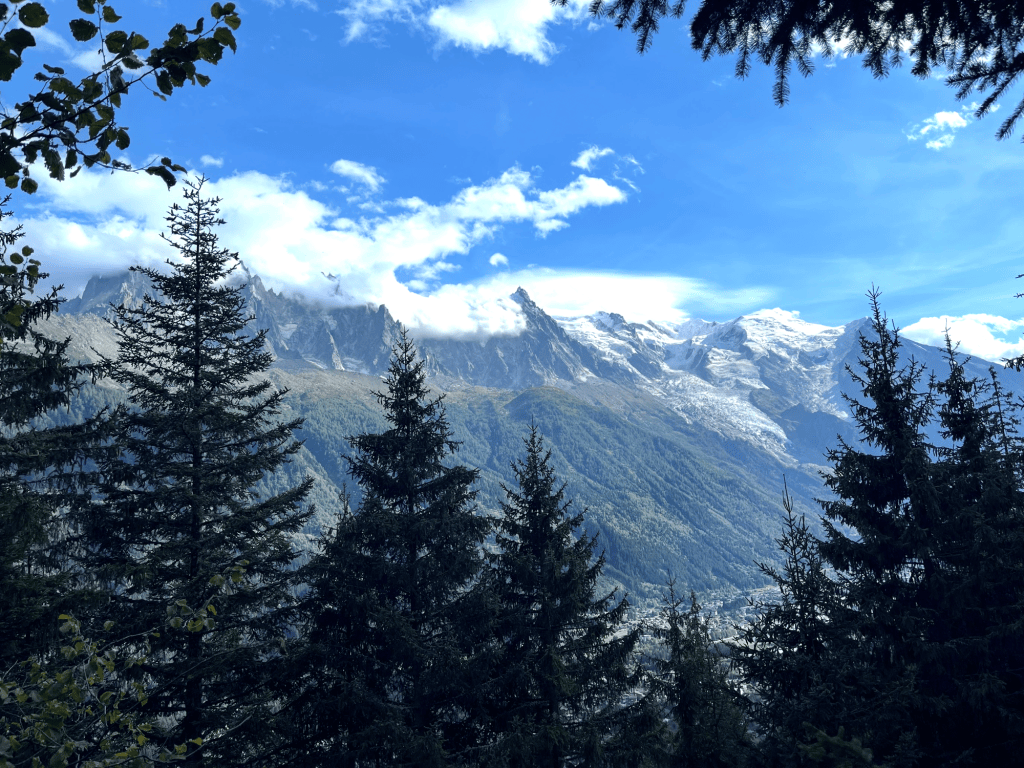
The trip was planned to last a week. I arrived thee days early to acclimatise to the altitude (wasted, because I was too low for too short a time) and do a little light hiking in my new boots (since I don’t hike that often and some practice seemed like a good idea). The guide company, Adventure Base (highly recommended), reviewed my equipment on the first evening and deemed it inadequate: wrong boots, insufficiently warm gloves, missing mid-layer, etc… I was out shopping late into the night, even resorting to renting the boots, which ended up being remarkably comfortable.
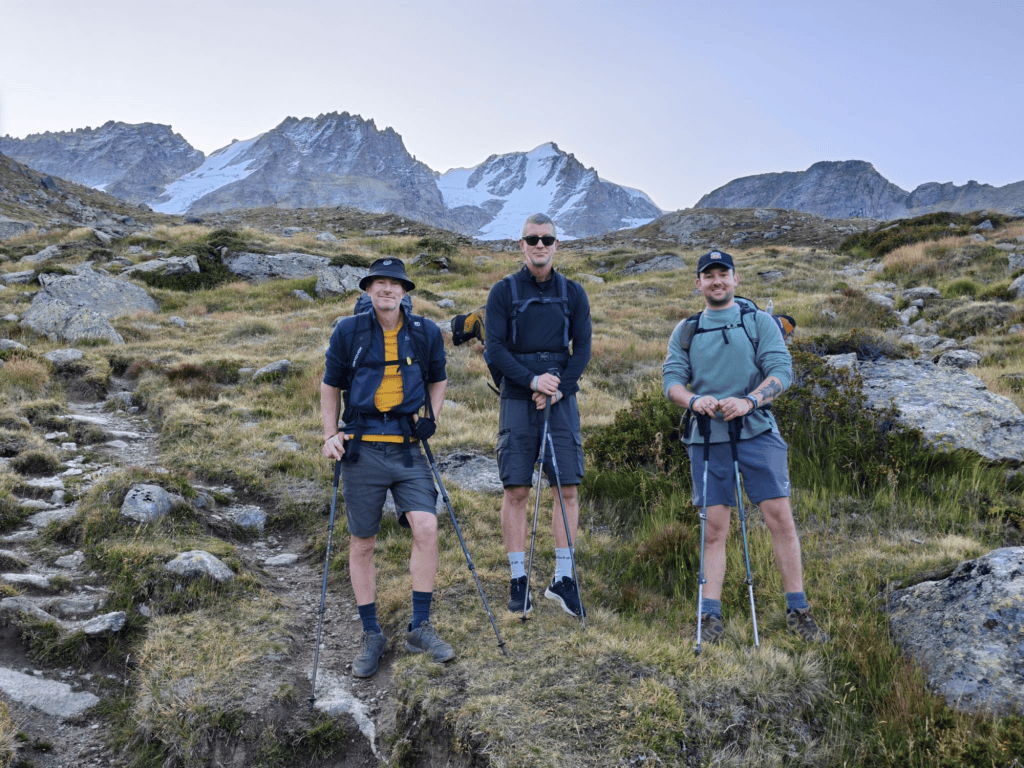
We were a group of three. The other two were both avid hikers, one in his late 40s with some mountaineering experience behind him, and the other ex-army in his mid 30s, both from England. Our assigned guide was in his late 50s and also the lead guide for the outfit, with the no-nonsense attitude and rocambolesque stories to match. The week was divided into three days of preparation and three days of summiting. We would also be assigned a second guide for the summit (the Mont Blanc has a two person to one guide limit).
The preparation was to climb to the top of Il Gran Paradiso in the Italian Alps, which, standing at 4,061m (13,323 ft), was no small feat in itself. I think the idea is that if you can’t make it up that, you have no chance on the Mont Blanc. Fair, but also brutal.
The first day starts early with a drive to the base and a brisk two hour hike to the mid-mountain “rifugio” at 2,732m (8,963 ft). It’s a 800 m ascent carrying all your gear: clothes, boots, ice-crampons, ice-pick, water; 15 kg (33 lbs) in all. We arrive early and enjoy the fine weather and dominating views. Dinner is shared with about 50 other climbers and then quickly to bed for a 5am start the next day. We’re able to secure a room for only the four of us, and there was running water for a shower. Both will be sorely missed at the next refuges.
At altitude on a clear night the air and stars are cold and crisp. It takes about 30 minutes to get ready, as I’m still unfamiliar with most of my equipment. The guide is ready on time and we’re off into the night, the thin light of my head lamp dancing off the rocky path.
Rapidly I go from too cold to too hot. We don’t stop, so I unzip and untuck what I can and continue. In 90 minutes we’re at the edge of the glacier and we pause to strap on the ice crampons and harnesses, and clip ourselves into the rope. The night is turning grey and soon the pink light of sunrise will illuminate the glacier. The timing is not by chance. I’m still too hot but now I’m worried about catching cold on the glacier. A lot about mountaineering is managing your body temperature.
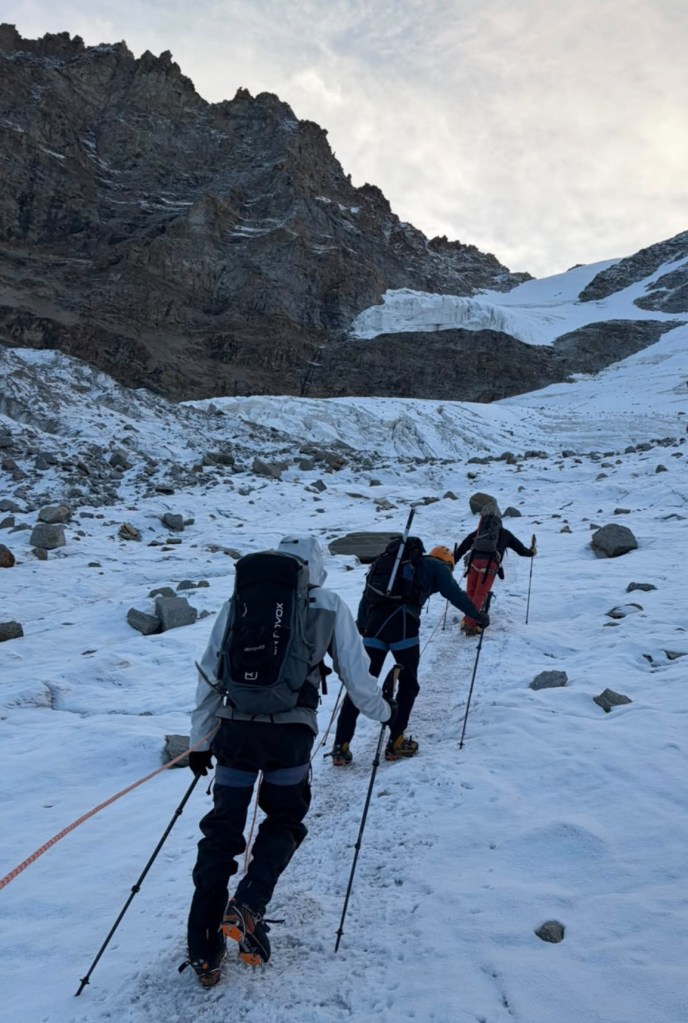
We set off onto the glacier, a first for me, feeling like a novice astronaut on the surface of the Moon. We climb for four hours. The crevasses are on full display after a hot summer that has eaten away at the glacier, so progress is slow and winding. For all the vastness of the glacier, we are often competing with other groups for the best path. No one is talking much because it’s hard work. We pause twice on the way up, to adjust our clothing and snack. On the final stretch, the summit firmly in view, I have to muster all my reserves, one agonising step after another, pulled onwards and upwards by my better-prepared roped-in teammates.
When we finally stop, my breath rasping in the thin air, I offer a floppy high-five of mutual congratulations to the guide, who comments: “Now you know what my Friday’s look like.” Indeed.
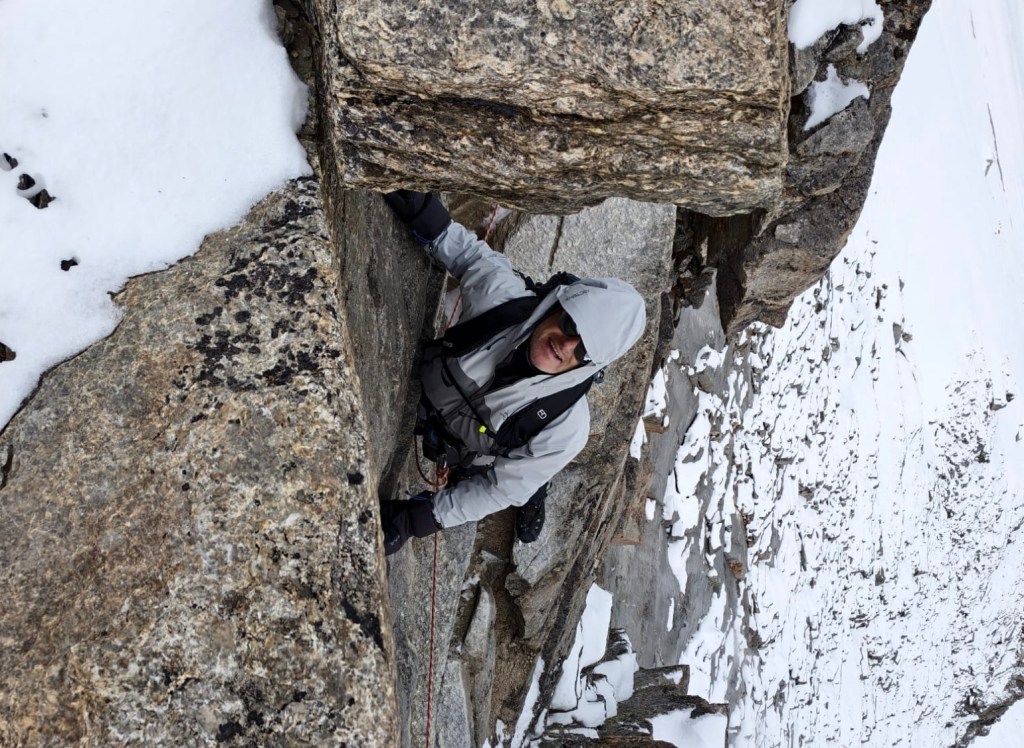
At the top we’re rewarded with a bit of rock-climbing to reach the peak, shaky in our ice-crampons and still lugging our backpacks, clipped into steel cables for the parts that jut out into the nothingness. The way down is easier, but it’s still two and half hours of steep descent with fading muscles.
When I reach the bottom I have completed probably the most difficult endurance challenge of my life, superseding my first (and only) marathon that I ran 12 years ago with barely any training at the sprightly age of 44 (in a satisfyingly synchronous time of 4 hours and 44 seconds). Our guide deems all of three of us ready for the Mont Blanc. He adds that the Mont Blanc will be 70% more difficult. I ask him to confirm that peculiarly specific number, which he does, an experience built on decades. I tell him that I’m worried I won’t make it.
The next day is officially a rest day, with only the two-hour decent from the refuge to the base where our van awaits. By 10am we’re comfortably seated in a Pasticerria with capuccinos and … Back in Chamonix, we eat dinner of heavy carbs, talking nervously and optimistically about the upcoming climb.
There are two ways to climb the Mont Blanc. Advanced climbers, can take the Aiguille du Midi route, a bit shorter but with some technical vertical ice climbing. The rest take the Couloir du Goûter route, easier but also deadlier.
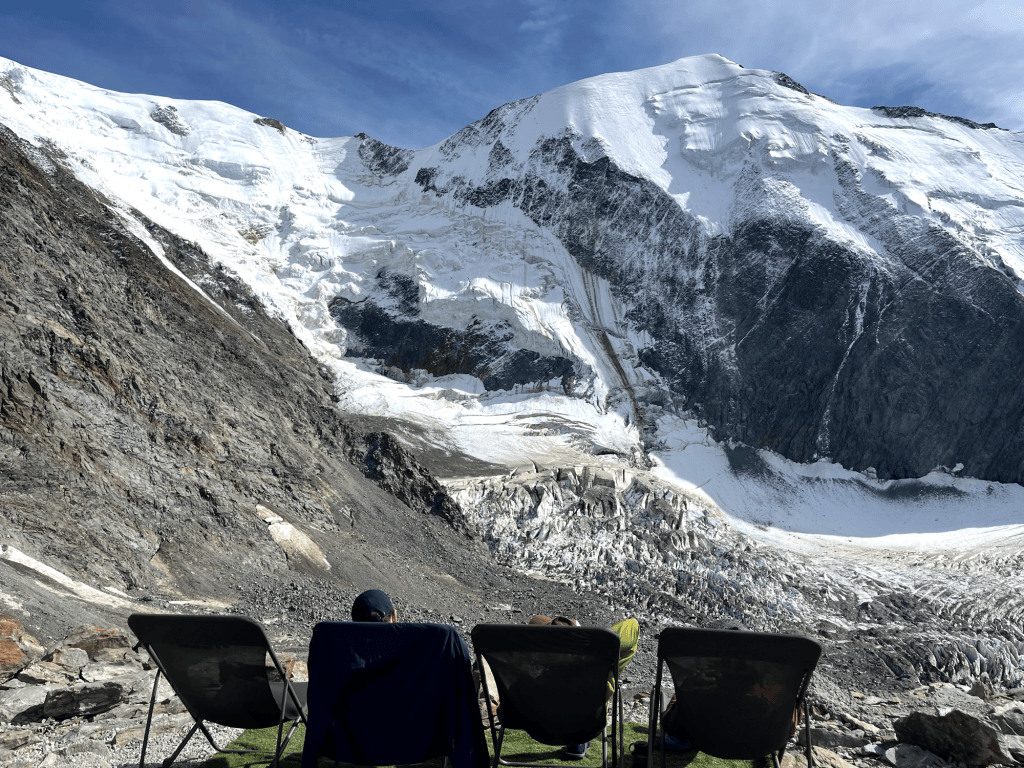
The route runs through two refuges. We start from the top of the Mont Blanc Tramway, France’s highest mountain railway that rises up to the Nid d’Aigle station at 2,373 m (7,785 ft). From there it’s a steep 800 m hike through a rock-strewn wasteland to the Refuge de Tête Rousse, which sits at 3,167 m (10,390 ft). We meet up with our second guide and 20 other climbing groups. The number of people on the mountain is limited by the maximum capacity at the refuge, which is good, but the refuge is always at capacity, which is not so good. Dinner is simple and tasty. Water is only available in purchased Evian bottles, which we reserve for drinking and brushing our teeth. We swap our sweaty clothes for dry ones and crawl into our dormitory bunks, cheek to cheek with the other unwashed.
Sleep doesn’t come easy. The steady rattle of (mostly) male snoring, the regular squeaking of someone easing out of their perch to use the toilets, and the early departures that start around 3am, leave me with about two hours.
The plan is to set off at 6am, reach the second refuge by 10am, rest for 45 mn, and then attempt the four hour ascent to the summit. Breakfast is simple and filling. I’m feeling nervous and fidget with my gear as I put everything in its place. Between the first refuge to the second refuge, which sits on the edge of the glacier, is the infamous Couloir du Goûter. The route is 30mn on one side of the couloir, a quick traverse of almost 100 m, and then a two hour climb up the couloir’s spine on the other side, a jumble of fallen rocks that is part scramble, part rock climbing, some parts assisted by the steel cables of a via ferrata.
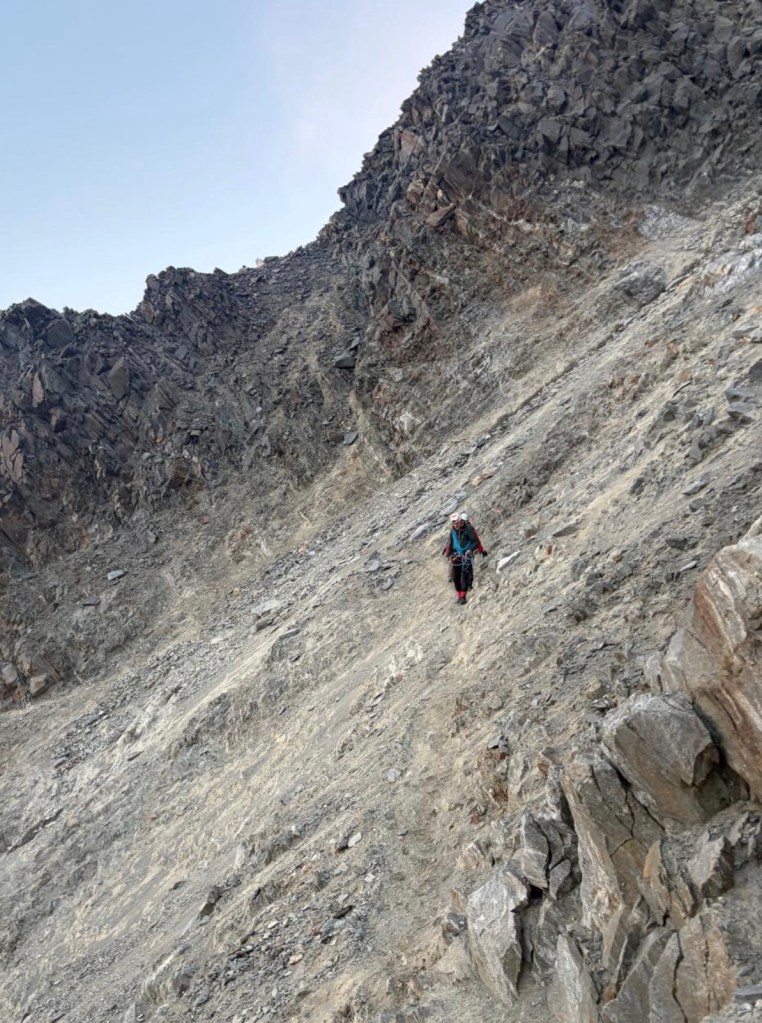
The traverse is where accidents happen. Two days earlier, we met the climbing group that our guide company had scheduled before us. They were forced to turn back and abandon their plans to summit when, as they were waiting for others to traverse ahead of them, a climber was killed by a falling rock. The couloir was deemed too unstable that day. Here’s a video of what it looks like, taken by luckier climbers.
https://youtu.be/569stalipmI?is=HUOqvrDGtQY8CpVe
The best time to traverse is when it’s daylight but at its coldest. We timed our arrival perfectly, paused when a couple of small stones bounced past, held our breath to see what followed, and quickly, but careful (it’s a narrow, steep and uneven track) traversed. The remaining two hours was almost fun, a little light headed from the relief, bouncing from rock to rock as we rapidly climbed up to the glacier’s edge. The end is a ladder that takes you over the rim and a short ice walk (crampons back on) to the Refuge du Goûter sitting at 3,817 m (12,522 ft).
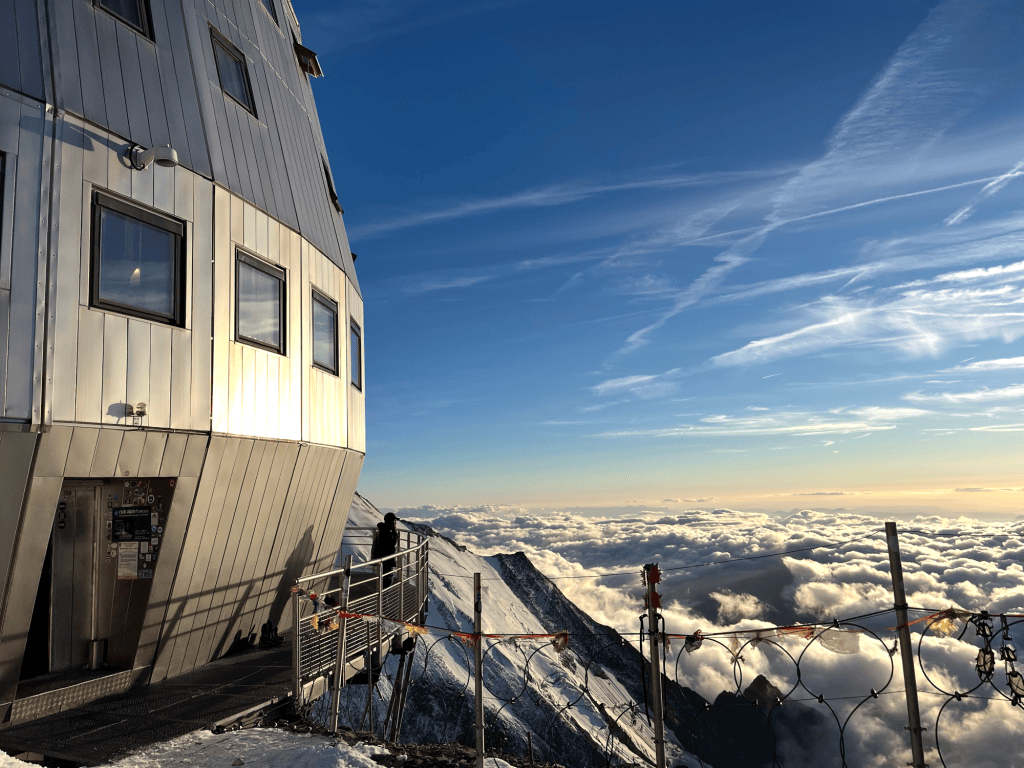
Now for the hard part: to complete the 1,650 m (5,413 ft) ascent to the top. It was a repeat of Il Gran Paradiso, only longer, steeper and colder (it was a clear day with a howling wind), with less sleep, and, crucially, less oxygen.
The lack of oxygen doesn’t just show up in faster breathing and burning lungs. It gets into your blood and makes all your movements heavy. Your heart works harder for less results. Your head feels light and unsteady. It’s what turns a difficult hike into torturous trek.
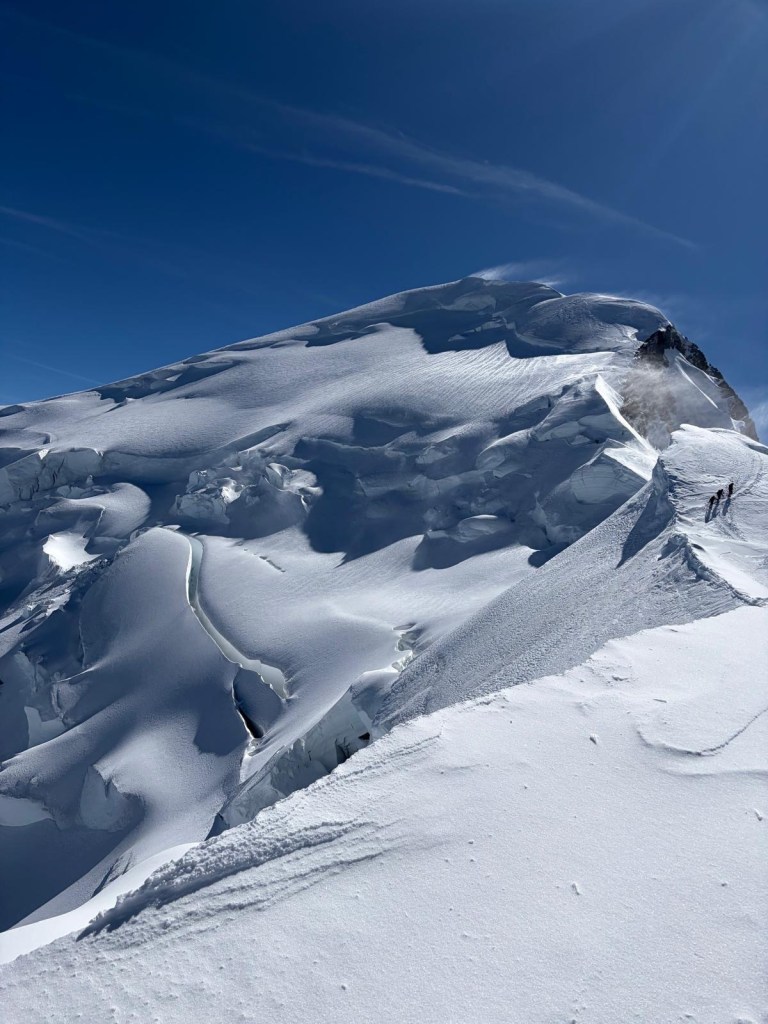
Maybe because of my more advanced age, probably because of my lesser ability, I was assigned a guide for myself, and my two colleagues took the other. They started off before us and I lost sight of them quickly. In a respectable four and a half hours, I hauled myself up to the Mont Blanc summit, heavy step by heavy step, painful breath by painful breath, head down, mind still, heart racing. I owe the last 100 m entirely to the steady voice of my guide, coaching my every move.
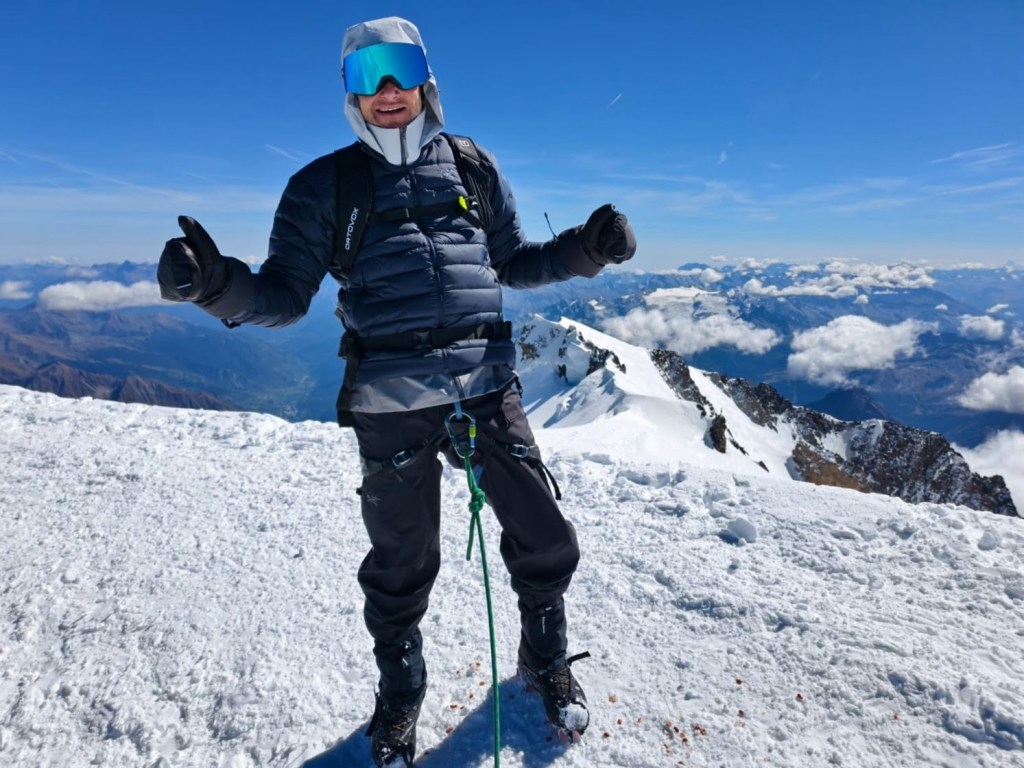
I know the descent was difficult but I really don’t remember much, my senses overrun by the endorphins and adrenalin. We spent the night in the Refuge du Goûter, still no running water or sleep. We needed to be at the traverse by dawn, so we left two hours before dawn, descending the rocky spine of the couloir in the dead of night with the help of head lamps, secured to our guides by the ropes that would save us if we slipped, or tripped, or passed out. Same pause at the traverse, same sense of dread. We made it, and then continued on to the valley below, pausing for delicious breakfast of croissant and café while we waited for the train.
It was over. Was it worth it? Absolutely, but not for the reasons I imagined. Not for the view or the sense of accomplishment. It was a real mountaineering experience, and I know what that looks like now, and I had a glimpse into what humans can physically endure. Would I do it again? No. To put it bluntly, it’s too hard and the reward is not worth it. I admire the people who can push themselves to new endurance challenges, higher, steeper, longer, faster. That’s not for me. I’ll limit my challenges to windsurfing the next wave and, occasionally, skiing a steep couloir.

