Tostan is an NGO operating in West Africa that I have supported for a while. This November, I had the good fortune to visit their headquarters in Senegal.
American educator Molly Melching founded Tostan in 1991. Its mission is to empower communities to define and reach their own vision of the future, and to spark wider movements toward dignity for all.
In Wolof, the language of Senegal and The Gambia, tostan means “breakthrough.” The name fits an organization that is proving a simple but revolutionary idea: lasting change comes from communities themselves, not from outsiders telling them what to do.
At the heart of Tostan’s work is the Community Empowerment Program (CEP), a non-formal education course that runs about three years. Tostan comes only when invited. Volunteers are made up of adults and adolescents who meet three times a week. Sessions are held in local languages and use stories, theatre, song and dialogue rather than lectures. Participants discuss human rights, democracy, health, hygiene, literacy and problem-solving. Each community also forms a management committee to turn what people learn into projects they choose themselves, from savings funds to school enrollment drives.
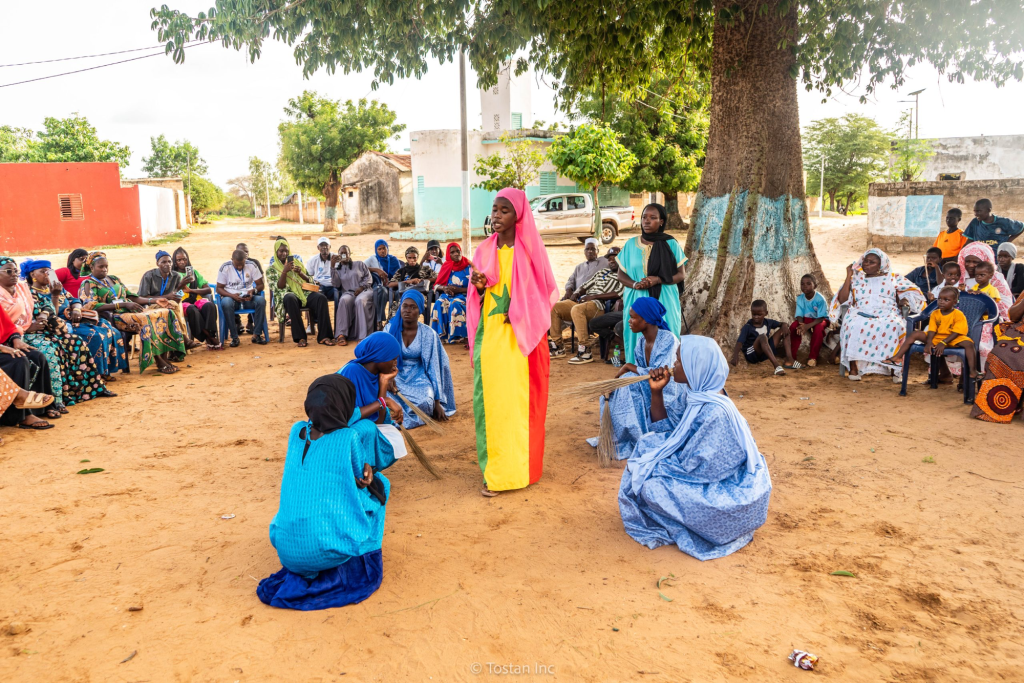
The Tostan team graciously organised for me to visit two nearby communities that have gone through their program, so that I could see firsthand the impact they have. The first village, Keur Sambara, implemented the Tostan model 30 years ago and were still rigorously adhering to it. We sat for two hours in simple plastic chairs arranged in a large circle under a massive shade tree, so they, mostly women and facilitated by a translator, could each share their history and experience. Just a couple of the most incredible stories:
The mother who volunteered to travel to India for a 6 month course on installing solar panels, because she was chosen by the village as the most qualified, and because she trusted the village to take care of her children, and, perhaps most impressively, because her husband gave his consent.
The woman assigned to health issues for the village, telling us how things have improved, starting with the abandonment of female genital cutting, and breaking into tears at the memories of what they have accomplished.
The man in charge of safety and security, explaining how their community-moderated approach has fostered an era of peace and prosperity within the village, but also with neighbouring villages.
Perhaps Tostan’s best-known result is tied to Bambara in western Senegal, which in 1997 decided together to abandon female genital cutting (FGC), and declared it publicly. Because FGC is tied to marriageability, one village cannot quit alone. So participants carried the conversation to neighboring and intermarrying communities, a strategy Tostan calls “organized diffusion.” Within months, 13 nearby villages joined the pledge. Since then, nearly 9,000 African communities have publicly abandoned FGC, many also renouncing child and forced marriage.
Senegal’s government later adopted Tostan’s model in its own national strategy to end the practice. Public declarations by villages abandoning FGC continue to be an important milestone.
FGC is only one part of the story. By Tostan’s count, 1.8 million people have taken part directly in its education program since 1991, and 5.5 million more have been reached through awareness activities that communities lead themselves. In total, the organization estimates 7.3 million lives touched.
In 2025 alone, about 150,000 people took part in Tostan’s programs across Senegal, The Gambia, Guinea-Bissau, Guinea and Mali, with another 110,000 reached through community-led outreach. All of this runs on a budget of about $11 million a year, with several hundred staff, most of them based in West Africa.
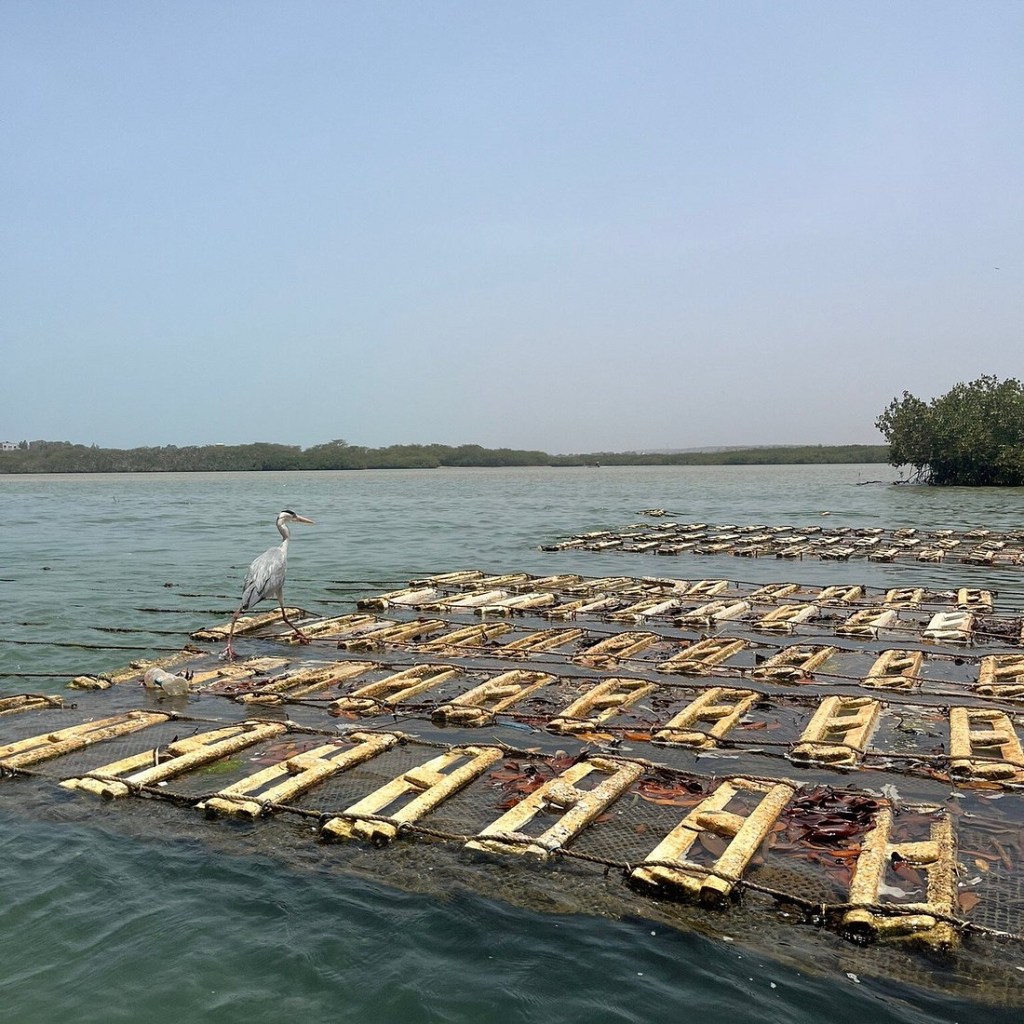
The second village I visited was in Somone, divided by a wide lagoon filled with dense mangroves. Their houses were on one side and their oyster farms on the other. The farming is done by the women who used to wade across the lagoon at low tide, carrying their children. With Tostan’s help they have improved their situation considerably. We met with the 30 or so women at the farm to catch up with their latest developments. Seated at wooden tables they talked happily with Molly in Wolof, with lots of laughing, singing, and even dancing.
The path ahead is not easy. Tostan’s 2025 report acknowledges tighter funding across the development sector, and the organization has spent more than it raised in several recent years.
Its mission remains powerful. Social norms change when the people who hold them decide, together, that something better is possible. Tostan does not deliver development to communities; it helps communities lead it. That is the breakthrough in its name.
If I had to describe the most important impression that I walked away with from my time with Tostan, it’s that empowering women to understand and uphold their right to live as equals among the men significantly improves the fortunes of a community. This is a lesson that needs to be learned everywhere.

