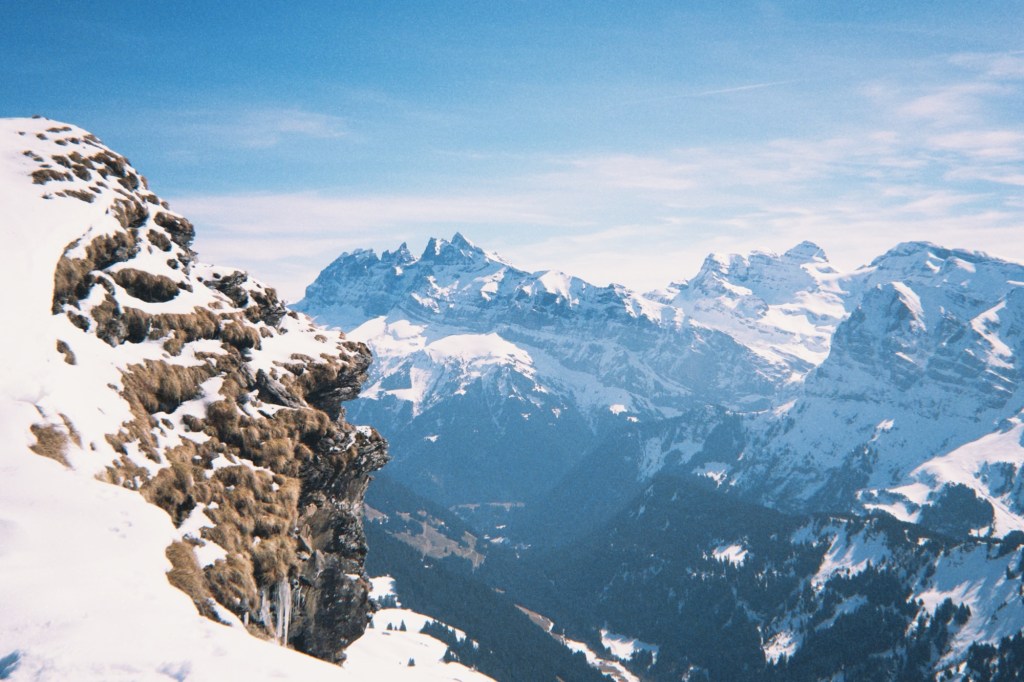
It’s taken me a little bit to put down on paper (so to speak) the next chapters of my world tour of windsurfing (and sometimes skiing). Real life is slowly creeping back into my state of mind and the wanderlust is fading. Still, there is bit left yet. I’m on the North Shore of Peru right now (a later post) and real life is literally thousands of miles away.
I like skiing, have skied since I was four and was lucky to include Jackson Hole and Valdez, arguably to two of the best extreme skiing destinations in the world, in my recent trips. I wanted to relive some of that excitement closer to home and booked a trip to La Grave in the French Alps.
La Grave (the village), also called La Meige (the mountain), is unique in the Alps. It’s a ski mountain that‘s higher than most (3,983 m or 13,076 ft), steeper than many, and has no runs. It’s all powder from top to bottom; powder and all the mountain terrain you could think of: corniches, cliffs, couloirs, crevasses, trees…
You get to the top of the 50 year old cable car, that takes between 30mn and 3 hours depending on the wind conditions, and you make your way down anyway you want, on all sides of the mountain. Some paths lead to the village 2,500 m (8,200 ft) below, others to roads that need a bus, taxi or hitch to get back. You could do it alone, but there are no signs and “down” can end abruptly over any number of hidden cliffs. A guide is recommended.
To get an idea of how good La Grave is for powder skiing, Doug Coombs, two time winner of the World Extreme Skiing Championship and co-founder of the leading helisking outfit in Alaska (the subject of this post), moved with his family from Jackson Hole to La Grave because the conditions were so great. (His story has a tragic end, because he lost his life on the moutain shortly after.) La Grave pulls in fanatical crowds, the type of skiers that walk around the village bare feet with ropes, harness and ice axes slung over their shoulders. A safe haven from the commercialised world of ski runs. Everyone here is an expert (or at least they think they are).
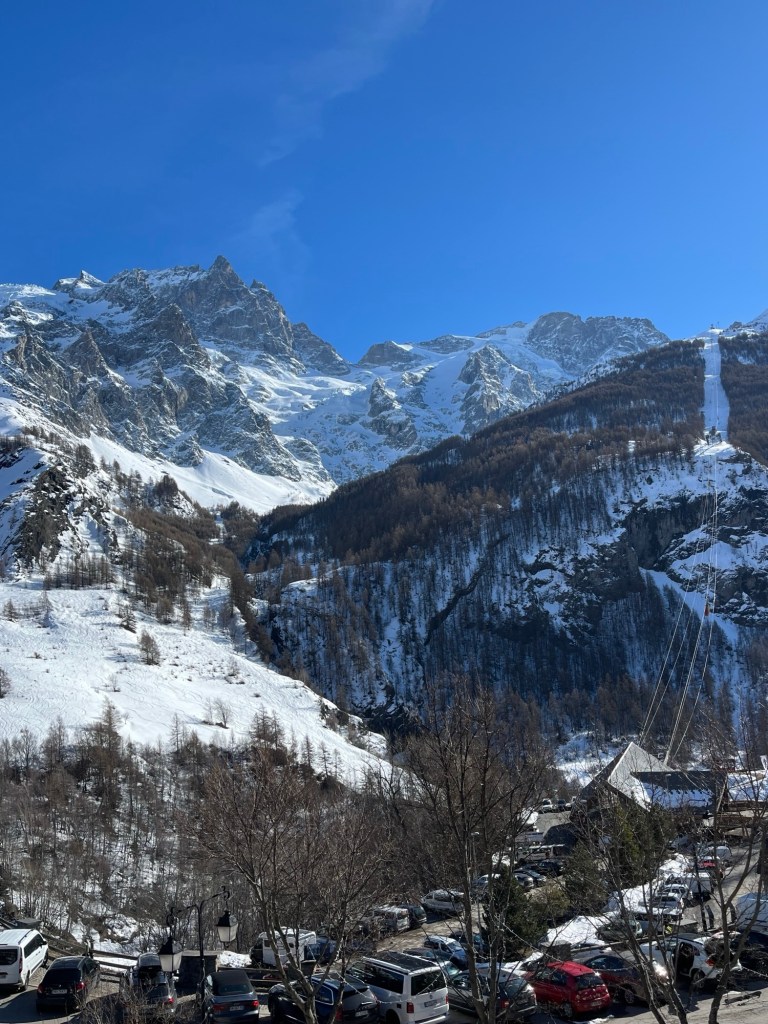
I invited my sister and her son, and my brother to join me. We camped out in the main hotel and the base of cable car with a panoramic view of the mountain. The accommodation was basic, and being France, the dinner was excellent. We met our guide the next morning, who introduced us to the required avalanche rescue gear. And then we were off. We were there three days, the weather was perfectly clear and the snow decent (ankle deep powder at the top, not too slushy at the bottom). Each day, I would lose someone.
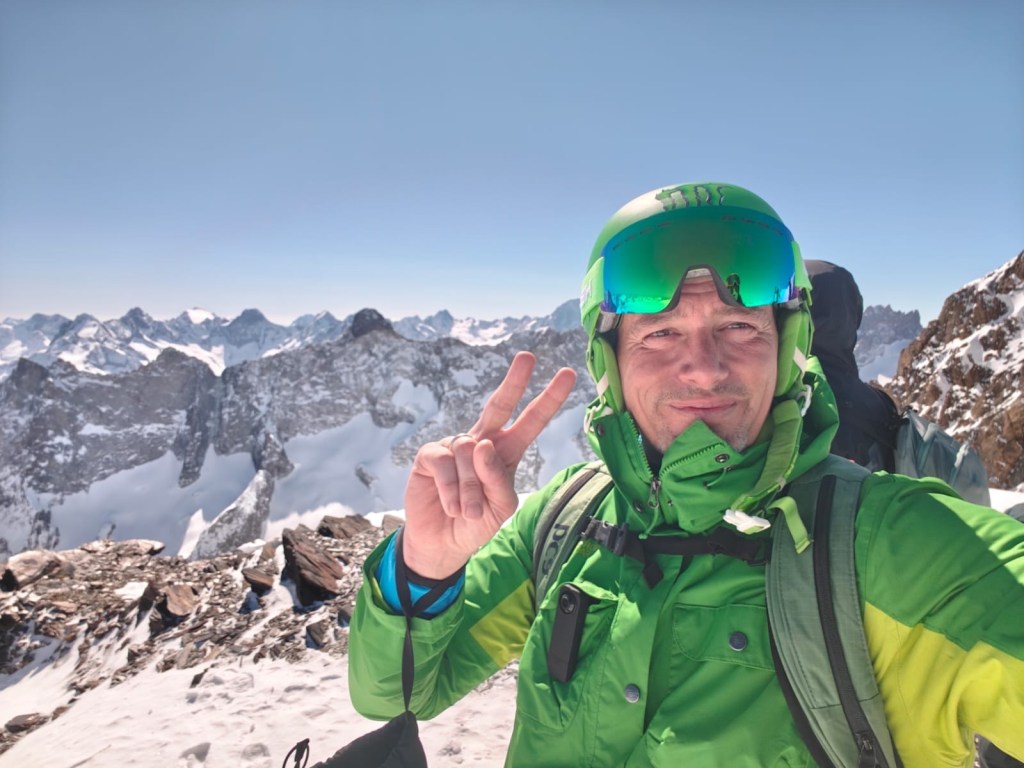
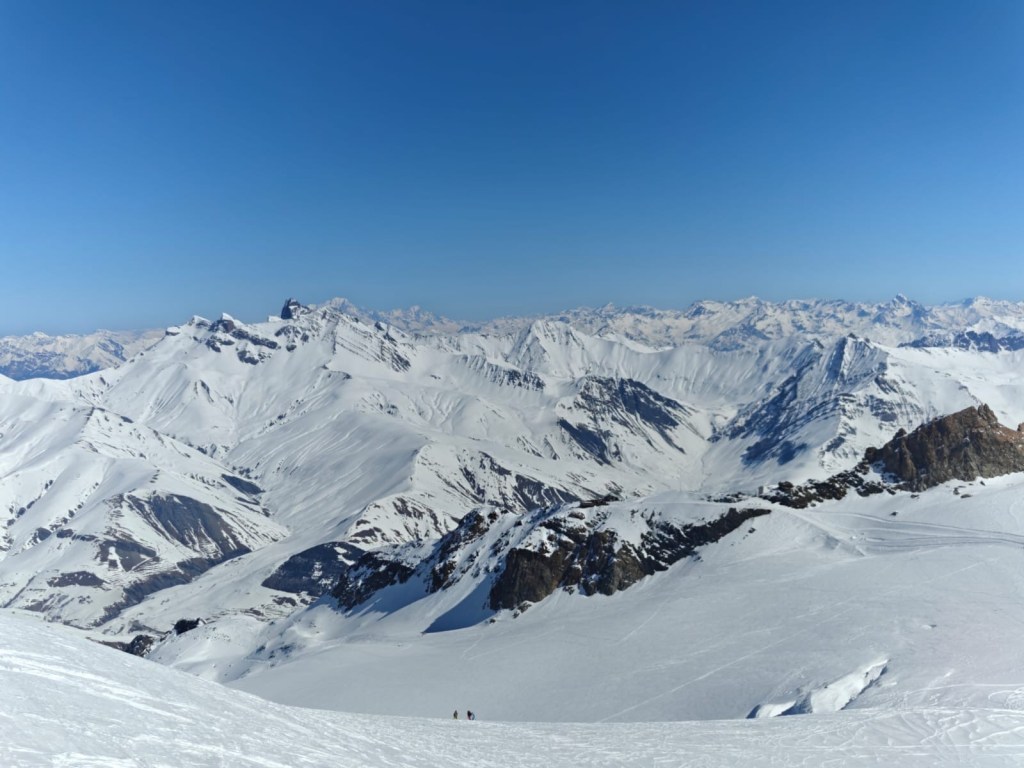
The first day we descended the front of the mountain. There are many routes and our guide led us through the best of them. It’s a mix of vast mountain plateaus (so vast they land small planes on them) to nose-bleed steep couloirs hemmed in by ice and rocks. The runs are so long, we only did two that day.
The next day we descended the back of the mountain. My sister chose the terrace and a massage over skiing, which was probably the smarter choice. We had to climb to the top first, because the cable car stops 650 m (2,100 ft) lower. A combination of being pulled behind a snowcat, a makeshift button bar and a 30 mn walk lands you on the ridge to the other side. The other side is a very steep, uninterrupted slope with a vertical drop of 1000 m (3,280 ft). We arrived early so it was mostly empty, and it looked vast. The features at the bottom were tiny, almost out of sight. The slope faces South, so it warms up during the day and the cold night creates a crusty snow that catches the skis. Given the steepness, a fall would be difficult to arrest and there was no natural break in the slope until the bottom.
We started gingerly, testing the snow with our skis, hopping them into the turns so they could break through the crust. It was hard work and stressful. We reached the bottom exhausted, and the rest of the descent followed a stream through a long, mellow valley that ended up in trees, and then fields. Once there was more grass than snow, we carried our skis the rest of the way to the village, a completely different village, 45mn by road to our hotel. One run was enough for the day.
On the third and final day, it was only my brother and I, and the guide wanted to show us something special. We started off with some excellent couloir skiing, the snow softer and deeper between the rocky walls. The couloir was getting steeper and steeper until it disappeared into emptiness. We walked our skis to reach the top of a different couloir; a continuous half-pipe with a 50 degree incline that runs 3 km to the valley floor.
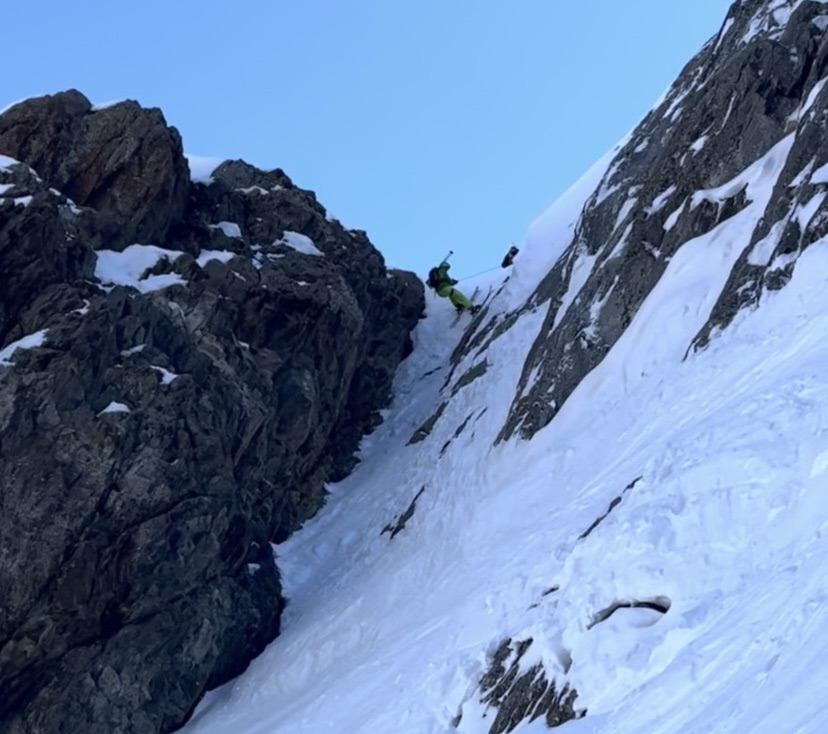
To access the top of the couloir is a short passage too steep and narrow to ski. The guide rigged up a rope and each us belayed the 50 m to the snow below. We did it with our skis on, poles tucked into our packs, because the couloir is too steep to put skis on. Of course, that also means that it’s too steep to lose a ski. All very exciting.
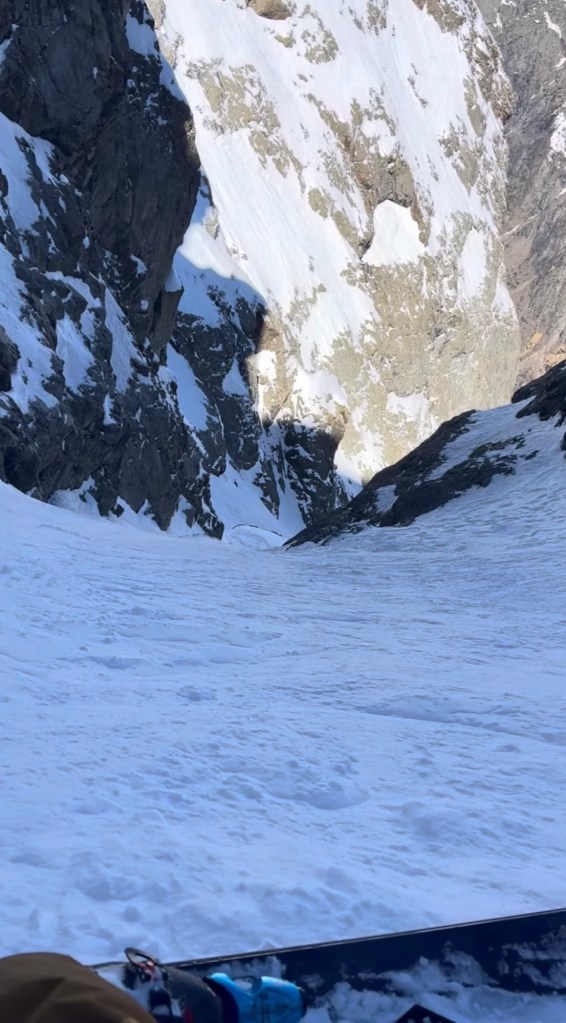
It’s difficult to imagine the scale without being there, but midway down I couldn’t see the top or the bottom, and it seemed to be infinite.
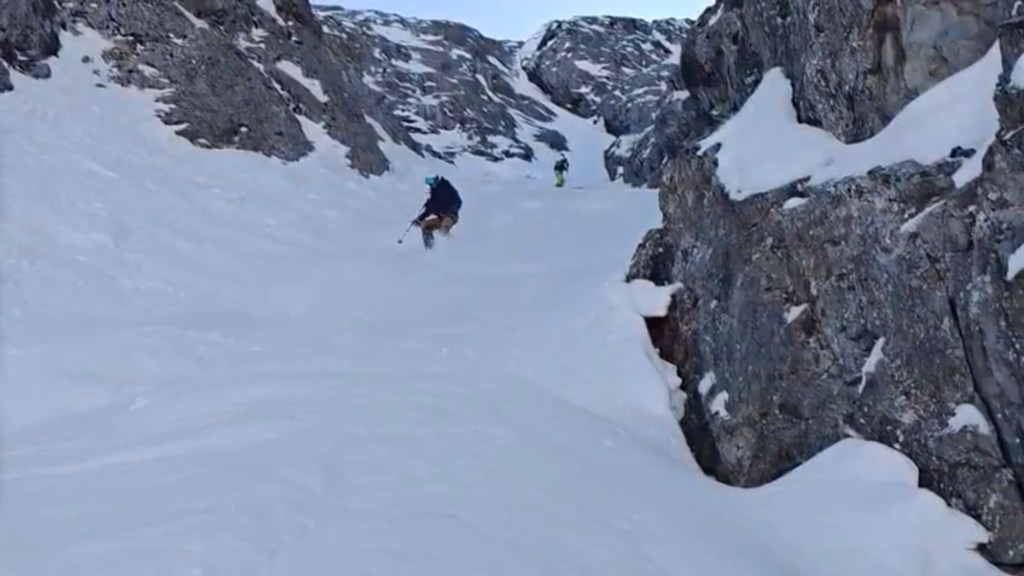
We had time for one more run and my brother had had enough. For this last one, my guide took me only halfway up so we could try a route that he had never done before, which gives you an idea of the scale of the mountain. It was a short and steep segment that you could see from below but not from above. He had spotted it and thought it was skiable. Easing in, he pointed to a young pine sprouting from the rocks, letting me know that it would make a descent anchor if we had to use ropes. OK.
It turned out to be bowl of excellent deep snow, rounding out a spectacular trip. À refaire!
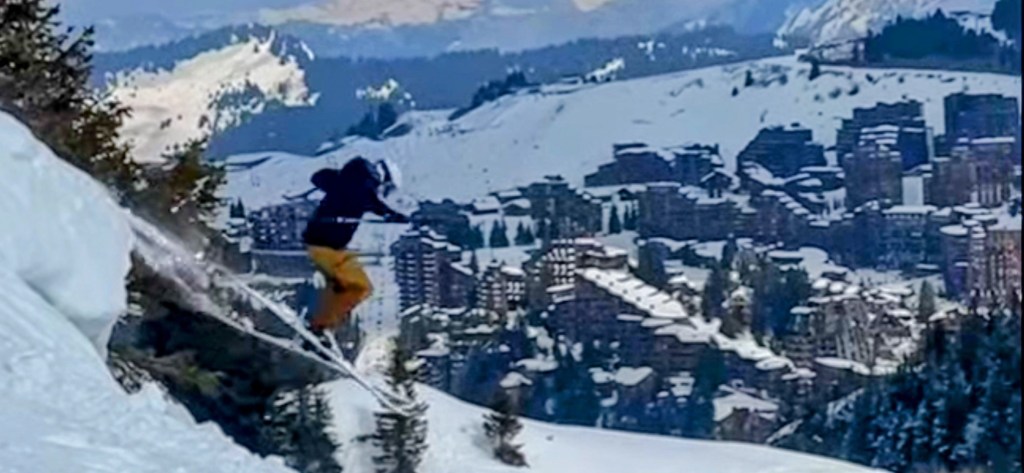
We drove directly from La Grave to Avoriaz, where my family reunites every year (since I was 4). It’s beautiful and much less extreme. As it happens, I severely sprained my back on the second day and spent the rest of the week on my back. Go figure.