The summer of 2026 was a scorcher. I spent most of July at home in Italy, where my house is without air conditioning (not for long!). The nearby sea was no relief, almost too hot to bathe in. At some point, my daughter and I escaped to an Alpine village so we could cool down for a few days. For me, it was also a long summer.
It started mid-January in the Southern Hemisphere summer in Cape Town; in May I was chasing the wind in Maui, Hawai’i; in August I was looking for cooler weather in Southern Portugal. When summer in Europe was finally and thankfully over, which found me at the top of the Mont Blanc in arctic conditions, I packed up my windsurfing gear and headed back to the South Hemisphere, to Màncora, Peru.
My original plan was to sail Pacasmayo, a legendary wave you can surf (windsurf, kitesurf, wingfoil) for almost 1 km, but I had missed the windy season. Someone suggested Máncora in Northen Peru instead, a fishing village turned surfer destination surrounded by desert, almost on the border with Ecuador and only 500km (300 miles) from the Equator. I’d never heard of Máncora but it received good reviews for “steady thermal winds that were ideal for kitesurfing” and steady Pacific waves. A friend recommended a beach hotel, and that’s where I went.
I arrived after a 26 hour trip, including two connections and a terrifying dead-of-night drive through the desert on the Pan-American Highway mined with potholes and overrun by trucks lit up like something out of a Mad Max movie.
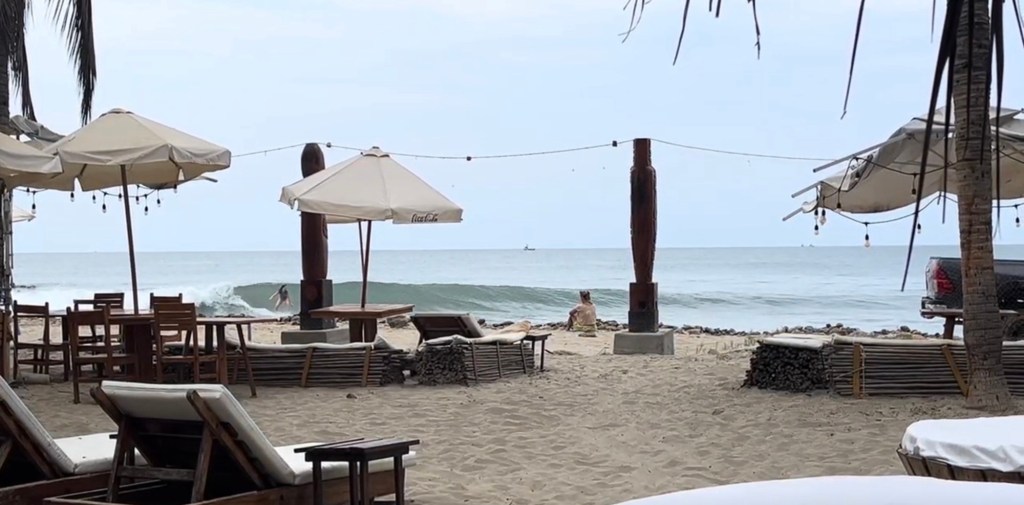
I woke the next morning to a glassy point-break wave in front of the hotel. Beginner surfers were being pushed into perfectly peeling head-high waves by local coaches, and the local surfers were shredding. It was an incredible view, and was that way the entire time I was there.
I was there to windsurf and could not handle a surf and windsurf session in the same day, so I waited for the wind to pick up, which it did, right on time, after lunch. The wind chased most of the surfers away, leaving the wave to a handful of kitesurfers and me, the only windsurfer. The wave was very consistent and I was sometimes able to connect turns over 150 m. And because the wave broke so progressively, there was almost never a breaking wave behind; clear sailing all the way. And the water was a balmy 25C (F), admittedly a little warmer than normal because of the El Niño effect that gets it’s name from the local tropical current. This was some of the most enjoyable wave sailing I had ever experienced.
Each day was a repeat, the wind more or less strong, the waves consistent.
A few days later a fellow windsurfer I’d met a few years back in Chile showed up. A friend of a friend pointed us to a local kitesurfer/wingfoiler/waterman who advised us against driving the 8 hours to Pacasmayo and, instead, to join him on a shorter trip to Las Negritas, which he called a “little” Pacasmayo.
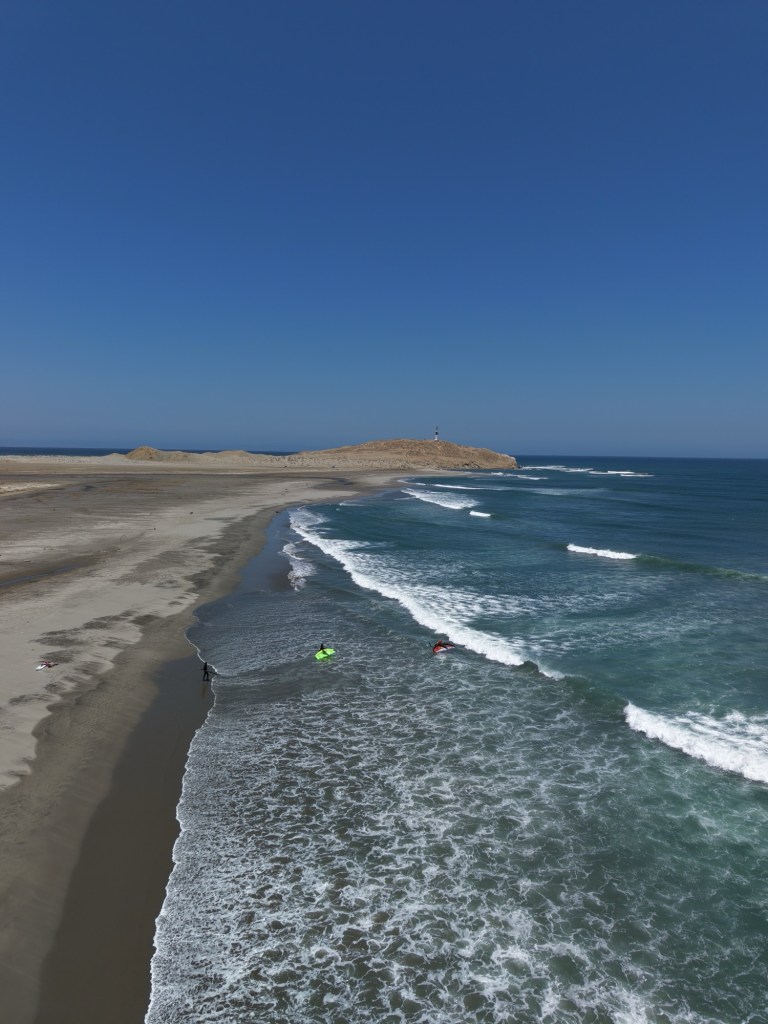
Las Negritas is a wide bay that ends in a rocky promontory that is the most western point in South America. It juts out into the Pacific where it receives the strongest, steadiest winds and best swell. The sea bed is configured in such a way that the waves roll in and then break gently for hundreds of meters. On a good day, several hundred. Still short of Pascamayo’s long waves, but not bad.
There is a run-down fishing village on one end of the bay and a single hotel on the other, with a lot of nothing in between. Our host shows up here most weeks, so the hotel is like his second home. The hotel owner is a long-time big wave surfer that is learning to windsurf and the staff is a young woman from Lima who’s on the pro windsurfing tour. Aside from the two of them, and the three of us, and a hotel guest from Germany now living in another windsurfing hotspot, Jericoacoara, Brazil, and a young kitesurfing coach who tagged along to learn wingfoiling, that was it. We had the entire place to ourselves.
The waves were big in the sets and they broke all the way onto the beach as there was no reef or rocks to stop them, so getting out was a bit nerve-wracking. Our local friends showed us the way and the rest of the session was magical.
It’s difficult to imagine a wave that stands up as if ready to break, but doesn’t, just rolling forward in a perfect ramp, on and on. Catching these waves is easy and riding them is pure pleasure. There’s no rush to turn before the white water crashes down, no fear of being swallowed up and spat out, just an endless canvas for carving up and down, up and down. On one video (we had a handy drone), I’m surfing the same wave for a full minute. Count it out to understand how long that is.
We tried Negritas one more time but the wind didn’t pick up and we ended up sailing Máncora again. Out of 15 days, I sailed 12 and surfed 2. Amazing!
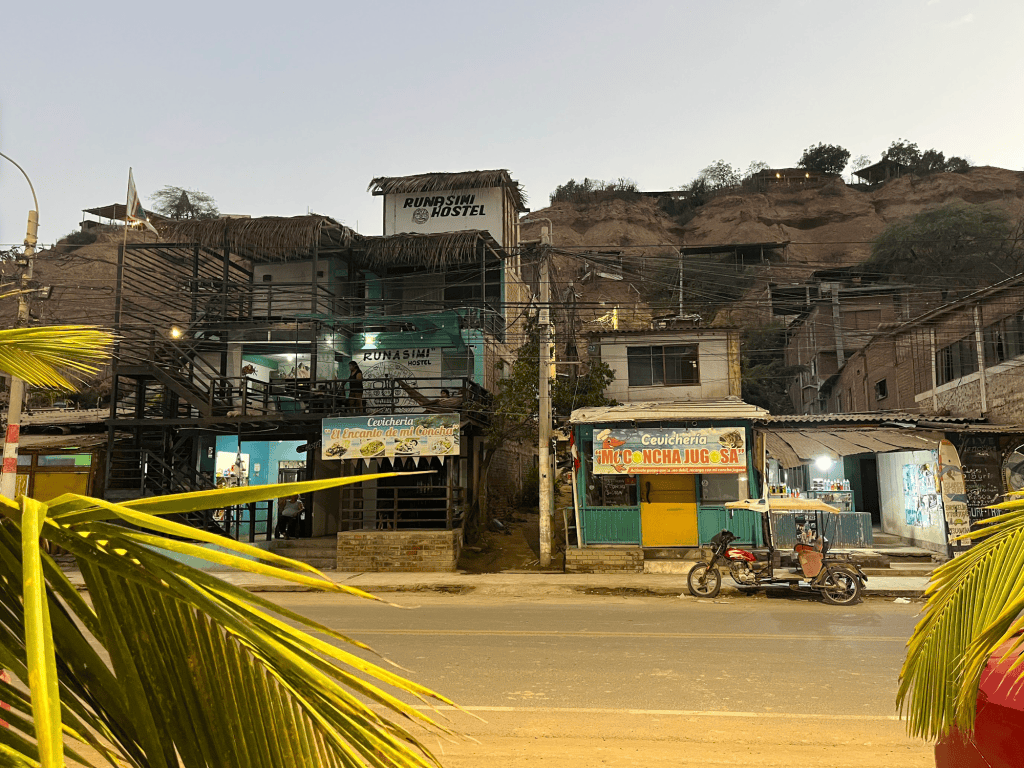
Aside from the windsurfing, Peru has great food. Peru is poor; Máncora is even poorer. One paved road crosses town and the rest are dirt. Most shops are stalls and they are empty most of the day. There are also many empty restaurants serving too few tourists, mainly from Lima and Ecuador. Despite all that, every restaurant I tried served delicious food. Fresh, innovative, flavourful, from the staple lomo saltado to the legendary ceviche and a whole lot in between.
I also saw whales. The area is at the junction of a warm tropical current from the North and a cold current from the South, which makes it a rich feeding ground. Sitting in the lineup waiting for waves, you’re constantly seeing all manner of fish, from small to big, jumping clear out of the water, and birds diving in everywhere. A few kilometers South of Máncora is Punta Blanca, a legendary fishing village that holds many world records for the size of the fish caught in the local waters.
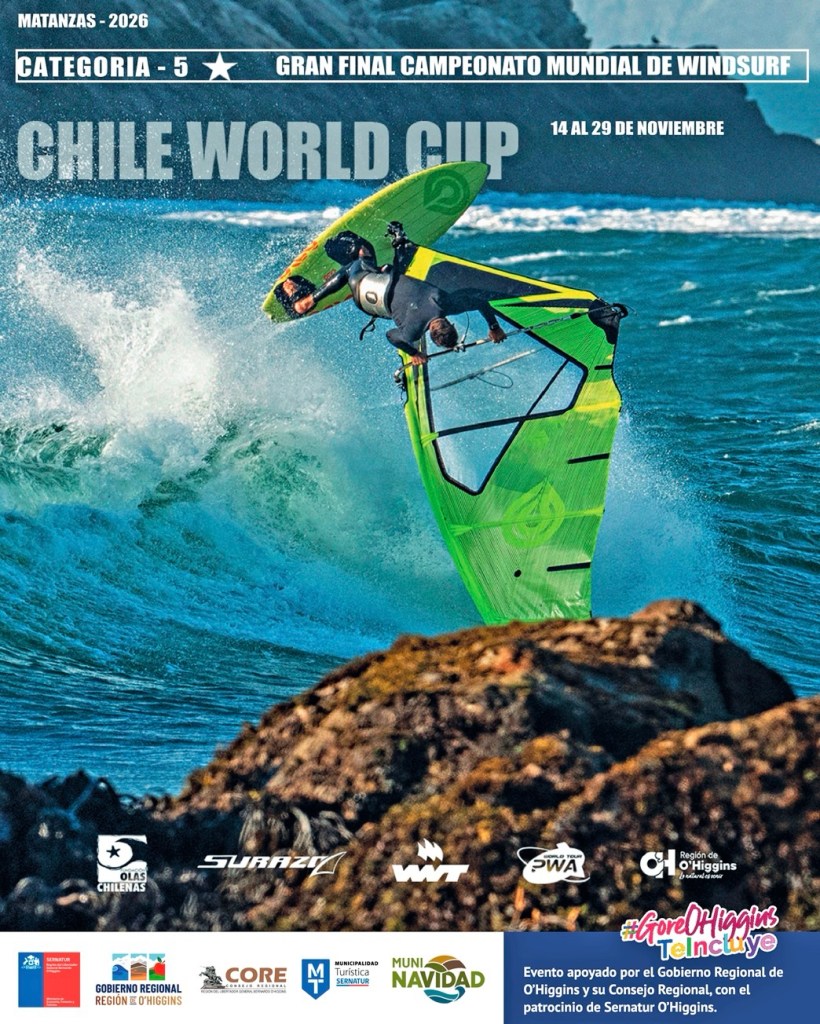
My next stop was Matanzas, Chile. I had been twice before. First, 20 years ago, sneaking away from a work conference in Santiago for a long weekend, and the next time four years ago for two months. Over the years it’s built up a solid reputation as a top windsurfing destination. Already one of the scheduled stops on the professional wave sailing circuit, this year it’s hosting the final even, a distinction previously accorded only to Ho’okipa, Maui. There is a sense of a passing of the torch.
The windsurfing community in Matanzas is small and close knit and passionate. The village is far from anywhere and the water is cold all year (14C thanks to the Humboldt current that comes up from Antartica), so anyone living there is not there by chance; they’ve chosen to live there for a reason. And the best reason to be there is the combination of strong summer winds and steady Pacific waves.
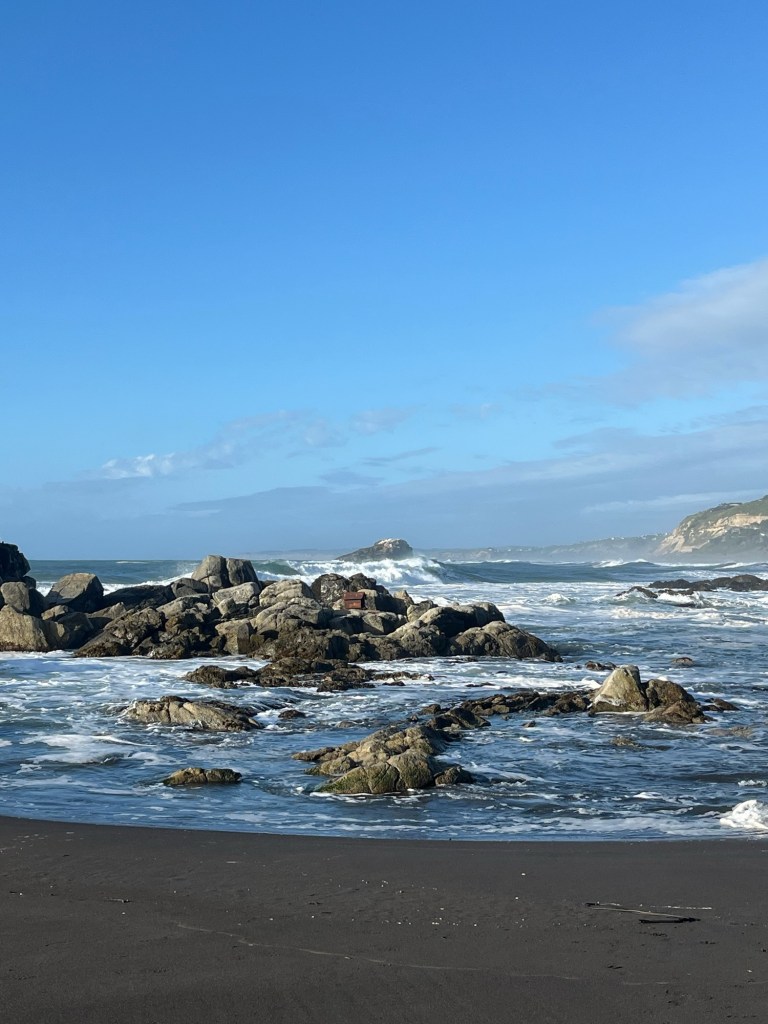
It’s a place where life can and does revolve around the ocean, if you want that: check the wind forecast in the morning, drive to the beach to check out the waves, chat with the local fishermen and surfers, eat a big brunch in preparation for an active afternoon, pack up the car with gear (most of which stays in the car anyway), drive back to the beach and park with the others, chat about yesterday’s session and what pros are in town, head out around 2, finish around 4, drive home, rinse the gear, shower, and go for an early dinner at one of the local hangouts overlooking the beach to watch the last diehards finish their session in the fading light. The windsurfers here don’t count how many days they go out each year, like we do almost anywhere else in the world. It’s more than 100 and that’s plenty. Pretty perfect.
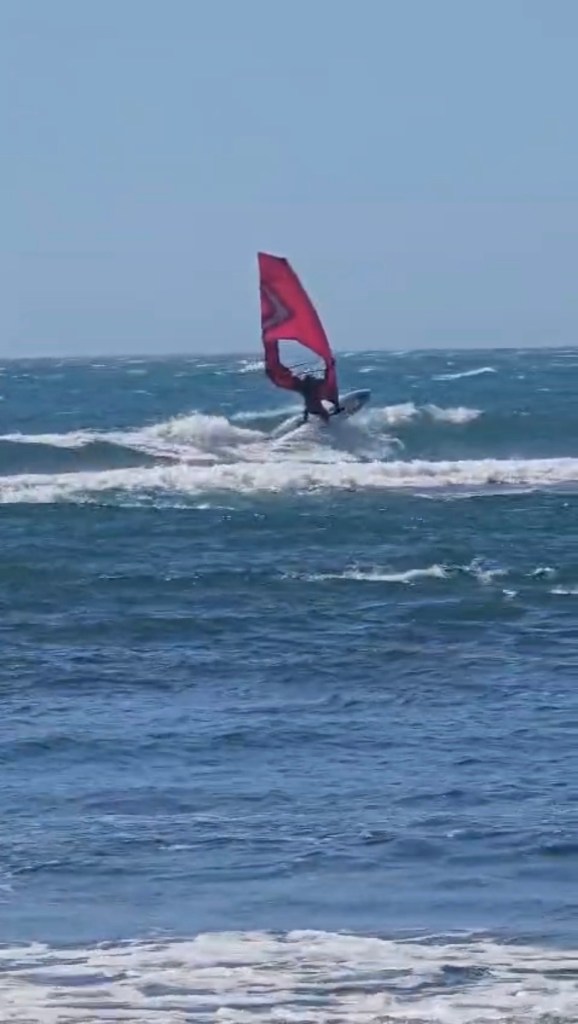
One special day included a visit by jet ski to a deserted island off the coast, more rock outcropping than island, covered in sea lions and colonies from a dozen of species of birds, including penguins; coming back to windsurf in Matanzas for two hours; then packing up my gear and, still in my wetsuit, driving half an hour to a nearby river for a wingfoiling lesson.
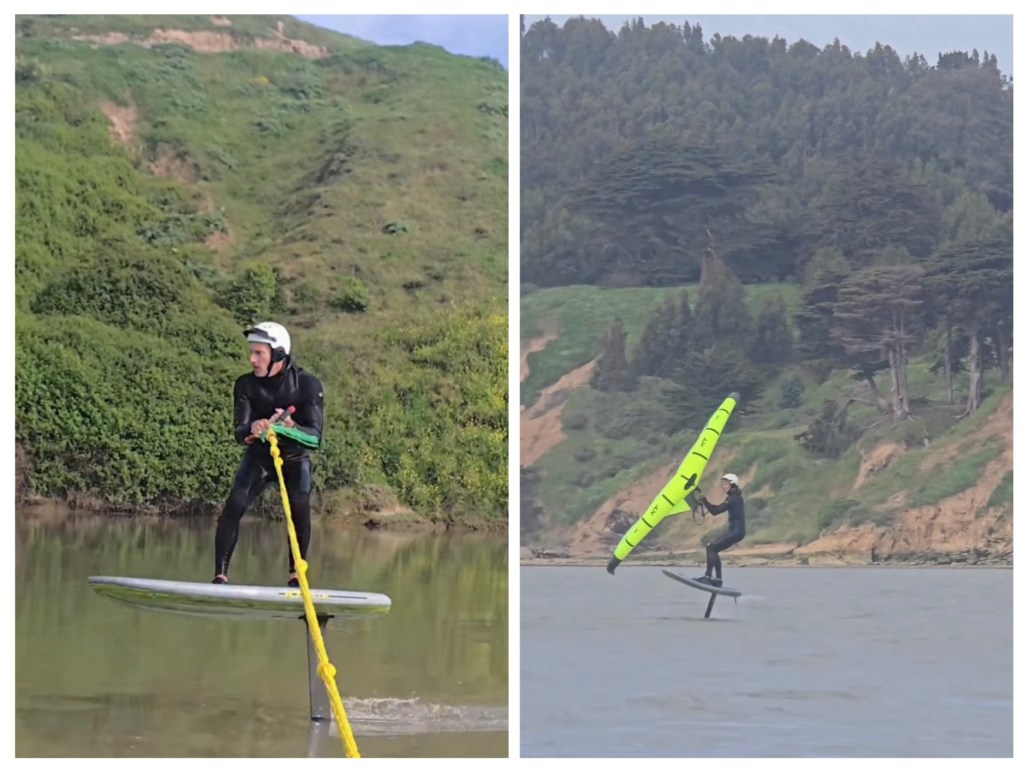
October is still early in the windy season (their summer) and the wind was good for only 8 of the 14 days. Not Maui or Peru, but not bad. The waves were a perfect size for me the whole time, about head high, not too small or too scary. I also took the opportunity to learn wingfoiling, a potential retirement plan. We’ll see. I’ll be back.
As it happens, a few days after I returned to Italy, I was on flight to Dakar, Senegal, where it was 40 C (100 F). So the summer continued for a few more days.
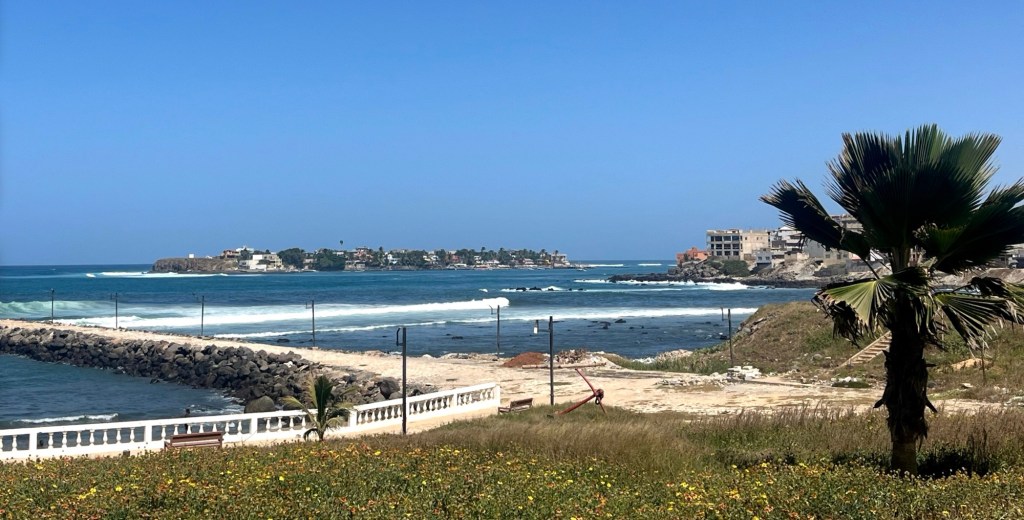
My objective was to visit Tostan and I was able to fit in a surf session in warm, head high waves, just around the corner from Ngor island, the surf break that found fame in the mythical 1966 surf movie The Endless Summer. A fitting end to my long summer.

